By ARINDAM GANGULY, OP
Bhubaneswar: Strategically located between the Central Indian and Eastern Ghats tiger landscapes, Debrigarh Wildlife Sanctuary in Odisha is emerging as an important ecological link for wildlife dispersal, while steadily gaining popularity among wildlife enthusiasts and nature lovers.


The sanctuary’s location offers potential connectivity between larger forest landscapes, facilitating wildlife movement, genetic exchange and long-term conservation. The natural arrival of tigers and the establishment of a breeding population of wild dogs (Dholes) are significant indicators of its growing ecological importance.
A major conservation intervention has been the relocation and rehabilitation of around 400 families, comprising nearly 1,500 people, from villages inside the sanctuary. The process, undertaken between 2022 and 2026, has helped reduce human disturbance, with the sanctuary remaining free of human settlements since 2023.
Habitat restoration has further strengthened the ecosystem, with grasslands and meadows covering around nine per cent of the sanctuary. Seven distinct habitat types are being managed to improve biodiversi ty and food availability for herbivores such as Sambar and Gaur. The Gaur population is estimated at over 850, including more than 100 in the safari zone.
Gaur, Sambar and Chital provide a substantial prey base for predators such as Leopards and Sloth Bears. Tourists regularly encounter these animals during safaris, particularly around restored grasslands. A male Dhole entered the sanctuary from Chhattisgarh in 2023, followed by a female in 2024. The pair subsequently bred, and a pack of four, including two offspring, was recorded in 2026.
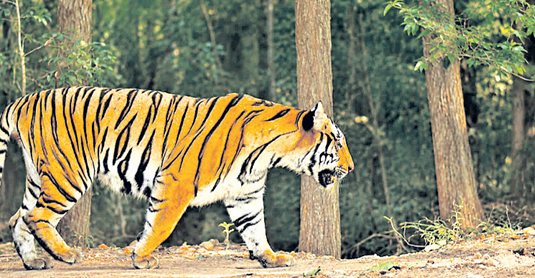
Debrigarh has also witnessed two instances of natural tiger dispersal in four years. A male tiger, estimated to be seven years old, entered the sanctuary in December 2022 and remained until 2024. Another adult male, aged around five years, was recorded November 9 this year, providing tourists an opportunity to spot the big cat.
These movements highlight the sanctuary’s potential as a receiving habitat for dispersing carnivores and an important link between larger forest landscapes. Conservation efforts have also focused on involving local communities through livelihood generation, cultural preservation and environmental awareness.
Govindpur Birds Village promotes migratory bird conservation along the northwestern boundary of Hirakud Wetland. Barabakhra is being developed as a pilgrimage destination, while Dhodrokusum Green Village encourages environmentally sustainable practices.
The Debrigarh Abhinandan initiative connects 38 schools and colleges and 67 Eco-Development Committees (EDCs) through conservation awareness activities. Community-based ecotourism has generated livelihood opportunities for around 150 members of forest-dependent communities engaged in safaris, boating, hospitality and nature interpretation.
With rising tourist interest, responsible ecotourism, scientific monitoring and community participation will be crucial to sustaining conservation gains. Addressing habitat fragmentation, poaching, electrocution and human-wildlife conflict beyond protected-area boundaries will also remain important.
Debrigarh’s significance thus extends beyond its growing tourism appeal, with its potential to strengthen wildlife connectivity between major tiger habitats offering wider conservation benefits for eastern India.