New Delhi: Former civil servants and rights activists Monday demanded Chief Election Commissioner (CEC) Gyanesh Kumar’s resignation, issuing a “people’s impeachment” notice that levelled six charges against him over the functioning of Election Commission and Special Intensive Revision (SIR) of electoral rolls.
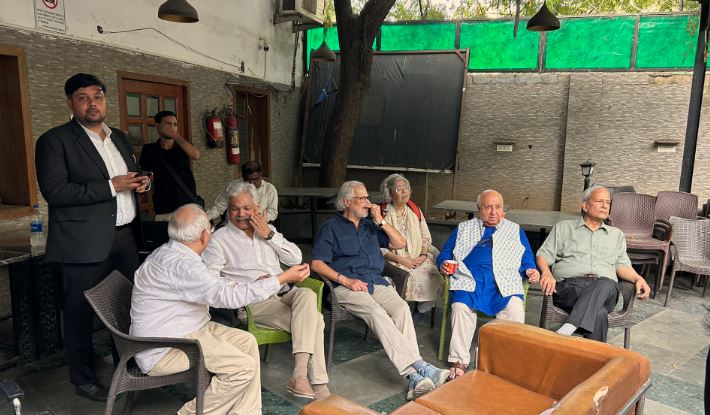
The group, which included former Union home secretary G K Pillai, former Delhi lieutenant governor Najeeb Jung and activist Yogendra Yadav, was prevented from reaching the Elections Commission’s office to submit the notice, its members said.


Rights activist Anjali Bhardwaj said all roads leading to the poll-body headquarters had been barricaded despite authorities knowing that a delegation comprising former civil servants would visit. She described the restrictions as violation of law and the Constitution.
Addressing a press conference, Jung said the former civil servants had taken an oath to uphold the Constitution throughout their careers, and are speaking out as they believe it is being undermined.
“We are not against the government,” he said, alleging that CEC Kumar’s conduct and the scale of disenfranchisement during SIR are unacceptable.
“Even one citizen cannot be deprived the right to vote,” Jung said, demanding the person responsible for the exercise step down.
Questioning why the delegation was stopped, he said its members have never broken the law. “The country’s former home secretary was stopped by a constable,” he said.
Pillai questioned what he described as a fundamental shift in the burden of establishing voter eligibility and citizenship. Recalling his career as administrative officer and Union home secretary, he said he had never imagined being asked to establish his citizenship.
“You are asking 99.9 per cent Indians to prove for potential 0.1 per cent illegals,” he said, arguing that the process had been turned on its head and citizens were being harassed without reason.
Addressed to CEC Gyanesh Kumar, the four-page notice accuses him of undermining the Election Commission’s collective functioning, authorising alterations to statutory Form 6, centralising electoral-roll administration through ECINET, causing mass disenfranchisement through SIR, compromising political impartiality and repeatedly breaching statutory duties.
It alleges that major decisions, including those concerning SIR, had been taken without adequate discussion, consultation or recorded proceedings within the Election Commission (EC). It cites reports of objections by the two other election commissioners to decisions allegedly taken without their knowledge.
On Form 6, the notice alleges that an altered version had been used despite internal objections concerning its legality. It also questions the requirement for previously enrolled voters who had been “wrongly excluded” to declare that they were seeking inclusion for first time.
The notice further alleges that ECINET has undermined the statutory authority of electoral registration officers — responsible for addition and deletion of voters’ names, and corrections to electoral rolls.
The notice accuses EC of implementing SIR without adequate preparation, training or effective mechanisms for speedy correction of wrongful exclusions, placing disproportionate burdens on women, the poor, migrants, minorities and the elderly.
Former special director of Intelligence Bureau Yashovardhan Azad acknowledged that the public impeachment initiative lacked legal sanctity, but said it demonstrated that demands for Kumar’s removal extended beyond opposition parties to citizens and civil society.
Former diplomat Shiv Shankar Mukherjee said the size and success of India’s elections had been a major strength in projecting the country abroad, and alleged that its democratic image has now been dented.
Yadav described the situation as among the darkest moments in Indian electoral democracy, saying the notice concerns alleged misconduct rather than ordinary disagreements or mistakes.
Anjali of the All India Students’ Association (AISA) said the “people’s impeachment” initiative sought to safeguard Indian democracy.
The initiative comes amid a controversy over SIR, including allegations concerning wrongful deletions, changes to enrolment procedures and the functioning of the EC.
PTI