
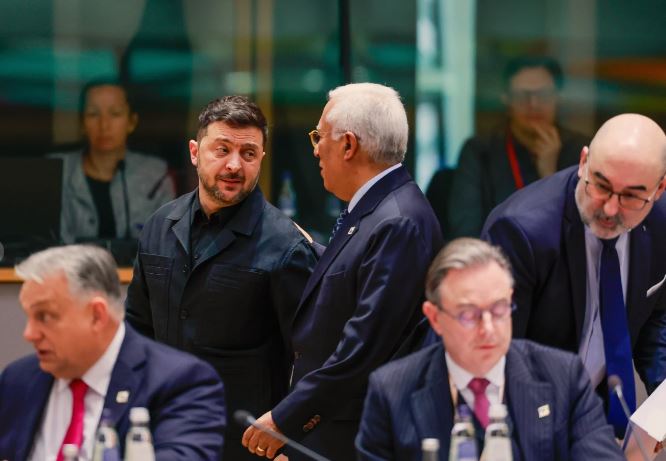
European leaders did what they are known to be good at – a brand of diplomacy aimed at antagonizing neither of two contending parties. This is how the 15-hour-long talks at the recent EU summit in Brussels can be summed up as it ended up with a deal on a 90 billion loan to Ukraine to be raised through joint borrowing among 24 of the European Union’s (EU) 27 countries. All the member countries agreed to the plan because it is guaranteed by the central EU long-term budget. The new deal is far from the tall talks that had been going on before the summit about using Russian assets, frozen as part of European sanctions against the country for its war against Ukraine, for financing Ukraine’s war efforts.
As per the agreed deal all EU countries, barring the Czech Republic, Hungary, and Slovakia, will band together and raise 90 billion in common debt. That money will be loaned to Ukraine over the next two years. Kyiv will then use future Russian war reparations to repay the loan.
If Russia refuses to cough up the cash, “the Union reserves the right to make use” of its frozen state assets “to repay the loan,” the EU leaders wrote in the final summit conclusions, the joint statement put out by countries at the end of the talks.
Also Read: G Ram G
The reparations loan based on Russian immobilized assets is still not off the table, the European leaders insisted and boasted “the most important decision” on the matter had already been taken, when they froze the assets, effectively ensuring that they are not returned. So far so good.
The upshot of the meeting is that the EU would not provoke US President Donald Trump who does not seem to set much store by Europe in negotiating a deal with the Russian President Vladimir Putin. At the same time the EU needed to reassure Ukraine that it would not renege on its promise of standing by it in this hour of crisis.
In a sense, the EU has made the balancing act in a deft manner. For, using Russian assets for Ukraine’s benefit would have led to serious complications that would surely have scuppered the negotiated settlement that Trump is trying. At the same time, Trump’s position of excluding Ukraine from the negotiations and gifting away Ukrainian territories to Russia is unacceptable to the EU. The best course of action at the moment appears to be to continue to exert pressure on Russia by providing sizable funds to Ukraine and let Trump go ahead with his peace negotiations ensuring that no one-sided solution is arrived at for Russia’s benefit at the cost of Ukraine.
European Commission President Ursula von der Leyen aptly said the EU has managed to secure an agreement that it can deliver on the financing needs for Ukraine for the next two years, while “reserving the right” to make use of the Russian cash balances to finance the loan. German Chancellor Friedrich Merz echoed her when he asserted Russia’s frozen assets in Europe would be used to repay the loan to Ukraine if Russia does not voluntarily decide to do so when the war in Ukraine ends.
The make-or-break summit has witnessed a fine tightrope walk. The compromise means the reparations loan, an audacious proposal without precedent in modern history, will remain a theoretical concept for the time being. A chaos has been avoided, while Europe stays united and remains relevant at the geopolitical table.