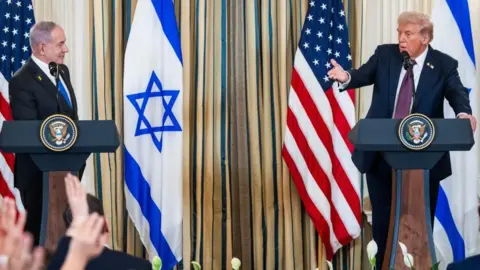
There is no doubt the way fighting in Gaza was ended and a peace process set in motion in the presence of 20 top world leaders, including the US President Donald Trump, represented October 13 a historic moment. In Israel, the release of living hostages was greeted with elation, surcharged with intense emotions by the entire population.
In Gaza and the West Bank, too, there were celebrations since around 2,000 Palestinian detainees started to be released, though the uncertainty over who is being released and where they will be sent causes distress. In northern Gaza, people can finally return to piece together the remains of an estimated 10,000 missing people. It was nothing sort of a miracle that things could turn out on such an optimistic note, as even three weeks ago the possibility of a ceasefire appeared to be doomed with the Israeli Prime Minister Benjamin Nethanyahu expressing his resolve not to make any peace overtures till the Hamas and its terror network was razed to the ground. Hamas was equally belligerent and evasive.
Also Read

The main credit for making the impossible possible goes to President Trump, while leaders of prominent Moslem countries in the Middle East did their best to make Hamas see reason and accept peace as non-negotiable. It was in the fitness of things that Trump travelled from Jerusalem, where he was cheered in the Knesset, to Sharm el-Sheikh in Egypt, where he joined a high-powered peace summit. The peace process initiated in Egypt is to be continued at a conference in the UK. Trump can legitimately claim that he is the chief architect of this peace as he succeeded in making Netanyahu abandon his hawkish policy and work for the restoration of peace. It was not an easy task, and Trump used both his military prowess and prodding to shun the path of war as a solution to the vexed problem festering for decades.
Also Read: Military Rhetoric
With this, hopes for the deal being the first step toward Palestinian statehood have brightened, though the history of the region may make one circumspect about such an eventual outcome. There are reasons for expressing cautious optimism, since the deal does not offer a path to sovereignty for Palestinians. On the other hand, there are risks of splitting Gaza from the West Bank. The sheer scale of devastation in Gaza wreaked by this war, with 60 million tons of rubble strewn all around, makes the future very uncertain. The lack of any timeline for Palestinian self-determination in Trump’s plan makes his glowing references in his Knesset speech to the “historic dawn” of a “golden age” sound rather rhetorical.
All the same, it is reassuring the way Trump has vowed to use the power of his presidency to ensure that Israel accepts the fact that it has achieved “all that it can by force of arms” and begin an age of cooperation in the Middle East. In a speech to the Israeli Knesset, made hours after the last remaining Israeli hostages were released from Gaza, Trump hailed what he called an end to the “long and painful nightmare” of the Gaza war. He used the occasion well to declare that this was also “the end of an age of terror and death.”
The most significant message that he gave to Israel was that it had won “with our help” all that it could by using the power of arms. He sounded like a true claimant for the world’s highest honour for peace when he said now it is time to turn these victories against terrorists on the battlefield into the ‘ultimate prize of peace and prosperity for the entire Middle East.” By repeatedly insisting that Israel’s military victory was complete, Trump seems to have emphasised that his remarks were intended as a reassurance to Arab states that he would neither allow Israel to reopen the conflict with Hamas nor permit Hamas to reestablish itself inside Gaza. This is the real gain achieved at the cost of over 1,200 Israeli and 67,000 Palestinian lives. Now, it is the duty of the top leaders of the world to make sure that both Israel and Hamas or any other outfit using terror as a tool for negotiation, bid farewell to arms and work for a durable peace.