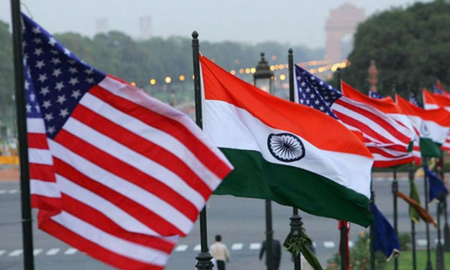
New Delhi: About a dozen officers from India will reach Washington April 20 for three-day talks with the US authorities on the first phase of the bilateral trade agreement (BTA), an official said.
As the tariff landscape has changed in the US, both sides may like to relook at the framework of the agreement, the text of which was released February 7.


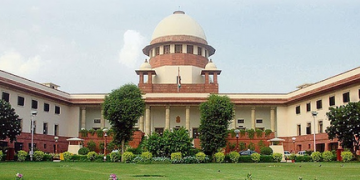
Following the decision of the US Supreme Court against the sweeping tariffs imposed by US President Donald Trump on a number of countries, the Trump administration imposed a 10 per cent tariff on all countries from February 24 for 150 days.
“The meeting will happen from April 20-22 in Washington DC. India’s chief negotiator Darpan Jain (additional secretary in the department of commerce) is leading the team. Officers from customs and external affairs ministry are also part of the Indian team,” the official said.
Further, the two unilateral investigations launched by the US Trade Representative (USTR) may also figure in the three-day deliberations.
India has strongly rejected allegations made by the US Trade Representative in those two investigations under its Section 301 of trade law and has requested to terminate the probes as the initiation notice has failed to provide cogent rationale to substantiate the claims.
Also Read : Indian stock markets to be driven by key factors this week, including oil prices
According to that framework, the US had agreed to reduce tariffs on India to 18 per cent, from 50 per cent. It had removed the 25 per cent tariffs on Indian goods for buying Russian oil and was to cut the remaining 25 per cent to 18 per cent under the pact.
But on February 20, the US Supreme Court ruled against Trump’s reciprocal tariffs which were imposed under the 1977 International Emergency Economic Powers Act (IEEPA).
After that, the President announced the imposition of 10 per cent tariffs on all countries for 150 days, starting February 24.
In light of these changes, a meeting between chief negotiators of India and the US scheduled in February was postponed. Now, they are meeting in Washington from April 20, 2026.
Under the agreed framework, India proposed to eliminate or reduce tariffs on all US industrial goods and a wide range of US food and agricultural products, including dried distillers’ grains (DDGs), red sorghum for animal feed, tree nuts, fresh and processed fruit, soybean oil, wine and spirits, and additional products.
India had also expressed its intentions to purchase USD 500 billion of US energy products, aircraft and aircraft parts, precious metals, technology products, and coking coal over the next five years.
Further, when India finalised the deal, it enjoyed a comparative advantage over its competitor countries. Now, with all US trading partners facing a uniform 10 per cent tariff, the pact requires recalibration.
“So the agreement will have to be recalibrated, redrafted,” a government source has said, adding, “that amount of change will take place from their side”.
“In our case, since the agreement has not been signed, we have got the option where we can right now change whatever needs to be changed,” the source has said.
As the circumstances have changed, every country is engaging with the US to see what is going to be the nature of their trade agreements with America.
China has overtaken the US to emerge as India’s largest trading partner in 2025-26. The US was India’s largest trading partner for four consecutive years till 2024-25.
The country’s outbound shipments to the US grew marginally 0.92 per cent to USD 87.3 billion during the last fiscal year, while imports increased 15.95 per cent to USD 52.9 billion. The trade surplus declined to USD 34.4 billion in 2025-26 from USD 40.89 billion in 2024-25.
PTI