Ajit Ranade
The Reserve Bank of India’s latest Financial Stability Report is reassuring about the health of banks and non-banking finance companies. It is less reassuring about the financial health of their retail customers. India’s household debt reached 45.5% of GDP by September 2025, close to its earlier peak, and subsequently a new high at 47.8% by December 2025. This may not be exceptionally high by international standards. But beneath the headlines are stressed signs that are revealed by the purpose of the loans, who the borrowers are and what is being pledged. Non-housing retail loans now account for 58.4% of household borrowings. Nearly half of all household debt is classified as borrowing for consumption, as distinct from asset creation or productive activity. A housing loan creates an asset, while a business loan may create an income stream. Even an education loan creates future earnings. But a personal loan used for groceries, medical expenditure or repayment of an earlier loan creates neither. The distribution of stress is even more revealing. As per the RBI study of 10 large banks, covering nearly 90% of such lending, those with annual incomes below 10 lakh accounted for roughly three-fourths of loan originations. They also accounted for 78% of the fresh non-performing loans in December 2025. This portends the onset of a household-debt crisis.
Also Read


Ironically, corporate loans are doing fine, bringing down the NPA ratio to quite low in the aggregate. But a low NPA ratio should not hide the fact that whatever residual stress exists is overwhelmingly concentrated among those with the least capacity to absorb it. Microfinance credit declined for seven consecutive quarters till January. The borrower base shrank by another 22.7 lakh. The fall in microfinance lending was not because poor households did not need credit. It followed due to regulatory action. Due to a phase of rapid lending, multiple borrowing and rising delinquency, the microfinance industry imposed its own guardrails. The permissible number of microfinance lenders to one borrower was eventually reduced to three. Total microfinance and unsecured retail debt was capped at 2 lakh, and lending to borrowers more than 60 days overdue was prohibited. Banks also sharply reduced their microfinance portfolios. These were two very difficult years for microfinance.
Hence, the credit demand migrated to gold loans. Gold loans have grown at a compound annual rate of 42.4% since March 2024, almost twice the pace of overall non-housing retail credit. The RBI finds that much of this increase has come from existing customers using higher gold prices to obtain larger loans and roll over previous debt. The RBI permits a loan-to-value (LTV) ratio of 85% for consumption loans of up to 2.5 lakh. This higher limit for small loans was intended to improve credit access to the really poor. But an 85% LTV also leaves a relatively thin safety margin if gold prices drop. The RBI had already found irregularities in gold appraisal, monitoring, auctions and adherence to LTV norms, prompting tighter directions. A gold loan is safer for the lender than an unsecured microfinance or personal loan because of the collateral. It is not necessarily safer for the fam ily. In case of default, the lender can auction the jewellery.
Thus, the banking system may report better asset quality precisely because the risk has been shifted to the borrower’s household balance sheet. Gold is often the family’s final emergency reserve. Monetising it repeatedly to repay earlier loans is not financial deepening.It may be distress wearing the appearance of formal credit. It is often a coping mechanism. Loans are liabilities, while savings are assets. Net household financial saving had fallen to 5.2% of gross national disposable income in 2022-23, a multi-decade low. It has now risen to 7% in 2024-25, mainly because new financial liabilities declined. Gross financial saving is 11.8%. The rapid growth in borrowing is pulling down net financial savings. The earlier fall from 11% to 5.2% was a post-pandemic correction and not really a sign of impoverishment in the aggregate. But now it is clear that low-income borrowers are increasingly using fresh loans to pay for consumption or an instalment of a refinanced old loan. Is low savings caused by cash transfers to women? Women-focused transfers reach 12 crore women across 15 states.
A transfer increases disposable household income, improves welfare and financial inclusion. It usually goes toward consumption, food, healthcare or children’s needs. It could just as plausibly reduce dependence on high-cost borrowing. But it is unlikely to be an explanation for decline in net savings of low-income households. The emerging macroeconomic danger must be acknowledged. Debt-financed consumption supports demand today but debt servicing subtracts from consumption tomorrow. A fall in financial savings reduces the domestic pool available to finance investment, to bank deposits and to fund the fiscal deficit. A gold-price correction could simultaneously weaken collateral and expose borrowers who have repeatedly refinanced. Since the stress is concentrated among lower-income households, it can also widen inequality. The answer is not to shut vulnerable households out of formal credit. Appropriate regulation, proactive credit bureaus providing real-time information on a borrower’s total exposure, lenders assessing repayments across microfinance, personal and gold loans- all this can help. Repeated gold loan rollovers should be curtailed.
Distressed borrowers need credible counselling and restructuring options. But all these measures can only contain the symptoms. Periodic loan waivers—most familiar in agricultural credit—are no durable solution either. Ultimately, the escape from excessive household indebtedness lies largely outside monetary and credit policy. It requires faster growth in real wages, more secure employment, lower out-of-pocket spending on health and education, and stronger protection against sudden income shocks. Credit can bridge a temporary gap between income and expenditure. It cannot permanently substitute for income. When households must repeatedly borrow merely to sustain ordinary consumption or repay earlier loans, financial inclusion begins to turn into financial fragility. That this is happening when bank balance sheets are extremely healthy, while vulnerable borrowers are pledging their last financial cushion, is particularly poignant.
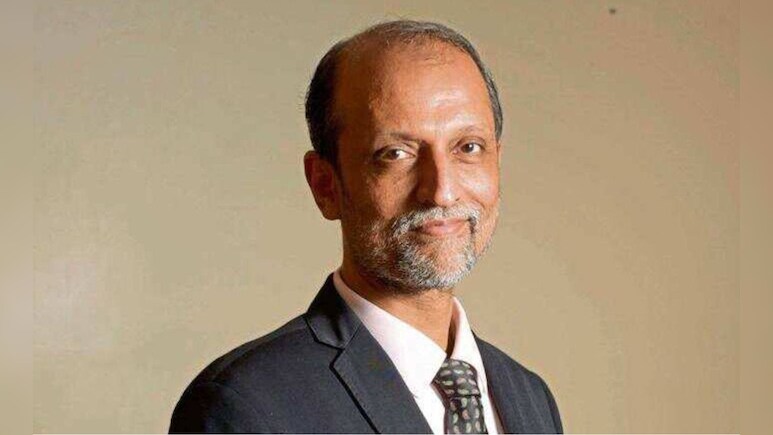
The writer is a noted economist.
Orissa POST – Odisha’s No.1 English Daily