
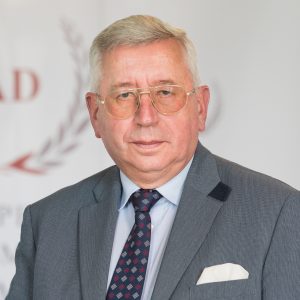
Krzysztof Płomiski
An update on the American-Israeli attack on Iran, launched on 28 February and carried out outside the framework of regional law, marks a new phase in the broader Middle East, with implications for global events. For the affected region, the war signals the beginning of the formation of a vaguely defined order, aligned with the American National Security Strategy and Israeli aspirations. It also lays the groundwork for a principle in which the US imposes the rules of the game in international relations—focused on implementation rather than political engagement—aimed at defending its weakening position as a global hegemon. For Israel, this war has long been considered necessary until the process of neutralising its hostile neighbours is completed, leaving behind either friendly or destabilised states, ideally under the approval of a regional power willing to assume partial responsibility for regional security from the US.
For the Islamic Republic, the ongoing war is existential in nature and marks the culmination of a conflict with the US and Israel that has persisted since the establishment of the regime in 1979. Iran’s relations with its Arab neighbours have historically been strained, marked by deep mutual distrust. The outbreak of war has undermined the Saudi-Iranian normalisation process that began in 2023 through Chinese mediation. The Gulf monarchies, while not fully expressing their usual positions, understand that the consequences of the attack on Iran cannot be openly articulated. This situation signals the weakening of regionalisation. Formal condemnations of violations of their territories and sovereign rights have also led to increased scrutiny and restrictions on missile and drone programmes. Iran has long been viewed as a destabilising force, posing a threat to Saudi Arabia, the UAE, Qatar, and other GCC states.
At times, like Iraq, it has been used as a strategic lever by the US in regional politics. It remains unclear, however, whether these countries are the true targets of the war. The US has once again been drawn into an armed conflict in the Middle East alongside Israel, without a clear plan, despite the likelihood of significant financial and domestic consequences, as well as a deterioration in its legal standing. The regional balance of power and the emerging security architecture are also at stake.
Meanwhile, multiple crises—from Libya and Sudan to Palestine, Lebanon, Syria, Yemen, Iran, and Afghanistan—remain unresolved, with several states on the verge of collapse. The Arab Gulf countries have traditionally relied on an American security umbrella, though these partnerships have weakened. There appear to be no viable alternatives that do not involve a security framework, including Pakistan or Turkey. The US is likely to push for a regional security pact involving Israel and an expansion of the Abraham Accords process.
As a result, attention may return to Saudi-Israeli normalisation and a broader package of Saudi-US agreements covering security, arms control, technology regulation, investment, and cooperation. However, GCC countries may also face increased oversight, particularly regarding their spending. Preliminary data from the first 30 days of the economic fallout suggest that Saudi Arabia’s revenues could decline by 5–6% in 2026, while the UAE may see a drop of 8–10%.
A comprehensive solution remains distant, and challenges are intensifying. A prolonged war with Iran—the most severe scenario—could trigger governance breakdowns, recession, and wider instability, spreading destabilising effects far beyond the region and affecting countries across Asia and Africa. The situation in the Middle East is also likely to worsen, including increased migration pressures and heightened instability in Lebanon and the Palestinian territories. Once de-escalation is achieved, practical steps will be necessary, including diversifying energy supply sources in case the crisis deepens. The ongoing situation requires careful monitoring, and government agencies should prepare detailed analyses of the conflict.
The writer is an expert, Centre for International Relations, Poland.
Orissa POST – Odisha’s No.1 English Daily