By Bhagirathi Jena
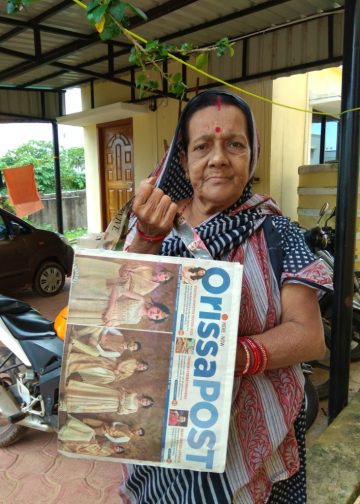
Somewhere in the world today, in a rural hinterland, on the foothills of a jungle, or on a mountainous terrain in a tiny hamlet, an elderly woman is whispering a story to her grandchild. A mother is singing a lullaby to make her child sleep. The language they use is one she inherited through a legacy that only the clan to which they belong can truly understand. It is a fragile, beautiful moment, but it is also a sombre countdown; in two weeks, that voice may be silenced forever.
Also Read


According to UNESCO, every 14 days, a language dies. This is the stark reality we confront as we gather for International Mother Language Day 2026 under the theme, “Youth Voices on Multilingual Education.”
This day is not merely a celebration of linguistic diversity; it is a stand against the systematic loss of identity.
When a language fades, we lose entire universes. We lose indigenous knowledge that could cure diseases, agricultural practices perfectly adapted to local ecosystems, and philosophical concepts that offer alternative worldviews. Yet, 40% of the global population still lacks access to education in a language they speak or understand. When we treat a mother tongue as a “barrier” rather than a foundation, we tell a child that their ancestors have nothing to contribute to the modern world. This exclusion is the root of systemic unfairness, silencing human potential before primary school even ends.
This is where the theme of 2026—“Youth Voices on Multilingual Education”—becomes our most powerful weapon. Language preservation is not an exercise in nostalgia; it is a matter of justice and equity. It requires fostering the political will to develop strategies that recognise the rights of all indigenous peoples. Fortunately, a tectonic shift is underway. Technology is emerging as a powerful tool for revitalisation, but the true power lies in the hands that wield it.
Enter the youth of 2026: the “Digital Fire-Keepers.” They are the generation taking languages once whispered in secret and shouting them across social media. They are using AI tools to translate under-resourced dialects, building digital archives for oral histories, and turning the digital desert into a vibrant forest of many voices. They understand that multilingual education is not about choosing between the global and the local, but about embracing both.
Praiseworthy initiatives are lighting the way. The National Education Policy 2020’s advocacy for mother tongue-based instruction is a landmark shift. In Odisha, the “Aame Padhiba Aama Bhasare” initiative will bring education to tribal children in their own languages, proving that a child learns best when rooted in their own culture. Institutions like KISS (Kalinga Institute of Social Sciences) have championed Mother Tongue-Based Multilingual Education. Kerala’s “Namath Basai” similarly demonstrates the transformative power of vernacular instruction in tribal areas wherein it has succeeded in retaining hundreds of tribal children in their online classes using their mother tongue as the language of instruction.
To the youth of today, we say: Your voice is the most sophisticated technology on Earth. Every time you speak your mother tongue, you are keeping a universe alive. Every time you teach it to the next generation, you are passing on a gift that transcends borders and time. By remaining rooted in the language of your blood while mastering the languages of the future, you are the living bridge between the elderly woman whispering her story and the generations yet to come.
You ensure that her story doesn’t end in two weeks. You ensure that it echoes for the next thousand years as a vital, irreplaceable part of our planet’s priceless linguistic heritage. Your voice is not just an echo of the past; it is the first word of the future.
The writer is a Senior Officer at the Parliament of India.