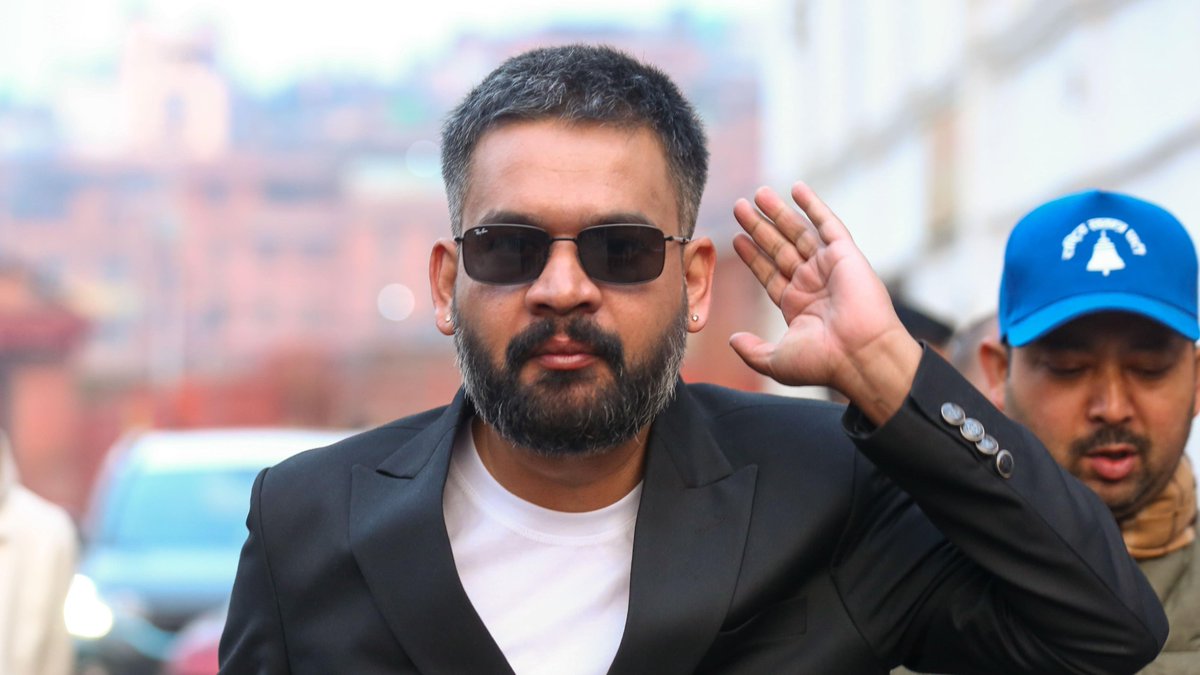
Nepal did what Bangladesh could not. Its Gen Z has transformed its pent-up anger against mainstream political parties and their leaders that exploded on the streets last September, into an unprecedented landslide victory for a fledgling four-year-old party – Rashtriya Swatantra Party (RSP). The results show Balendra Shah, the 35-year-old rapper turned politician and popular figurehead of the Gen Z revolution, is set to become Nepal’s next Prime Minister after his party – the RSP – won by an unprecedented margin securing a rare landslide victory in the first election since the youth-led protests during which dozens were killed and the former government was toppled.
Ecstatic over its success and the decimation of mainstream parties – the Nepali Congress (NC) and the Communist Party of Nepal (Unified Marxist–Leninist) (CPN-UML) – RSP leadership rightly stated their victory is a resounding “endorsement of the Gen Z movement.” The NC managed to win 17 seats while the CPN-UML won seven out of a total of 165 seats. On the other hand, the RSP won 122 seats, securing a landslide victory.
Also Read

In contrast, the Gen Z of Bangladesh had taken the lead in toppling the ruling government through movements on the streets, but they failed to keep the momentum and were trounced in the subsequent elections. Nepal’s RSP did not make the mistake Gen Z leaders in Bangladesh made as it declined to join an interim government despite having been invited to do so. Instead, it decided to focus on strengthening the party and contest subsequent elections. Their strategy paid off handsomely. The public frustration and anger at the political old guard are evident in the results, with veteran parties and their leaders losing vast numbers of seats. Balendra’s (popularly known as Balen) RSP, which was formed by a former TV executive, was handed a rare outright majority. One of the most dramatic moments of the election was the announcement of victory of RSP’s prime ministerial candidate, Balendra, who defeated four-time former Prime Minister KP Sharma Oli by a massive margin. In what many observers described as a “David versus Goliath” contest, Balendra secured 68,348 votes against Oli’s 18,734 in the eastern Koshi province constituency, long considered a stronghold of the veteran leader Oli.
Balendra’s victory symbolises the wider collapse of entrenched political dominance as voters rallied behind the newcomer promising generational change. Among the three former PMs, who contested the polls, only Pushpa Kamal Dahal known as ‘Prachanda’ managed to retain his seat. The 71-year-old Maoist leader won from Rukum East, a traditional stronghold of the former Maoist movement. Another former PM, Madhav Kumar Nepal lost to RSP candidate Rajesh Kumar Chaudhari. The electoral upset extended beyond individual leaders. Data from the Election Commission showed at least 11 office-bearers of the CPN-UML were defeated by RSP candidates, while several senior leaders of the NC also lost their seats.
Nepal’s Gen Z constitutes 40 per cent of the population and the youth were smouldering with anger at the established parties under whose rule corruption, unemployment and mismanagement of the country’s economy became the norm. They were also tired of the change and rotation of aged PMs representing mainstream parties. A strong anti-establishment mood, particularly among younger voters frustrated with corruption and political instability, led to the victory of the RSP which campaigned for ending corruption through clean electoral politics. It seems it has caught people’s imagination. Campaign issues such as good governance, anti-corruption measures, an end to nepotism and a generational shift in leadership dominated the political discourse.
It goes to the credit of Balendra Shah who set an example of clean politics as Kathmandu Mayor. A civil engineer by training, he rose to fame as a rapper whose tracks took aim at poverty, unemployment and corruption. In 2022, he won the mayoral election as an independent candidate. After winning a strong majority, he began the mammoth task of cleaning up the city, including removing unauthorised buildings and sorting out rubbish. But it was the youth uprising in September last year that elevated Shah to national prominence. After protests suddenly erupted, sparked by a ban on social media but driven by a larger frustration at lack of opportunities, the government hit back with force and 19 protesters were killed. The uprising spiralled into wider unrest and arson attacks that left 70 dead.
With the new government to be installed in the next few days, Nepal has embarked on a new political experiment in which the power of the youth, which stood against corruption and nepotism, plays a crucial role. The Kathmandu Mayor, poised to be the PM, will have to lead such a government by his own example.