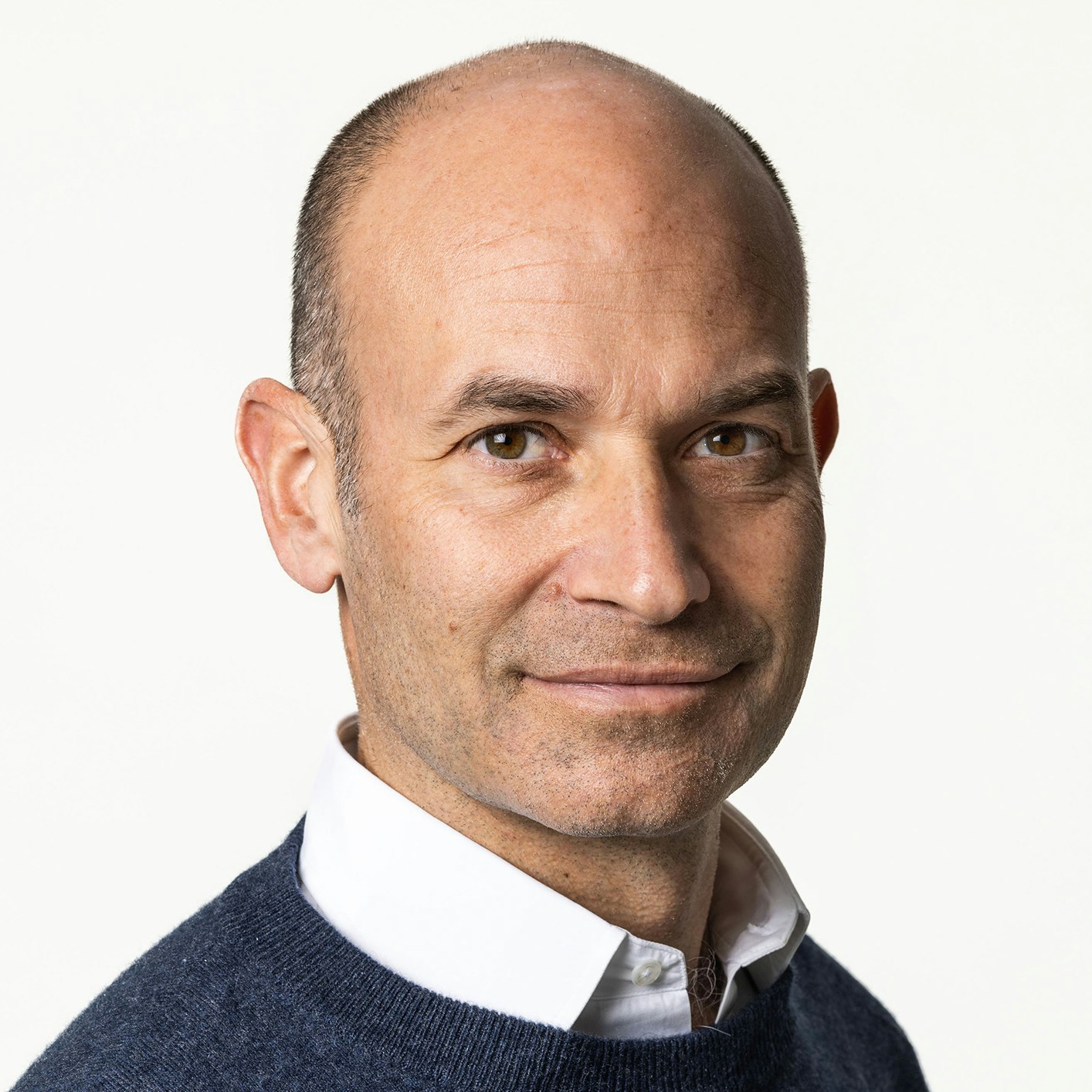
Daniel Sachs
Proliferating wars and shaky alliances are hallmarks of today’s brutal new political reality, one that would have been unimaginable a decade ago. But the geopolitical rupture currently underway is no accident of history, nor is it simply the result of strongmen, weak institutions, or a sudden loss of restraint. It mirrors something more fundamental: the social soil of our societies. Politics does not occur in a vacuum. It grows out of lived experience, reflecting whether people feel secure, respected, and optimistic about a shared future. For years, political volatility has been treated as a series of external shocks. But today’s reality is the culmination of choices made over many decades. Like all political shifts, this one has a supply side and a demand side.


Yet most commentaries on the new world disorder focus disproportionately on the supply side: authoritarian leaders and new doctrines, blocs, or geopolitical arrangements that might replace liberal democracy and the rules-based international order. While important, this perspective ignores the demand that is driving current political trends. Why are so many people willing to support authoritarian ideas and leaders? Polling shows that we are not dealing mainly with an ideological shift. Datapraxis’ research across eight European Union countries finds that only 23% of voters who switched to populist parties did so because they believed those parties had the best policies; the dominant motive was a more basic desire for change.
Similarly, the OECD’s most recent trust survey finds that only 39% of citizens across 30 member states trust their national government, and the Pew Research Center’s survey of 24 countries finds that 59% of respondents are dissatisfied with how democracy works. The data do not indicate declining support for democratic values or a sudden conversion to extreme ideas, but rather a slow loss of confidence that democratic institutions still offer a credible path to a good life. We have allowed inequalities to harden, social mobility to stall, and trust to erode, undermining social cohesion. This is the demand side, the desperation for change that authoritarianism exploits. When people’s trust in democratic institutions’ capacity to improve their lives erodes, they stop asking whether ideas are good and start asking whether anyone is even listening. Here lies the deeper danger. When the root causes are hidden by a complex mix of symptoms, polarization, democratic backsliding, and support for authoritarianism tend to be treated as isolated pathologies rather than as expressions of unmet social needs. Renewing our institutions to meet citizens’ legitimate demands is the central challenge of our time.
Democratic renewal begins not with constitutions or conferences, but with a more basic query: Is our democracy generating broad prosperity, promoting social mobility, and giving everyone a shared stake in society? If the answer is no, democracy risks becoming a hollow ritual. Democratic renewal is not abstract. It is about institutions that deliver, that invite participation rather than create distance, and that form pathways from voice to influence, from engagement to leadership, and from effort to improved chances in life. We need serious commitments to confront structural problems without ideological shortcuts. Open societies must be both economically dynamic and socially cohesive; both globally engaged and domestically rooted; and both principled and pragmatic. Reform cannot be left to politics alone. Since businesses play a leading role in shaping opportunity, they must serve as the trustees of open, democratic, institutionally stable societies. And philanthropic organizations must experiment and invest more in meeting needs that markets and governments are ill suited to address. Civil society can give people a voice and build trust. All these forces must be integrated into a credible social contract.
Institutions that are relevant, representative, and in service of citizens’ needs must be built on a foundation of broad er civic participation and new methods of deliberation that close the gap between people and politicians. The challenge is a generational one. Democracy becomes fragile when too many people feel it no longer belongs to them. Yet according to TUI Stiftung, only 57% of Europeans aged 16-26 unreservedly prefer democracy, while one in five would accept authoritarian government under certain circumstances. One reason for cautious optimism is increasing honesty and realism. As Canadian Prime Minister Mark Carney recently put it, “Nostalgia is not a strategy.” Faced with military escalations, tensions between longstanding allies, and state violence in American cities, we can no longer pretend that the old order will return. Once legitimacy is lost, it cannot be restored through rhetoric alone. The work ahead is slower, less theatrical, and more demanding. The pillars of an open society must be rebuilt. We need education systems that open real paths to mobility; economic models that foster dynamism while ensuring broad prosperity; institutions that treat citizens as participants, not problems; and leaders who tell the truth, even when it is uncomfortable. This is not about winning the next news cycle or launching the next grand framework. It is about restoring the basic conditions for democratic life, replacing cynicism with agency and protest with possibility. It is about fixing the broken pipeline between civic energy and public authority, between movements and mandates. That is how we approach our work at the Daniel Sachs Foundation, focusing on the intersection of social cohesion, institutional renewal, and responsible leadership. If there is one lesson the current moment offers, it is that open societies are not self-sustaining. They must be cultivated – patiently, collectively, and with humility. We are all embedded in the soil where our new political reality has taken root, and change will come from people who refuse to wait for permission to act. It falls to all of us, not only to politicians, to replace complacency with the hard, patient work of nurturing the demand for a different reality. The future will depend on whether enough of us choose to stop worrying about what comes next and start building it.
The writer is a Swedish business leader, investor, and philanthropist working at the intersection of finance, democracy, and inclusive growth.
Orissa POST – Odisha’s No.1 English Daily