
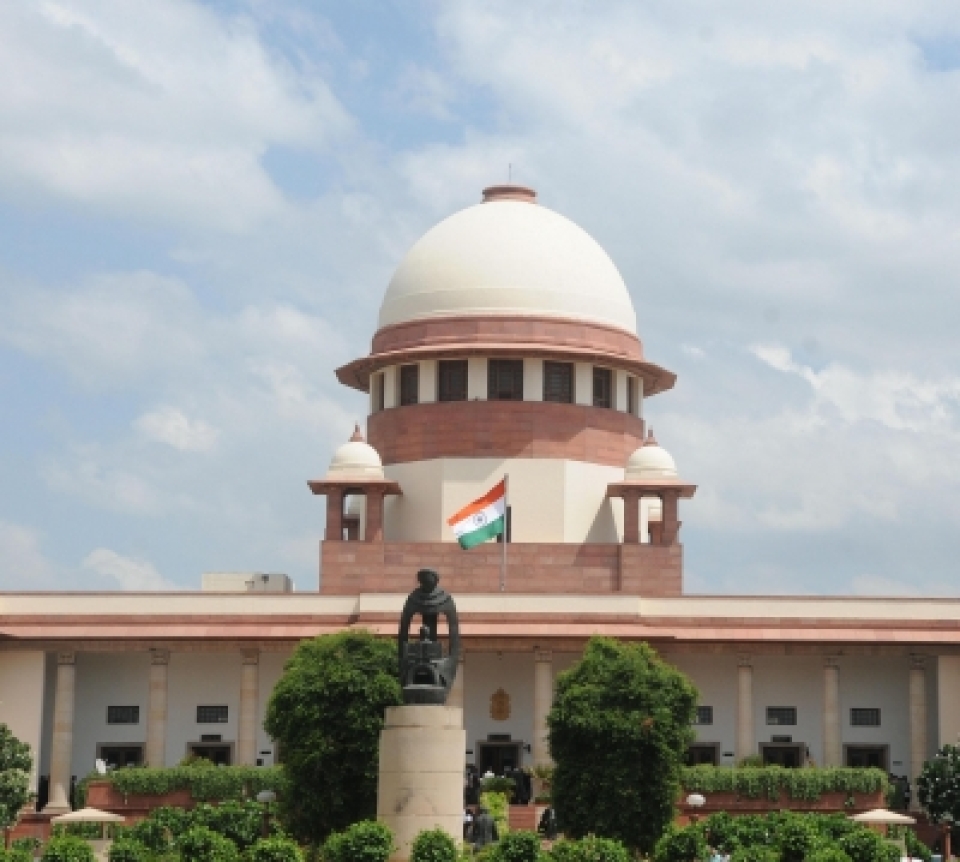
New Delhi: There is no question of gagging or restrictive live-streaming of court proceedings, the Supreme Court Friday said, as it flagged its concern over monetisation, advertising and misrepresentation through video clips of court hearings.
Expressing its displeasure, a bench of Chief Justice of India Surya Kant and Justices Joymalya Bagchi and V Mohana said the misuse of live-streaming of court hearings for commercial gain has caused immense damage to the institution.
“You have no idea the damage caused to the Bar and Bench and the institution as a whole,” the bench told advocate Mathews J Nedumpara, who conceded that he shares the video clips on social media handles.
Nedumpara said that he does not want restrictive live-streaming of court proceedings and also that the court should not restrict sharing of video clips.
“This court should be open. In the United States and the United Kingdom, there is no restriction. Judges should not be afraid of criticism, which will always be there,” he submitted.
CJI Kant told him, “All of us agree that there is no question of gagging anything. There is no question of restricting live-streaming.
“But this kind of misuse, as you have rightly pointed out… some people are extracting recordings for personal promotion, monetisation, advertising and misrepresentation. These are our areas of concern.”
The bench gave the Centre two weeks to file its reply and suggestions based on the inputs received from different high courts, and said that the court will issue necessary guidelines.
It said the earlier directions restricting YouTube channels from sharing court clips will remain in force till further orders.
It ordered, “The suggestions received from the parties and other stakeholders shall also be forwarded to the office of the Solicitor General of India. Time is granted to file a counter-affidavit along with a proposal prepared after taking into consideration the suggestions received so far from different high courts”.
The top court was hearing a plea seeking restraint on the unauthorised extraction and monetisation of videos of court proceedings.
Justice Bagchi said, “First, the Bar Council of India prohibits lawyers from canvassing for professional gain. Today, much of the uploading of court proceedings is being done for personal promotion and professional gain. It is a very serious issue.”
He said the judiciary is in the process of arranging sufficient storage space, whether cloud storage or otherwise, for preserving the data relating to live-streamed proceedings.
“That material can be made available through appropriate mechanisms, including RTI. But when we live-stream proceedings, because of technological limitations, there is no effective regulation preventing someone from extracting portions of live-streamed proceedings, uploading them on a personal profile and using them to canvass for professional benefits.
“This is completely contrary to the principles governing advocacy and the legal profession,” he said.
Senior advocate Gopal Sankaranarayanan, also appearing in the matter, flagged that distorted clippings of court hearings are uploaded on social media with misleading captions, which is very offensive.
Nedumpara argued that people have a right to know whatever happens in court.
Solicitor General Tushar Mehta, appearing for the Centre, said that despite court orders, some YouTube channels are still uploading courtroom proceedings.
“I do not think there should be any opposition to directing those YouTube channels, which are still uploading court proceedings, to stop doing so,” he said.
CJI Kant said, “There is commercial exploitation of court proceedings, which are meant for public viewing, for public understanding of the proceedings and for making the public better informed about what happens in court. Some channels are exploiting these proceedings commercially.
“Do you think we will not prohibit them? We are only here to lay down guidelines that court proceedings are not meant for commercial exploitation.”
The CJI said anything meant for public good should not be allowed to be commercially exploited. That would defeat its very purpose, he added.
The bench said that misquoting or misrepresenting judges is not the purpose of live-streaming, and the reporting must be fair and accurate, and there is a way to deal with such misuse.