

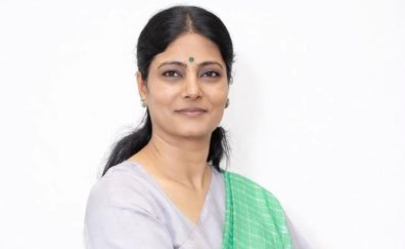
Bhubaneswar: Union Minister of State for Health & Family Welfare Anupriya Patel Saturday said that non-communicable diseases (NCDs) are a major challenge in India and urged healthcare professionals to focus on prevention and early detection.
Patel said this while addressing the 6th Convocation of AIIMS Bhubaneswar.
“The healthcare professionals must focus not only on treatment but also on prevention and early detection as NCDs are a major challenge before the nation,” she said.
The NCDs or chronic diseases mostly originate from behavioural factors like unhealthy diets, physical inactivity, and alcohol and tobacco abuse, which often lead to metabolic changes such as high blood pressure and obesity.
Also Read: AIIMS Bhubaneswar completes 100 successful robotic surgeries
The Union minister highlighted India’s achievement in launching the National Programme for Prevention and Control of Non-Communicable Diseases (NP-NCD), which provides nationwide free screening for individuals aged 30 years and above to curb conditions like diabetes, hypertension, and common cancers.
It is the world’s largest population-based screening programme, she said.
Patel also highlighted the role of the Ayushman Bharat Digital Mission (ABDM) in strengthening India’s healthcare ecosystem through digital health initiatives.
She said that the establishment of 1.84 lakh Ayushman Arogya Mandirs is an achievement which serves as the first point of contact for comprehensive primary healthcare services within communities.
In her convocation address, Patel congratulated the graduating students and encouraged them to dedicate themselves to ethical, compassionate and patient-centric healthcare.
Highlighting the values associated with the medical profession, the minister said, “The white coat (of doctors) is a symbol of trust, responsibility, commitment and immense privilege. Wear it with confidence and compassion.”
Patle said India’s healthcare sector has undergone a major transformation with the expansion of premier medical institutions in the country.
The number of AIIMS has increased from 7 to 23, which has strengthened access to quality healthcare and medical education across the nation, she pointed out.
Apart from this, she said, there has been a remarkable expansion of medical education infrastructure in the country as India presently has 820 medical colleges, around 1.29 lakh medical seats and approximately 85,000 postgraduate seats.
Patel said doctors graduating from AIIMS carry a distinctive identity, and described them as “Doctor+” because of the “exceptional and unparalleled exposure” they receive through world-class infrastructure, advanced facilities, research opportunities, expert mentorship and, the values of compassion and empathy instilled during their training.
Odisha’s Health and Family Welfare Minister Mukesh Mahaling lauded the role of AIIMS Bhubaneswar in strengthening healthcare delivery in the state and eastern India.
He appreciated the institute’s contribution to medical education, specialised healthcare services and research, and extended his best wishes to the graduating students for their future endeavours.
A total of 684 students received their degrees during the convocation.
The graduating batch comprised 192 MBBS students, 163 MD/MS students, 60 DM/MCh students, 17 Post-Doctoral Fellows (PDF), 4 PhD scholars and others.
In recognition of outstanding academic performance, 61 Gold Medals were presented to 32 meritorious students by Patel.