By Arindam Ganguly, OP
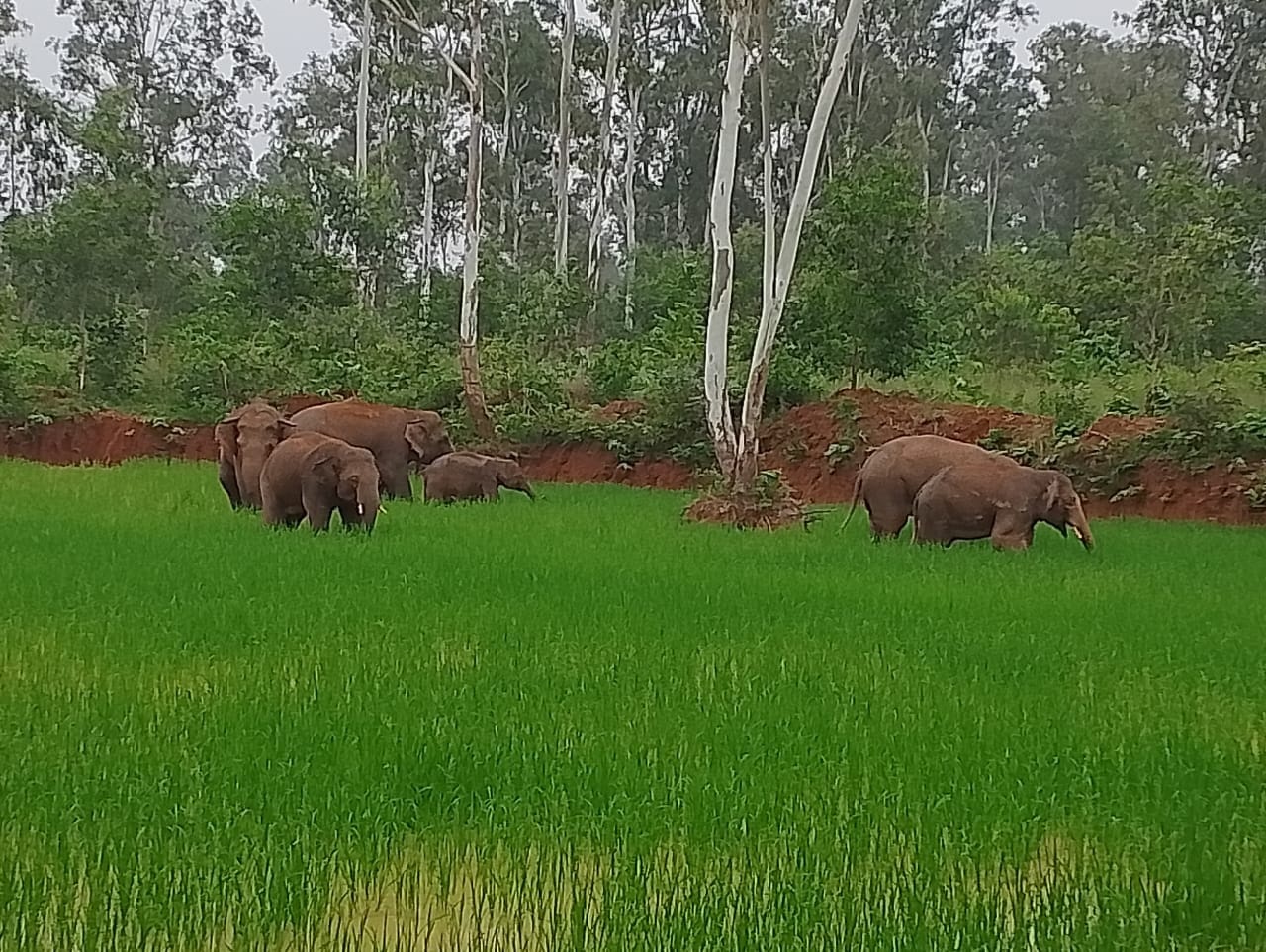
Bhubaneswar: Odisha may have managed to keep its wild elephant population broadly stable for decades, but a more difficult conservation question is now staring the state in the face; does Odisha still have enough healthy, connected habitat to accommodate its elephants?


The latest state elephant census puts Odisha’s wild elephant population at 2,103, while a Centre-backed study has estimated that the state can accommodate around 1,800 elephants. The gap has renewed attention on Odisha’s ecological carrying capacity at a time when mining, roads, railways, power infrastructure, agriculture and human settlements are increasingly fragmenting elephant landscapes.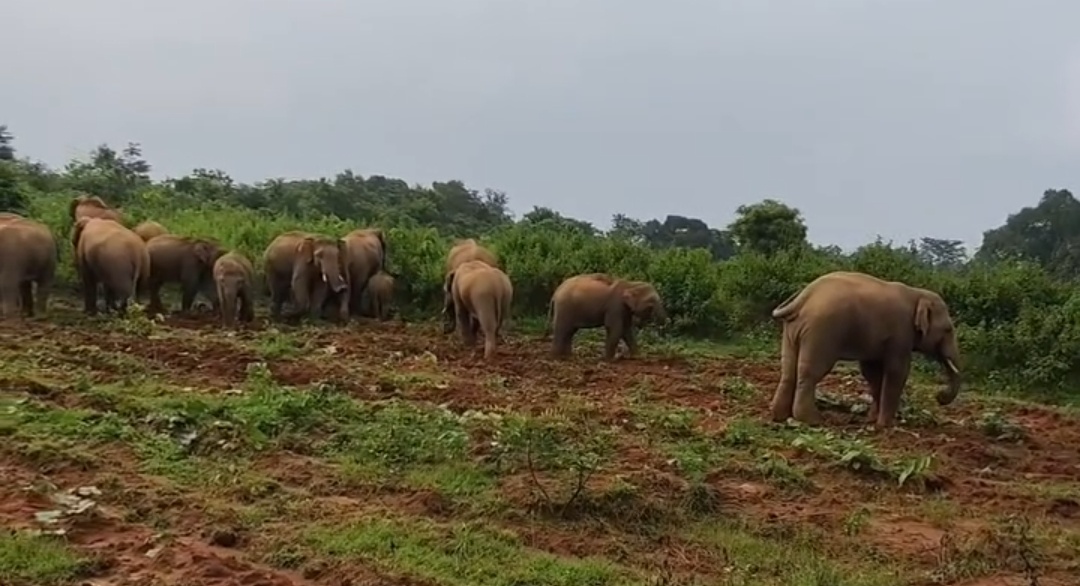
The question has become even more complicated after the Wildlife Institute of India’s (WII) first nationwide DNA-based elephant population assessment estimated Odisha’s population at 912—less than half the state Forest Department’s figure.
The distinction is important because elephant conservation is no longer only about counting animals. It is increasingly about whether forests, corridors, rivers and feeding grounds remain sufficiently large, connected and productive to support elephants while limiting conflict with people.
As Odisha observes World Elephant Day, Orissa POST spoke to wildlife experts, conservationists and senior forest officials to examine the larger question; irrespective of which population estimate is accepted, does the state have enough safe and connected habitat for elephants to survive without increasing conflict with people?
 Environment and wildlife expert and working president of the Orissa Environmental Society (OES), JK Panigrahi, said Odisha’s elephant population has remained remarkably stable over several decades, but that stability should not necessarily be interpreted as evidence that the state has reached its natural ecological ceiling.
Invoking historical accounts, Panigrahi said, “There was once an abundance of war elephants in the Kalinga region, as evidenced by ancient and medieval texts, some of which mention kings possessing elephant forces numbering in the lakhs.”
“However, modern estimates indicate that Odisha’s elephant population has remained relatively stable over the past five decades. The state recorded 2,044 elephants in 1979, while the 2024 census estimated 2,098 elephants in the summer count and 2,103 in the winter count,” Panigrahi said.
The 1979 figure of 2,044 is documented in an assessment of Odisha’s historical elephant censuses, while the Forest department’s 2024 summer and winter counts stood at 2,098 and 2,103, respectively. Panigrahi said habitat loss caused by industrialisation, mining and deforestation has fragmented historical elephant corridors and restricted the species’ movement.
“Besides habitat loss resulting from industrialisation, mining and deforestation, which have fragmented historical migratory corridors, several human-induced threats continue to constrain population growth,” he said.
Electrocution, train and road accidents, poaching and poisoning have contributed to elephant mortality, while forest degradation has reduced the availability of food, water and secure habitat.
“Taken together, these factors appear to have prevented any substantial increase in elephant numbers,” he said. According to Panigrahi, the state could potentially support more elephants if habitat quality were restored, corridors secured and human-induced mortality reduced.
 Former PCCF Susanta Nanda said Odisha’s elephant crisis can no longer be understood simply in terms of elephant numbers.
“The state’s elephant crisis may no longer be only about protecting elephants. It is increasingly about finding enough safe space for elephants and people to survive together,” he said.
According to Nanda, Odisha has witnessed a conservation paradox. Despite decades of protection, the conventionally counted elephant population has broadly remained within the range of about 1,800–2,100 for several decades. An earlier carrying-capacity assessment by the Asian Nature Conservation Foundation had suggested a desirable population of roughly 1,700–1,800 elephants, he said.
But Nanda said the larger concern is the fragmentation of the landscape.
“Forests that once formed continuous elephant country are increasingly fragmented by mines, roads, railways, power lines, agriculture and settlements,” he said. “A forest may still have enough food for elephants, yet the larger landscape may have run out of safe space for them.” He said Odisha must distinguish between ecological carrying capacity and social carrying capacity.
“Ecological carrying capacity is the number of elephants a habitat can sustain based on food, water and other ecological resources. Social carrying capacity, on the other hand, refers to the level of human-elephant interaction that communities can tolerate without unacceptable loss of life, livelihood and property,” Nanda said.
Odisha identified 14 elephant corridors in 2010 to facilitate safe movement between fragmented forest habitats. Together, the corridors cover more than 870 sq km and extend for roughly 420.8 km.
Nanda said corridor protection must become a central component of elephant conservation. “Corridors must be restored, electrocution hotspots eliminated and villages given real-time warning of approaching elephants,” he said. He also suggested a more specialised conflict-management system.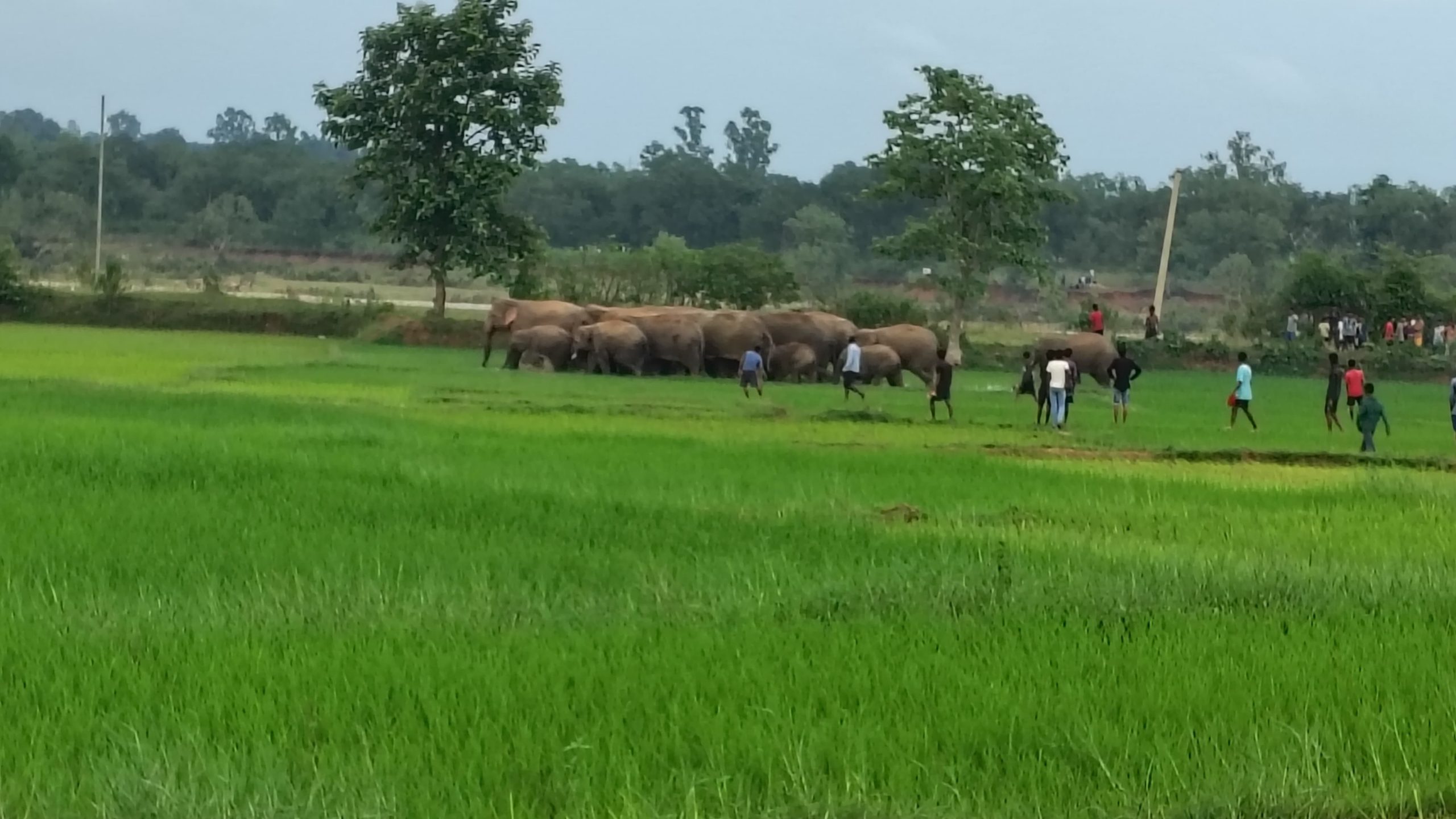
“Chronic high-conflict bulls should be individually identified, monitored and radio-collared. Where repeated dangerous behaviour becomes unmanageable, capture must remain a legitimate last resort,” Nanda said. He advocated specialised Kumki-based Elephant Conflict Response Centres, supported by trained mahouts, veterinarians, drones, AI-enabled cameras, telemetry and rapid-response teams.
Nanda also questioned the basis for directly comparing the state’s conventional census figure with the WII’s DNA-based estimate.
“The DNA samples were collected from only a few notified forest areas, making the figure an estimate. The state, on the other hand, conducted an extensive head count across both forest and non-forest areas in two different seasons, supported by photographs and drone surveillance, before arriving at its estimate,” he said.
 Wildlife expert Sanjukta Basa said the relationship between elephants and forests is inseparable. “Elephants and jungles are dependent on each other, as both play an important role in each other’s survival,” she said.
According to Basa, increasing pressure on forest areas is one of the biggest threats facing elephants. “The problem is not simply the number of elephants; it is the shrinking and degradation of their habitat. Forests are being affected by tree felling, mining and large infrastructure projects such as highways, railways and canals. Forest fires also create serious problems for elephants,” she said.
Bamboo, one of elephants’ important food sources, is also being illegally removed from forests, further reducing food availability, she added. “Like humans, elephants can also suffer from stress, and they are currently facing tremendous pressure. When their natural forest habitat is destroyed and their space is reduced, it affects their immunity and overall health,” Basa said.
 Upasana Ganguly, Senior Manager and Programme Head, Wildlife Corridor Project, Wildlife Trust of India (WTI) said, “Ensuring the conservation and safety of elephants requires not only protecting their habitat but also maintaining connectivity between protected areas. The movement and dispersal of wildlife between forests and protected areas must be secured so that elephants can move freely across their traditional ranges. Inter-state coordination is equally important to ensure that elephant movement is not restricted by administrative boundaries and that they have access to larger, connected landscapes, as elephants are wide-ranging animals that naturally travel long distances.”

Wildlife filmmaker and founder of Voice for Asian Elephants Society (VFAES), Sangita Iyer, said “Claims that Odisha’s elephant population is ‘growing’ must be examined with extreme caution, particularly when they are being invoked against the backdrop of staggering elephant mortality,” she said.
“The Wildlife Institute of India’s latest DNA-based national elephant population assessment estimates that Odisha has approximately 912 elephants—dramatically lower than the state government’s own figure of 2,103.”
Iyer said the methodological debate should not distract from the larger conservation issue.
“Whatever debate may continue over methodology, one fact should be beyond dispute: population estimates must never become an excuse to normalise preventable elephant deaths,” she said.
“Odisha has approximately 47 million people and, according to the WII estimate, fewer than 1,000 elephants. Yet somehow, elephants continue to be portrayed as though they are the population problem.”
She said the consequences of human land-use decisions should not be projected onto wildlife.
“We have to stop projecting the consequences of human actions onto wildlife. Elephants are not suddenly invading our world; we have been steadily dismantling theirs,” Iyer said.
“Their ancient habitats and migratory corridors are increasingly fragmented by encroachment, mining, roads, railways and other infrastructure. Too often, land-use decisions are made without sufficient regard for ecological connectivity or the cumulative impact on wildlife.”
Iyer said India’s demographic pressure makes science-based land-use planning essential.
“India supports roughly 1.4 billion people on a landmass approximately one-tenth the size of Africa, which supports a comparable human population. That extraordinary demographic pressure makes thoughtful, science-based land-use planning not optional, but essential,” she said.
“Development itself is not the problem. Development without ecological foresight is.”
She said habitat fragmentation and poorly planned development must be addressed before the resulting conflict is simply labelled human-elephant conflict.
“Until we are willing to confront habitat fragmentation, poorly planned infrastructure, encroachment and the destruction of elephant corridors, we will continue calling the consequences ‘human-elephant conflict’—when much of that conflict has been created by human choices,” she said.
“We cannot solve a problem by denying its root causes. And we certainly cannot use disputed population numbers to explain away the continuing loss of one of India’s most important and endangered species,” Iyer said.
 Wildlife activist Akash Ranjan Rath said Odisha is at a critical ecological crossroads, with a growing population, rapid economic expansion and increasing pressure on its already limited natural resources. He stressed the need for authentic, scientifically reliable and regularly updated environmental data on issues such as declining dense forest cover, habitat degradation, biodiversity loss, noise pollution, natural-resource depletion and the fragmentation of wildlife corridors.
Rath said a transparent, integrated geospatial database covering these sectors would allow policymakers, researchers, conservation agencies and local communities to make informed decisions and monitor environmental changes effectively.
He also called for Environmental Impact Assessments (EIAs) to be conducted independently, honestly and transparently, with meaningful participation from local communities, credible NGOs, independent experts and experienced field practitioners.
He said local communities generally have a positive attitude towards elephants, but lack adequate knowledge of practical conservation and conflict-mitigation measures. Rath believes Odisha still has the ecological potential to remain a major stronghold for elephants and support diverse wildlife.
PCCF (Wildlife) Prem Kumar Jha said the government’s focus is on finding a sustainable balance between elephant conservation and human development.
Jha said, “The study by Indian Institute of Science indicates that Odisha can accommodate a maximum of around 1,800 elephants. We are looking at sustainable, long-term solutions to ensure peaceful coexistence between humans and elephants. Our focus is on finding a balance where elephant conservation and human development can go hand in hand,” Jha said.
On the WII study, Jha said the sampling methodology should be taken into account while interpreting the estimate.
“The DNA samples were drawn from a few notified forested areas only. It is an estimate,” he said.