
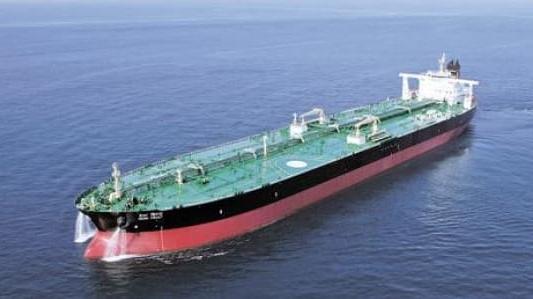
New Delhi: A foreign-flagged vessel carrying oil for India has managed to cross the war-hit Strait of Hormuz to reach Mumbai, while another large ship is likely to reach Indian ports in a day or two, according to vessel tracking data and industry sources.
Liberia-flagged Shenlong, carrying around 1 million barrels of Saudi Arabian crude oil, arrived at Mumbai port Wednesday evening. The other tanker – an Indian-flagged VLCC or a very large crude carrier – with around 2 million barrels of Iraqi crude too reached Indian waters and is now headed to Paradip in Odisha.
Shenlong, a Suezmax tanker considered a large carrier, began loading crude oil from Saudi Arabia’s Ras Tanura port March 1 – a day after the West Asia conflict started with the US and Israel attacking Iran.
The tanker sailed from the port March 3, around the time the conflict widened with Tehran’s retaliatory attacks on US bases in neighbouring countries and Israel, as well as the shutdown of the Strait of Hormuz – a narrow sea route between Iran and Oman through which about 20 per cent of global oil and more than half of India’s oil imports are shipped from producers, such as Saudi Arabia, Iraq and the United Arab Emirates.
The vessel carrying 1,35,335 tonnes or around 1 million barrels of crude transmitted its last signal in the Strait March 9 before its Automatic Identification System (AIS) was switched off, the ship tracking data showed.
This was perhaps the time the vessel was transiting through the most critical part of the strait.
The vessel reappeared on the tracking system a day later, before it docked at Mumbai port Wednesday.
Industry sources said the ship has started to discharge its oil.
The other tanker too, has reached Indian waters and is now on the way to Paradip, which houses Indian Oil Corporation’s (IOC) refinery.
Tankers’ movement through the Strait has been effectively stopped as the West Asia conflict widened. Some reports suggest that Iran was allowing only its own oil tankers – headed to China – to cross the Strait.
New Delhi has been engaged with Iranian authorities for the safety of shipping and energy supplies. Unconfirmed reports say Iran may have agreed to allow Indian flagged vessels.
At the daily inter-ministerial briefing on the West Asia crisis that has hit India’s fuel supplies, Ministry of External Affairs (MEA) spokesperson Randhir Jaiswal refused to say if the reports were correct or false.
India’s “External Affairs Minister and the Foreign Minister of Iran have had three conversations in recent days. In the last one, they discussed issues pertaining to the safety of shipping and India’s energy security. Beyond that, it would be premature for me to say anything,” he said.
India, the world’s third-largest crude importer, sources 88 per cent of its oil needs from abroad. It consumes 5.8 million barrels per day, of which 2.5-2.7 million barrels came from West Asian countries like Saudi Arabia, Iraq, and the UAE via the Strait of Hormuz.
The choke point also carried 55 per cent of India’s cooking gas (LPG) and 30 per cent of liquefied natural gas (LNG), used for power, fertilisers, CNG, and household cooking.
The conflict has largely halted shipments through the strait, forcing India to seek alternate crude sources from Russia, while LPG and LNG supplies remain constrained.
The impassable Strait of Hormuz has created shortages that are shuttering a variety of commercial establishments, from restaurants and crematoriums to ceramic units, fertiliser plants and even a canteen in the Delhi High Court.
In response, the government has prioritised household cooking and transport fuels, directing refineries to maximise LPG output by cutting petrochemical feedstock streams and barring units, including Reliance Industries Ltd’s export-oriented plants, from using LPG as feedstock.
Industrial LNG and LPG deliveries have been curtailed to protect more than 33 crore households, which account for roughly 86 per cent of LPG consumption.
To manage demand, cooking gas prices were raised for the first time in 11 months, and the minimum interval between subsidised refills was extended from 21 to 25 days for urban users and 45 days for rural consumers.
The opening of the Strait will provide relief to India in sourcing energy supplies.
At the briefing, Rajesh Kumar Sinha, Joint Secretary, Ministry of Shipping, said 28 Indian vessels were struck because of the closure of the Strait of Hormuz. 24 of them, with 677 seafarers on board, are on the west side of the strait, and four with 101 seafarers are on the east side.
“All Indian vessels and crew are being actively monitored for their safety,” he said.
Asked about India-bound vessels crossing the Strait of Hormuz, he said, “I do not have any authentic information”.
Orissa POST – Odisha’s No.1 English Daily