
PROF CHANDRAMANI KHANDA
August 24, 1962, marked a historic milestone in Odisha’s journey of agricultural education, research and technological development with the establishment of the Odisha University of Agriculture and Technology (OUAT).
As the university completes 65 years, its journey represents far more than the growth of an educational institution.
It reflects a continuing partnership with Odisha’s agriculture, farmers, rural economy and human-resource development. As the second-oldest agricultural university in the country, OUAT has made significant contributions to agriculture and allied sectors.
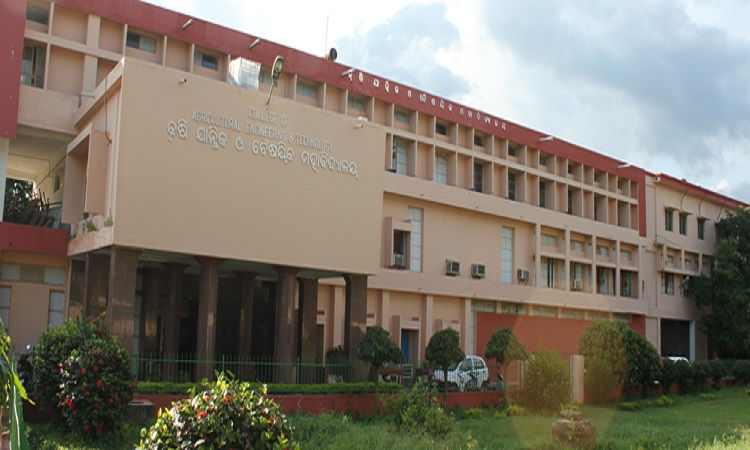
Today, its academic and research network includes 10 colleges, postgraduate programmes, research centres, Krishi Vigyan Kendras, agro-polytechnic centres and several national coordinated research projects.
Together, these institutions have created a strong foundation for education, research, technology generation and extension.
The university’s greatest strength has always been its human resource. Over the decades, OUAT has produced more than 22,025 graduates, 9,280 postgraduates and 542 PhD scholars.
Its alumni are serving in agriculture, research, education, administration, entrepreneurship and development across the country and abroad.
Through generations of teachers, scientists, agricultural officers, researchers and policymakers, OUAT has made a lasting contribution to the development of Odisha. Its research achievements are equally significant.
The university has released 217 varieties of different crops and secured six patents and eight designs. Improved varieties of rice, oilseeds, ginger, turmeric, vegetables and other crops, along with technologies in crop production and plant protection, have emerged from its research programmes.
Its decentralised research system, spread across 10 agro-climatic zones through eight Regional Research and Technology Transfer Stations, four sub-stations and seven Commodity Research Stations, enables research to respond to diverse agricultural conditions.
OUAT has also played a vital role in connecting research with farmers. Through 31 Krishi Vigyan Kendras and other extension mechanisms, improved technologies, scientific farming practices, training and farmer-oriented programmes are reaching communities across Odisha.
This research-extension linkage remains one of the university’s most important strengths. OUAT is now entering another significant phase of expansion.
During its 65th Foundation Year, steps have been taken to establish new institutions, including Colleges of Agriculture in Mayurbhanj and Balangir, a College of Veterinary Science and Animal Husbandry at Chiplima and a College of Fisheries at Sonpur.
Such expansion will broaden access to agricultural and allied education while strengthening local human resources.
The National Education Policy (NEP) 2020 offers OUAT an important opportunity to redefine its educational and research ecosystem.
Its emphasis on multidisciplinary, flexible, research-oriented and innovation-driven education aligns closely with the emerging needs of agriculture.
OUAT already possesses the institutional foundation required to translate this vision into meaningful action.
In this transformation, the College of Basic Science and Humanities can play a strategic role.
It can become a knowledge bridge connecting basic sciences with agricultural applications.
Chemists and agricultural scientists can collaborate in soil and nutrient management; biologists and biotechnology experts can work on crop improvement, biofertilisers and biological control; physicists and computer scientists can contribute to sensors, digital agriculture and smart farming; while mathematicians and data scientists can develop predictive models and agricultural analytics.
Thus, basic sciences should not be viewed merely as supporting agriculture but as a fundamental engine of future agricultural innovation.
The research agenda must also evolve from ‘publication to impact’. Research excellence should be measured not only through publications but also through patents, technologies, prototypes, start-ups, industry partnerships and, most importantly, measurable improvements in farmers’ livelihoods and incomes.
The challenges ahead are complex. Climate variability, emerging pests and diseases, natural-resource pressures, changing nutritional requirements, technological disruption and the demand for sustainable and profitable agriculture require new approaches to education and research.
OUAT must therefore continuously reinvent itself while preserving the values and strengths developed over six and a half decades.
The future identity of OUAT should extend beyond that of an agricultural university alone. It should evolve into an integrated knowledge institution bringing together agriculture, science, technology, humanities and innovation.
Greater collaboration among disciplines, industries, institutions and farmers can create a connected ecosystem in which laboratories, classrooms, research stations and farms work together.
Young researchers and students should be encouraged to identify real agricultural prob lems and develop scientific, technological and entrepreneurial solutions.
With its extensive institutional network across Odisha, OUAT is uniquely positioned to lead this transformation.
As OUAT enters its 66th year, its 65-year journey stands as a testimony to the transformative power of agricultural education, research and extension.
The next chapter should build on this glorious legacy while embracing interdisciplinary collaboration, innovation and impact.
By strengthening the bridge between basic sciences and agricultural applications, OUAT can create new knowledge, develop practical solutions and contribute even more effectively to a sustainable, resilient and prosperous agricultural future for Odisha and the nation.
Dean, Post Graduate Faculty, OUAT