
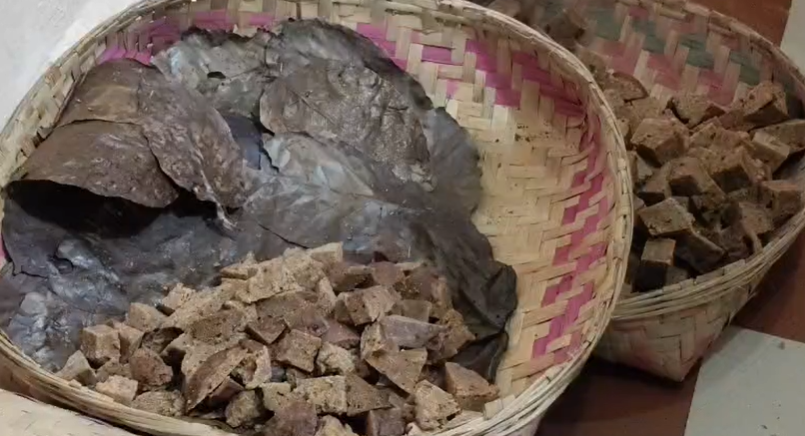
Puri: As Puri gears up for Bahuda Yatra, the final leg of the Rath Yatra, one offering holds a special place in the hearts of devotees and Odisha’s culinary heritage: poda pitha.
According to tradition, Lord Jagannath, Lord Balabhadra and Goddess Subhadra are offered poda pitha at Mausi Maa Temple during their return journey from the Gundicha Temple to the Shree Jagannath Temple. Devotees believe Mausi Maa welcomes the sibling deities with the beloved sweet as a gesture of motherly love before they continue their return journey.
The ritual is deeply rooted in Jagannath culture and has been observed for generations. Preparations begin on Hera Panchami, when the temple kitchen starts making the special offering. Once the three chariots halt in front of the Mausi Maa Temple on Bahuda Yatra, the sacred offering is presented to the deities as part of the centuries-old tradition.
Also Read : Bahuda Yatra: Gajapati Maharaja of Puri performs ‘Chhera Pahanra’ ritual
Poda pitha is prepared using ingredients such as rice, black gram, jaggery, grated coconut, black pepper, cardamom and ghee. In some traditional recipes, chhena, sugar, raisins, cloves and pistachios are also added to enrich its flavour. Despite its name, which literally translates to “burnt cake,” the delicacy is not charred. Instead, it is carefully cooked with ghee, giving it its characteristic aroma, soft texture and rich taste.

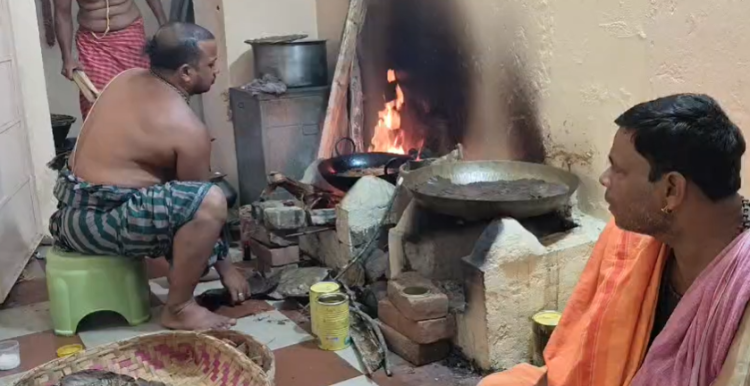
During the ritual, three earthen pots containing the sacred poda pitha are carried onto the three chariots and offered to the deities by temple servitors. The offering remains one of the most anticipated rituals of Bahuda Yatra, drawing thousands of devotees who eagerly witness the ceremony.
While Rath Yatra celebrates the divine journey of Lord Jagannath, Bahuda Yatra reminds devotees that every homecoming is welcomed with love and warmth. Poda pitha, with its rich flavour and enduring legacy, continues to embody that spirit, making it one of the sweetest symbols of Odisha’s devotion to the Lord.