By Ajit Ranade
India’s Election Commission was established 25 January, 1950, a day before India became a republic. This was a remarkable act of foresight. In a democracy, political parties compete for the support of the electorate to earn the right to govern. The contest must be free, fair and without fear or coercion. An independent EC is essential to ensuring this. Over seven decades, the Commission acquired a formidable reputation for impartiality and professionalism. That reputation is a precious national asset, which must be protected.


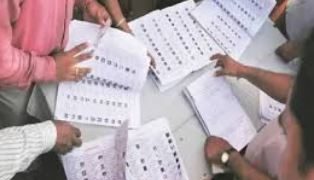
The controversy surrounding the Special Intensive Revision (SIR) of electoral rolls must be viewed in this larger context. There is no disagreement about the need for clean and accurate voter lists. People die, migrate, change addresses, and new voters become eligible. Duplicate and ineligible entries must be removed.
But the methods employed in the present exercise have raised serious questions about the rights of genuine voters, the burden imposed on ordinary citizens, and the safeguards against wrongful exclusion. Consider first the two kinds of errors. One is wrongful inclusion. The other is the exclusion of someone who is eligible. Both compromise electoral integrity, but their consequences are asymmetric. A wrongly included name may or may not result in an illegal vote. An eligible citizen whose name has been wrongly deleted is certainly prevented from voting.
Hence the process must attach particular importance to preventing wrongful exclusion. The second issue concerns the burden of proof. Once a person’s name has been included in the electoral roll after verification, there is a presumption of eligibility. If the authorities subsequently question that eligibility, they must have specific grounds and follow the prescribed procedure.
Yet SIR appears to have reversed this principle. Citizens who have voted for years are being asked to establish their eligibility afresh, sometimes with reference to electoral records dating back to 2002 or 2003. This is unfair.
The late Jagdeep Chhokar, co-founder of the Association for Democratic Reforms, drew attention to this reversal. His concern was that the burden of proving eligibility had effectively shifted from the EC to the citizen. This is particularly troubling when the original documents may be incomplete, inaccurate or simply unavailable.
Administrative records maintained by the State should not become an obstacle that citizens must repeatedly overcome. The third issue is the unequal burden imposed by SIR. The exercise has disrupted the lives of millions who have had to locate documents, establish family relationships or attend verification hearings.
It has even invited comparisons with demonetisation! The comparison is imperfect, but the distribution of costs is relevant. Those with stable residences, education, digital access and ready docu mentation fi nd compliance relatively easy.
Migrant workers, daily-wage earners, elderly people and women whose names or addresses have changed face much greater difficulties. The fourth concern is the increasing reliance on technology. Electoral databases contain errors of spelling, transliteration, age and family relationships.
Comparing names from older Devanagari records with Roman-script versions in later databases can produce erroneous mismatches. Indian names are written in many scripts, and the same name can have several legitimate Roman spellings.
A discrepancy flagged by an algorithm may be readily resolved by a human officer familiar with local circumstances. Such discrepancies must therefore trigger verification rather than deletion. The Commission should disclose the criteria used by its software, independently test error rates, and ensure that no adverse decision rests solely on automated matching. The fifth issue involves objections to voter registration.
Form 7 allows objections by third parties. Reports of individuals filing dozens or even hundreds of objections raise obvious concerns about possible misuse. The Commission has tried to curb bulk filing of Form 7, with a limit of ten per individual. This is a useful corrective, but it also invites questions about the earlier safeguards.
How many bulk objections were received? Were they properly verified? What happened to objections found to be false or malicious? More fundamentally, an objection is only an allegation. The registered voter must receive the prescribed notice and a meaningful opportunity to be heard before an adverse decision.
This is the elementary principle of natural justice. Where names have been deleted without following these requirements, the cases must be investigated and remedied. The integrity of the electoral process depends on an auditable record of notices, hearings, reasons for deletion and appeals. The Supreme Court’s judgment of 27 May, 2026 upheld the legal validity of SIR.
It recognised the EC’s authority to conduct a limited inquiry into citizenship for determining electoral eligibility, while reserving formal citizenship adjudication for the competent authority under the Citizenship Act. The Court also clarified that deletion from the electoral roll does not extinguish citizenship.
But having procedural safeguards is very important. The Court directed that cases of deletion on citizenship grounds be referred to the competent authority within four weeks. More than four months have elapsed. But compliance is still a dark secret.
While upholding SIR, the Court could also have laid down more explicit and enforceable protections against wrongful exclusion, including notice, timely hearings, independent review and restoration before polling day. The constitutionality of the exercise cannot be separated from the constitutional rights of those affected by its implementation.
What should happen now? The Commission should publish constituency-wise data on deletions, objections, notices, hearings, appeals and restorations. Every deletion should carry recorded reasons and proof of due process.
Algorithmically identified discrepancies should undergo human verification. An independent audit of the software and procedures should examine systematic errors and possible misuse. Above all, mechanisms for restoration must operate quickly enough to ensure that eligible voters are not deprived of their franchise.
The EC’s authority rests ultimately on public confidence. As Chhokar observed, trust must be earned through conduct. Like Caesar’s wife, the Election Commission must be above suspicion. It should welcome scrutiny and answer legitimate questions, especially when millions of voting rights are involved.
Political parties should compete for the votes of citizens. They should have no opportunity to influence which citizens get to vote. A clean electoral roll is one that protects every eligible citizen’s right to vote. That must remain the governing principle of SIR.
The writer is a noted economist.