
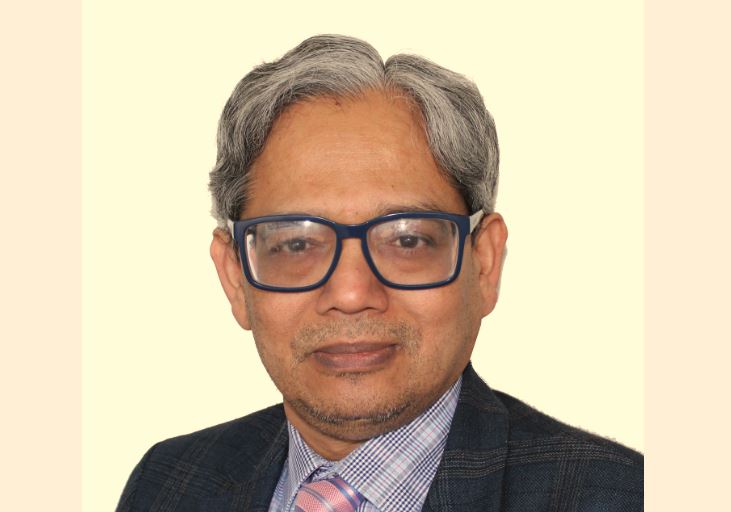
By Sanjaya Mishra
Recently, the Governor of Odisha, as the Chancellor of the Public Universities, appointed 14 Vice-Chancellors to various universities in the state. With this, the long-standing leadership vacuum at these universities has been filled. However, the Vice Chancellors need to immediately focus on the state of their respective universities to rethink how best they can contribute to quality improvement.
It is important to note that of the 24 state public universities, only 12 have accreditation from the National Assessment and Accreditation Council (NAAC). Only seven of these are graded ‘A’ or above. None of the state’s public universities features in the 2025 top 100 list of the National Institutional Ranking Framework (NIRF).
This shows a critical need to improve the quality of public universities in Odisha. According to the All India Survey of Higher Education Report 2021-22, the Gross Enrolment Ratio (GER) in higher education in the state is 22.1, which is below the national average of 28.4. The National Policy on Education 2020 aims to achieve a 50% GER by 2035.
Public universities are currently facing several issues, including faculty and staff shortages. According to a report, over 1,400 teaching posts and 2,286 non-teaching posts are vacant in public universities. In such a situation, most universities are relying on temporary/ad hoc appointments to continue teaching. It is obvious that in such a situation, there is a lower focus on research, which is a key pillar of quality assessment in both NAAC accreditation and NIRF ranking. Appointment of faculty is sine que non for quality assurance.
Universities, as higher education institutions, are expected to demonstrate excellence in teaching, research, and extension (social relevance). The CAG of India, in its 2021 report on the performance audit of higher education in Odisha, highlighted several issues, including shortage of quality faculty, outdated curricula, poor placement records, inadequate ICT infrastructure, and others.
Categorically, it highlighted the absence of a long-term vision for supporting quality higher education in the state and recommended strengthening the state-level quality assurance cell to coordinate and monitor the quality of higher education.
While appropriate funding is necessary to improve the status of public universities, there are also ways that would require little funding to change the status quo. Presented below a ten-point agenda for consideration of universities and higher education leaders in the state. First, universities in Odis have must think global and act local. It is important that universities develop courses and programmes that will support the local economy, culture, and environment.
Second, universities need to ensure the quality of teaching, learning, and research. To accomplish this task, the National Education Policy 2020 must serve as the guiding document, offering education rooted in human values, intellectual curiosity, scientific temper, entrepreneurship, and service to society.
Third, universities must follow a collegial decision-making process and adopt national and state-level directives to ensure a safe learning environment for all students. Fourth, universities should ensure continuous quality improvement by adhering to NAAC guidelines. This should be one of the key priorities for Vice-Chancellors.
Fifth, universities need to develop a strategic plan to integrate information and communication technologies into teaching, learning, and assessment to promote blended and flexible learning and improve the quality of student engagement and success. Encouraging ethical use of Artificial Intelligence and Learning Analytics for student success would play a critical role in classroom management and the day-to-day operation of the institution.
Sixth, universities must provide regular feedback to students on internal assessments to monitor their progress. Seventh, universities may regularly collect student feedback on teaching quality and foster teachers’ professional development through capacity-building programmes. Eighth, universities need to develop measurable indicators within their strategic plans to ensure all stakeholders are aware of the goals, timelines, and responsibilities.
Ninth, the government must mandate that every university develop and publicly share an annual calendar of activities and ensure the timely completion of scheduled activities, including examination and results declaration. Tenth, faculty may be encouraged to conduct research through collaboration and participation in regional and national networks. Special research funding and support to present at national and international conferences would increase the visibility of research in universities.
Universities must contribute to the richness of the state’s culture and environment by preserving and promoting research and development through national and international networks. The universities need to be a hub of intellectual capital for the region and promote the sustainable well-being of people. The university in the 21st century must be a place for critical thinking, creativity, innovation, and entrepreneurship.
A student entrepreneur incubation centre will encourage value addition to the local economy through research and development of local needs and practices. Preparing citizens ready to face the uncertain future will require a team of teachers, staff, students, parents, and the local citizens/society.
By adopting a results-based management framework, university leaders can demonstrate quality and value for money.
The writer is a Bhubaneswar-based educationist.