By Rajiv Gupta
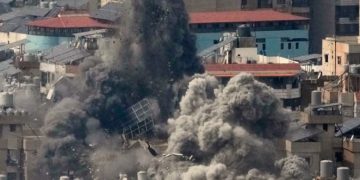
It has not been even a month since the horrific bomb blast at the Red Fort, but already it seems like a distant memory; news related to the incident having been relegated to one of the inner pages of newspapers. One might be tempted to believe that whatever danger was present immediately after the incident is history and we are safe now. But are we really safe?


Immediately following the blast, several of the busy markets in Delhi were “fortified” to prevent any similar incident. The term fortified is in quotes to stress the lack of seriousness this action conveys. The reason for this assertion will be examined next.
Most markets in Delhi, as also in other parts of the country, are pedestrian areas. The explosives that were blown up at the Red Fort were carried in a car, suggesting that they were larger and heavier than what could have been carried on a person. How does a pedestrian marketplace be secured when the threat is from a car bomb? Most marketplaces in Delhi are closely integrated into residential areas and restricting car traffic is impractical as it would virtually bring a large part of the city to a standstill.
Second, securing the pedestrian areas is a very big challenge because these areas are porous and have multiple points of entry and exit. This is largely true of older markets in Delhi such as Chandni Chowk, Lajpat Nagar, Sarojini Nagar, etc. Unlike malls which have restricted points of entry and exit, the other open markets cannot easily be secured. It is interesting to note that, in the case of malls, there is usually a security check at entry even when there is no threat of violence. In the case of open markets there is an appearance of some tightening of pedestrian traffic, but that is short-lived in the aftermath of a blast such as the one in the Red Fort area.
It is not only true that securing an open market poses a significant challenge, but the way in which this is done sometimes reveals a less than serious approach to maintain the safety of the common shoppers as well as the shopkeepers in these markets. The question that needs to be asked is, if malls can have security checks year-round, why is increased security in markets not provided in a similar fashion? One suspects that a possible reason might be the lack of adequate police and security personnel. But why are the existing personnel not deployed more effectively in the market areas? There is never a dearth of security personnel that are assigned to safeguard our politicians.
Better patrolling of crowded areas by the police could go a long way in making our cities secure. The police are typically not considered an ally by the common man. This situation needs to be addressed by training of the police personnel as well as by education of the population. This could lead to more cooperation among people and the police where citizens would feel encouraged to report any suspicious activity that they may observe.
The police force has been used in India by political parties to seek retribution on their opponents. This has gone a long way to erode the public confidence in the police as they are seen as serving only the politicians, and not the general public. The trust deficit between the police and the people needs to be restored.
Incidents such as the one at the Red Fort are stark reminders that danger can lurk in any place. These incidents cannot be completely prevented, in spite of the best efforts by authorities, but their chances can be reduced. However, better intelligence about suspicious activities can help forewarn of a future incident.