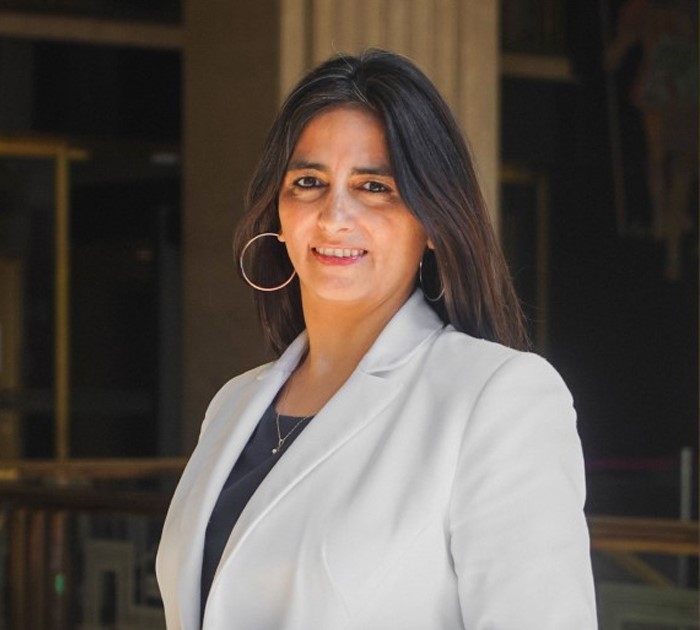
Claudia Sanhueza
For decades, global power emanated from Europe and the United States. That was certainly my view when I first set foot in the Northern Hemisphere as a graduate student at the University of Cambridge. But managing Chile’s international economic relations under former President Gabriel Boric revealed just how much power the Global South can wield, if it chooses to do so. This is apparent not only in the data but also at the negotiating table.
Also Read


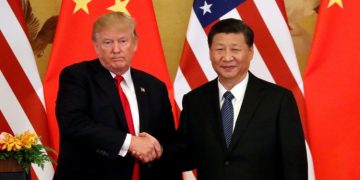
In 2025, I travelled with Boric, other cabinet members, and Chilean business leaders, academics, cultural figures, and entrepreneurs to India to negotiate a Comprehensive Economic Partnership Agreement. Both sides were following development economists’ long-standing policy prescriptions: diversify trade partners, open new markets, and deepen South-South integration. But during the trip, US President Donald Trump announced his “reciprocal” tariffs against most of America’s trading partners, ripping up global trade rules.
For the Global South, this was a slap in the face. We never expect ed development to be free of struggle and contradictions. But the direction was clear: greater global economic integration would enhance growth. And the rules and institutions were shared—until the country that designed them decided to exempt itself. Perhaps most strikingly, the rules-based multilateral system worked for the developing world.
In 1952, the United States, with just 6 per cent of the world’s population, produced around 40 per cent of global GDP. By contrast, the US now produces 15 per cent of global GDP (in purchasing power terms), while China has risen from near zero to 20 per cent. The redistribution extends beyond the US-China axis. In the 1970s, Germany’s economy was twice the size of India’s; today, India’s is nearly three times larger than Germany’s. The City University of New York economist Branko Milanovi has called this “the greatest reshuffle of individual incomes since the Industrial Revolution.” As Milanovi and Christoph Lakner of the World Bank showed in a landmark study, the largest relative income gains between 1988 and 2008 went to hundreds of millions of people around the global median, mostly in Asian countries, lifting them into the middle class. The same process led to stagnant incomes for working- and middle-class people in rich countries.
The system reduced global poverty and shifted the international power balance. Integration into the global economy was a necessary but insufficient condition for development. The countries that gained the most from globalisation had a plan. China is the most obvious example, but South Korea, Vietnam, Indonesia, and others followed a similar path: they devised long-term development strategies; invested in education, industrial policy, and technology; and integrated selectively into global markets. The countries that lacked a plan, particularly in the developed world, opened their economies without building domestic capacity to redistribute the gains. That failure to manage the risks of globalisation has become everyone’s problem, because it has generated the political discontent now engulfing the West and fracturing the international order.
Some of the greatest challenges the world faces today, including climate change and managing AI, can be addressed only through common rules, shared institutions, and cross-border collaboration. We know that technological change is one of the main drivers of rising inequality within countries, and that the world’s poorest and most vulnerable are bearing the brunt of the climate crisis. Both problems demand dialogue, and neither can be solved by the strongest acting alone.
Many of the critical resources required to fight climate change and power the technological transition, from copper and lithium to rare earths and rainforests, are concentrated in Latin America, providing the region with new leverage. But leverage without coordination creates risk. And right now, Latin America lacks a regional strategy. Devising one is not a utopian aspiration.
The Association of Southeast Asian Nations was built on the recognition that smaller economies need collective positions, shared frameworks, and coordinated strategies to negotiate with major powers from a position of strength. As the rules that once constrained these powers weaken, regional solidarity has become only more important. Forging closer ties between Latin American governments, private sectors, and civil societies is no longer an option. It is an imperative that calls for strong national agendas. The last wave of globalisation illustrated the importance of policies that distribute gains equitably and strengthen education systems, as well as fiscal frameworks that convert resource rents into public investment.
State institutions must be strong enough to resist capture. Long-term industrial and technology policies must be put in place. Such planning is the difference between development and dependency. When this period of Trumpian disorder eventually gives way to reconstruction, the Global South must come to the table with proposals, not just complaints. The order that is now fracturing was built largely without us, but that need not be true of the next one. Countries that cannot impose their preferences by force must continue to do the unglamorous work of coordination and collaboration—much like we did in India last year. Only by coming together now can we create a global system where the rules apply to all.
The writer is a former deputy finance minister and former undersecretary of international economic relations of Chile.
Orissa POST – Odisha’s No.1 English Daily