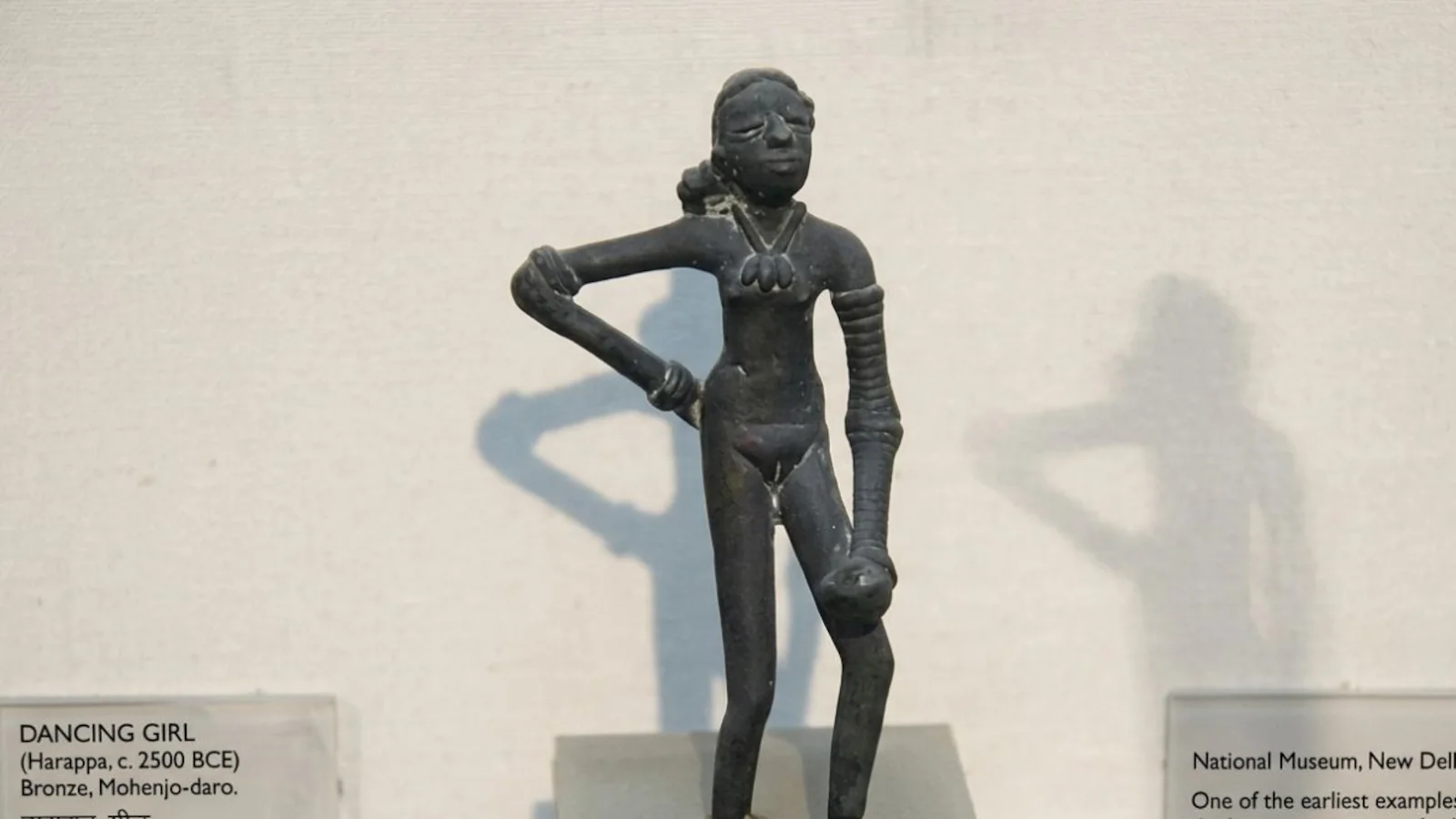
India is being shown in such a poor light that it does not stand comparison on the question of a modern outlook with its ancestors who developed the Harappan civilisation over 4500 years ago. A new controversy has erupted over the image of the iconic bronze figurine known as the ‘Dancing Girl’ of Mohenjo-daro, which has been visually altered in NCERT’s new Class IX Arts textbook, with the sculpture’s earlier bare torso now covered. This has not only raised questions about how one of India’s most recognisable archaeological artefacts is being presented to students, but also given rise to deep suspicion about rewriting history to suit a few deviates in power. The civilisation that flourished in the Indus Valley showcased the antiquity of this subcontinent. It may be worthwhile to mention that both Mohenjo-daro and Harappa are now in Pakistan. Historical research shows that at the time of the flourishing of that civilization, the people living did not communicate in any of the currently known North Indian languages.
Some infer that the language used by people of the area was Proto-Dravidian, a language similar to Tamil. This could indicate that the civilization was before the advent of Sanskrit. The image of the Dancing Girl features in the opening chapter, His tory of Arts, of Madhurima, NCERT’s newly introduced Class IX Arts education textbook. Compared to photographs of the original artefact, the version in the textbook appears modified, with shading across the upper body obscuring anatomical details visible in the original bronze sculpture.
Also Read


The depiction contrasts with the image used in NCERT’s Class VI Social Science textbook, where the figurine appears closer to its original form. Michel Danino, who previously headed the textbook development committee for NCERT’s new Class VI Social Science books, said he had earlier been told that the figurine was considered unsuitable for younger students. The reason given, according to Danino, was that the image of the Dancing Girl was “not age-appropriate.” This is a euphemism for cultural policing and muzzling free thinking. Danino slammed the reasoning behind the move, saying, “The notion that nudity is inappropriate is, in my opinion, an obsolete Victorian view. Yet we speak of decolonising Indian education.”
The 4-inch-high figurine has inspired awe and reverence since the artefact was first excavated for the quality of civilisation, amor al pursuits and dispassionate portrayal of art and human activities displayed by the people and artistes of the Indus Valley Civilisation. The chapter identifies the Dancing Girl as a bronze figurine from Mohenjo-daro dating to around 2600 BCE. It states that the sculpture was made using the lost-wax technique prevalent in West Bengal, Jharkhand, and Chhattisgarh. Interestingly, earlier editions of NCERT textbooks, including those published during the tenure of former BJP Education Minister Murli Manohar Joshi, featured the ‘Dancing Girl’ without any covering on the torso. The ‘Dancing Girl’ is widely regarded by archaeologists as evidence of the Indus Valley Civilisation’s advanced metallurgical skills.
Archaeologist Gregory Possehl described the Dancing Girl as “the most captivating piece of art from an Indus site.” He had doubts whether the figurine represented a dancer, but he marvelled at the creation that showed the girl was “good at what she did and she knew it.” History is a crucial component of human progress. It shows to pos terity the advancement made in the past so that man can build on past experiences, rise to new heights and enrich the human mind further. To judge the past with a moral lens of the present is not only a distortion of truth, but also a great hindrance to progress. Like it is said ‘Beauty is in the eyes of the beholder,’ it can safely be said this controversy about the Dancing Girl of Mohenjo-daro displays that ‘Perversion lies in the eyes of the beholder’.