
Few United Nations Security Council resolutions have been as one-sided as its recent condemnation of Iran’s “egregious attacks” on regional neighbours such as Bahrain, Qatar, Saudi Arabia, and the United Arab Emirates. Leaving little room for interpretation, it describes those attacks as “a breach of international law and a serious threat to international peace and security.”
That may be true, but the resolution, sponsored by 135 countries, omits the context in which those attacks occurred. Before being attacked, Iran had repeatedly warned that US and Israeli strikes would not go unanswered.
The resolution does not acknowledge those warnings. Nor does it address the assassination of Iran’s supreme leader, Ayatollah Ali Khamenei, along with much of his family and the country’s senior leadership, or the indiscriminate bombing of civilian infrastructure and densely populated residential areas by the United States and Israel. Strikingly, it does not even mention the bombing of a girls’ school in Minab – reportedly carried out by the US – that killed at least 175 people, most of them children, on the war’s first day.
These omissions are not incidental; they are aimed at framing Iran’s actions as unprovoked acts of aggression. International law, however, does not operate in a vacuum. As the Security Council resolution itself notes, Article 51 of the UN Charter recognises every country’s right to self-defence against armed attack. If Iran’s actions are to be judged against that principle, so too must those of the US and Israel.
To be sure, the Iranian regime has a long record of crushing dissent. In January, its security forces killed an estimated 30,000 protesters and imprisoned thousands more. In theory, the “responsibility to protect” principle, intended to prevent mass atrocities by oppressive regimes, could be invoked to justify intervention against the Islamic Republic. But the indiscriminate bombing of civilians and the destruction of essential infrastructure do not qualify as protection. They are, instead, forms of collective punishment. Recent history offers a stark warning: regime-change wars deliver nothing but immense human suffering.
From Afghanistan and Iraq to Libya and Syria, American interventions have brought widespread destruction of lives and livelihoods, and the emergence of failed states controlled by rival warlords, or – as in Afghanistan – the return of the very regime that the US sought to overthrow.
Much like those earlier conflicts, this war is defi ned by an obvious power imbalance. Iran lacks the conventional and nuclear capabilities of the US and Israel, and much of its defensive capacity has already been severely degraded by air strikes. It is therefore hardly surprising that the regime would seek to defend itself by targeting US interests across the region. Attacks on US bases, along with strikes on energy facilities and the closure of the Strait of Hormuz, are among the few means of self-defence available to it.
Why, then, did the Security Council resolution receive such broad support, especially when there has been no equivalent response to the ongoing genocide in Gaza? Why the sudden outrage at what is, in many ways, a predictable consequence of a profoundly unequal war? As Spanish Prime Minister Pedro Sánchez put it, “You can’t support those who set the world on fi re and then blame the smoke caused by the fire.”
The answer lies in the resolution itself, which warns of the “adverse impact” of regional instability on international trade and energy security. At its core, the outrage is less moral or legal than practical: the global economy needs an uninterrupted flow of hydrocarbons. The resolution is also about protecting the privileged status of the Gulf’s financial powerhouses, which offer tax havens, secrecy jurisdictions, and legal exemptions to international investors, even as they deny migrant workers basic rights.
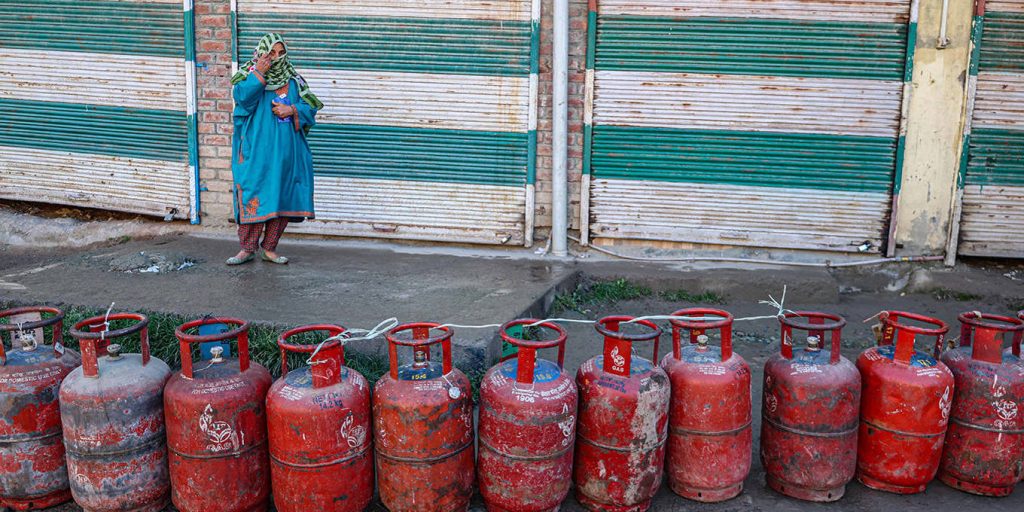
Iran’s leadership understands that while humanitarian catastrophes rarely command the world’s attention, threats to destabilise the global economy do. The consequences of this calculus could be far-reaching. As oil prices surge above $100 a barrel, the Global South – home to most of the world’s population – risks becoming collateral damage once again. Some of the increase reflects speculative responses to uncertainty, but real supply disruptions are already evident, particularly across Asia. In India and other countries, cooking-gas shortages are hitting the poor, while disruptions to fertiliser supplies threaten crop yields, and rising energy costs squeeze small enterprises and vulnerable households.
Such human costs seem to carry little weight with the US and Israeli leaders who launched this war. But the resulting economic disruption is already exacting a heavy toll, which helps explain why US President Donald Trump is so eager to declare victory and bring the conflict to a swift end.
He is likely to be disappointed, as the other parties show little willingness to stop. Iran’s regime views the war as an existential threat that cannot be resolved through a temporary ceasefire, while Israeli Prime Minister Benjamin Netanyahu understands that a prolonged state of war is the best way to ensure his political survival and delay his ongoing corruption trial.
The result is a humanitarian disaster for Iran and its neighbours. As that crisis reverberates through the global economy, it also risks unleashing a wave of instability that hits the developing world the hardest. For Gulf countries long reliant on US protection, this crisis should serve as a wake-up call. To paraphrase a remark often attributed to Henry Kissinger, it may be dangerous to be America’s enemy, but it can be fatal to be its friend.
The writer is Professor of Economics at the University of Massachusetts Amherst.