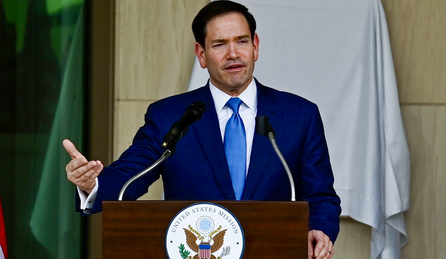
US Secretary of State Marco Rubio’s ongoing visit to India comes at a moment of unusual strain in India-US relations, exposing the widening gap between the lofty rhetoric of “strategic partnership” and the harsher realities of transactional geopolitics under PoTUS Donald Trump’s second term in office. From calling India a “dead economy” to punishing the country with steep 50 per cent tariffs over its Russian energy imports to “permitting” New Delhi to resume purchase of Russian oil, the Trump administration’s attitude towards India has been outright dismissive. Also, Trump’s countless claims of bringing a ceasefire between India and Pakistan following four days of a military confrontation between the two countries in May 2025 and India’s rejection of these claims further deteriorated diplomatic ties between New Delhi and Washington. At this current juncture, Washington does not seem to really bother much about India and its role in global politics.
Months after the trade and diplomatic tensions between the two countries, the announcement of a trade deal by Trump in early February, which was seen as heavily tilted in favour of America, appeared to reset the ties. At the same time, Prime Minister Narendra Modi’s visit to Israel in February, only days before the US and Israel launched an unprovoked war on Iran, has drawn intense geopolitical scrutiny. Modi travelled to Tel Aviv at a time when American military mobilisation around Iran had already heightened fears of imminent confrontation. By publicly embracing Israeli Prime Minister Benjamin Netanyahu during a period of escalating regional instability, India appeared to signal a strategic comfort with the emerging US-Israel axis in West Asia. Now it is payback time already and citizens are just beginning to probably understand how every flight abroad and every single word uttered can be interpreted or misinterpreted.
Also Read


That visit has acquired greater significance in hindsight. As the conflict with Iran intensified, India found itself navigating an increasingly uncomfortable diplomatic contradiction. On one hand, New Delhi sought to preserve its long-standing ties with Tehran. On the other, it continued expanding defence cooperation with Israel while simultaneously deepening strategic engagement with Washington. This drifting foreign policy exposed the limitations of India’s multi-alignment doctrine. Across sections of the Global South and within Iranian strategic circles, perceptions strengthened that India was drifting steadily closer to the geopolitical preferences of the US and also Israel. All this when the world is clearly perceiving a down slide of US power.
The timing of the US Department of Justice dropping criminal charges against billionaire Gautam Adani has added to perceptions surrounding Rubio’s visit. Officially, the decision has been described as part of a reassessment of prosecutorial priorities. Yet politically, the optics are impossible to ignore. Adani had become a symbol of alleged corporate impropriety in American legal discourse, and the sudden withdrawal of criminal proceedings along with a rider that the case cannot be reopened came precisely when Washington was seeking to use New Delhi for other purposes now. The sequence inevitably raises uncomfortable questions about the intersection of geopolitics, business and diplomacy. Adani’s claimed growing investments in the US (unfortunately with money from Indian financial institutions) have only sharpened suspicions that strategic calculations may have influenced legal outcomes. For the Indian government, the Adani reprieve offers immediate domestic political relief after months of Opposition attacks over the conglomerate’s closeness to the government. But it also underscores a deeper problem. India-US ties increasingly appear shaped not by stable institutional trust or shared democratic values, but by elite political calculations and corporate interests.
Rubio’s visit may temporarily ease tensions, but it cannot conceal the broader transformation underway in the ties. The old narrative of a “natural alliance” between two democracies is steadily giving way to a colder business realism.
The directionless foreign policy pursued by New Delhi over the past decade or so has put the country in a geopolitical tight spot. This holds true especially in the context of the ongoing shifts in the world order with major powers, such as America, China and Russia, carving out their own spheres of influence. Having made enemies out of most countries that matter, India has a tough road ahead in this fast-changing world.