
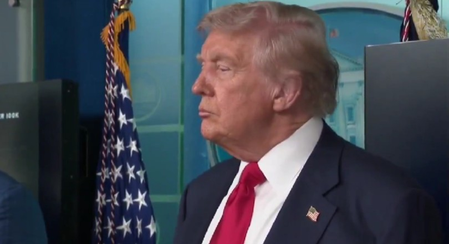
Once bitten, twice shy is an old idiom. But when it comes to US President Donald Trump, it loses its meaning as he refuses to learn any lessons from the past. Trump, in his tariff war, has thrown caution to the wind, undermining old diplomatic and trade relations, even to the detriment of American consumers and importers. In this backdrop, the US Supreme Court has struck down Trump’s tariff policy even as he projects that this is his bid to revitalise the American manufacturing sector and its strained economy.
The US president has reportedly called the SC ruling a “disgrace”. What has happened is a remarkable act that displays judicial independence. The apex court reasserted the primacy of the law over presidential arbitrariness. The decision encourages members of Congress to fully perform their role in the teeth of opposition from a hyperactive President firmly entrenched in the White House. Trump had declared 2 April, 2025 “Liberation Day” when he announced an array of tariffs on imports from almost every country in the world. He even went on to say that his countrymen would look back in years to come and pronounce him right. Just ten months later, the US Supreme Court ruled that he was wrong, at least from a legal standpoint. A majority of six out of the nine justices found that Trump had gone too far by imposing tariffs without clear authorisation from Congress. This is a huge setback to Trump’s plan and credibility, considering three conservative justices who were expected to blindly support Trump’s action voted against the President’s tariffs. They found that the US president had overstepped his authority by invoking the International Emergency Economic Powers Act (IEEPA).
The justices upheld the position of American businesses and the dozen federal states that argued they had suffered harm as a result of these tariff barriers. Contrary to Trump’s repeated claims, it was indeed American businesses and households that bore the brunt of the tariffs’ cost, as several independent studies confirmed. In effect, these barriers could be considered taxes that the President did not have the authority to impose without Congressional approval. The tariffs, set at varying rates, covered dozens of countries from war-torn Syria and impoverished Lesotho to the UK, China, Canada, Mexico, Japan, India and EU countries. The conservative-majority court ruled six to three in the judgment, saying the IEEPA – the 1977 law designed to address national emergencies Trump had used to implement them – “does not authorise the President to impose tariffs”. The decision affirms earlier findings by lower courts that the tariffs Trump imposed under the IEEPA were illegal.
The ruling has wider international economic and political ramifications, while Trump shows no signs of relenting from his policy of weaponising tariffs to force nations to cough up billions of dollars into the US exchequer. Soon after the apex court decision, Trump held a press conference where he vowed to keep tariffs in place using a different law than the IEEPA. He announced a new 10% global tariff and said that his administration would conduct additional “investigations” into unfair trading practices using the Trade Act of 1974. A day later, he increased the global tariff to 15%. While the White House has these other alternative routes to pass tariffs, there are more restrictions in the form of capped amounts and durations of tariffs, along with procedural prerequisites such as investigations and hearings. The relevant section of the Trade Act, 1974, stipulates that tariffs of up to 15% can be imposed to address “fundamental international payments problems”, and it could be effective only for 150 days.
Trump adopts the stance that he would not back down and that increased tariffs would continue, though the new measures would be “a little more complicated, but the end result is going to get us more money,” he said. New complications will inevitably arise as those who have already paid increased tariffs will approach the courts for a refund. That is why Trump has virtually resigned himself to such a fate, stating that his presidency would be spent in the courts for the next few years.
India’s leadership is shown in a poor light in this context after its desperation, hurry and nervousness to clinch the Indo-US trade deal that was heavily tilted in favour of the US. It could easily have waited for the SC verdict before inking the deal. And thereby hangs a tale.