Odisha News, Odisha Latest news, Odisha Daily - OrissaPOST
  • Home
  • Trending
  • State
  • Metro
  • National
  • International
  • Business
  • Feature
  • Entertainment
  • Sports
  • More..
    • Odisha Special
    • Editorial
    • Opinion
    • Careers
    • Sci-Tech
    • Timeout
    • Horoscope
    • Today’s Pic
  • Video
  • Epaper
  • News in Odia
  • Home
  • Trending
  • State
  • Metro
  • National
  • International
  • Business
  • Feature
  • Entertainment
  • Sports
  • More..
    • Odisha Special
    • Editorial
    • Opinion
    • Careers
    • Sci-Tech
    • Timeout
    • Horoscope
    • Today’s Pic
  • Video
  • Epaper
  • News in Odia
No Result
View All Result
OrissaPOST - Odisha Latest news, English Daily -
No Result
View All Result

Unlocking human potential imperative

Updated: August 11th, 2026, 08:20 IST
in Opinion
0
Santosh Kumar Mohapatra

Santosh Kumar Mohapatra

Share on FacebookShare on TwitterShare on WhatsAppShare on Linkedin

Santosh Kumar Mohapatra

India aspires to become a developed nation by 2047. It is already one of the world’s largest economies and has one of the world’s youngest populations. Yet beneath the impressive statistics of GDP, digital expansion and infrastructure creation lies a fundamental question: Are we in vesting adequately in the human beings who are expected to build the India of 2047? The durable solution lies in comprehensive educational reforms, adequate public investment, free and quality education for every deserving student, transparent governance, stronger public institutions and, above all, the creation of large-scale opportunities for decent and dignified employment. This broader perspective finds a powerful explanation in the celebrated book Why Nations Fail: The Origins of Power, Prosperity, and Poverty by Nobel Prize-winning economist Daron Acemoglu and political scientist James A. Robinson.

Also Read

BEYOND REDISTRIBUTION

BEYOND REDISTRIBUTION

1 day ago
Dhurjati Mukherjee

Water scarcity demands a farming reset

2 days ago

Their central argument is both simple and profound: nations do not become prosperous merely because they possess natural resources, favourable geography or a particular culture. They prosper when they build inclusive institutions that are transparent, accountable and capable of providing equal opportunities. When institutions become weak, exclusionary, unaccountable or inefficient, public confidence erodes, and the foundations of sustainable development begin to weaken. Education is the foundation of human capital. Roads, ports, airports, factories and digital networks are undoubtedly important, but it is the educated, skilled, healthy, creative and innovative people who build, operate and improve these assets. Nobel laureate economist Prof. Amartya Sen’s concept of development is particularly relevant here. Development, according to Sen, is not simply an expansion of income or GDP; it is an expansion of human capabilities and substantive freedoms. Basic education and healthcare constitute essential social opportunities that governments must provide to remove structural barriers and empower disadvantaged citizens. When essential services become excessively expensive, inequality deepens, and millions remain trapped in what Sen describes as capability deprivation. Unfortunately, India’s education system presents a disturbing contradiction.

Governments repeatedly speak about education, skills, innovation, knowledge and the demographic dividend, but public expenditure and educational outcomes do not always reflect the scale and urgency of these commitments. Perhaps the most disturbing indicator emerges from the UDISE+ 2025–26 report. According to the data, only 51.9% of students who enter Class 1 remain in school until Class 12. This means that nearly 48% of children who begin Class 1 do not remain within the formal school system until Class 12. It represents millions of unfinished educational journeys and a massive loss of human potential.

A child who leaves school prematurely is more vulnerable to low-paid employment, unemployment, poverty and social exclusion. For a country aspiring to become a developed nation by 2047, such a high attrition rate should be treated as a matter of national urgency. The crisis does not end with school education. The problem is galore in higher education too. India’s students live in financial uncertainty. Fellowships are often delayed, recruitment in universities and research institutions takes enormous time, and many highly qualified researchers remain underutilised, unemployed or underemployed. When a society invests years in educating its brightest minds but fails to provide them with meaningful opportunities, frustration is inevitable. This is not merely an employment problem. It is a waste of human capital. The inadequacy of public investment is perhaps the most glaring contradiction in India’s educational policy. The Kothari Commission recommended that India should spend at least 6% of GDP on education. Central government expenditure on education as a percentage of GDP has declined from 0.55% in 2014–15 to 0.41% in 2023–24, further falling to 0.34% in 2025 26, and is estimated at 0.35% in 2026–27. Globally, average public expenditure on education is around 4.4% of GDP, while developed countries generally spend around 6–7%.

The condition of scientific research deserves equally serious attention. India’s Gross Expenditure on Research and Development rose to 0.84% of GDP in 2023–24. This is an improvement in absolute terms, but it remains well below the global average of about 1.2% and India’s own target of 2% by 2035.

A country cannot aspire to technological leadership while chronically underinvesting in research and underutilising human capital. If human capital is not properly harnessed, demographic dividend can gradually turn into a demographic disappointment.


Orissa POST – Odisha’s No.1 English Daily



ShareTweetSendShare
Suggest A Correction

Enter your email to get our daily news in your inbox.


Mettle Meet 2026
OrissaPOST epaper Sunday POST OrissaPOST epaper

Click Here: Plastic Free Odisha

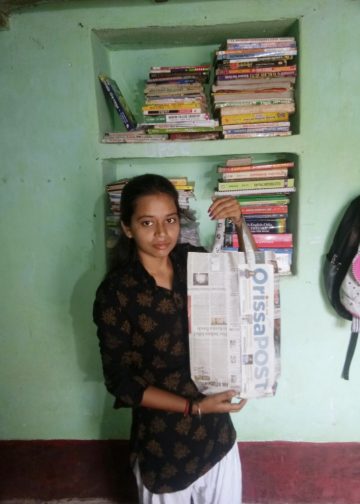
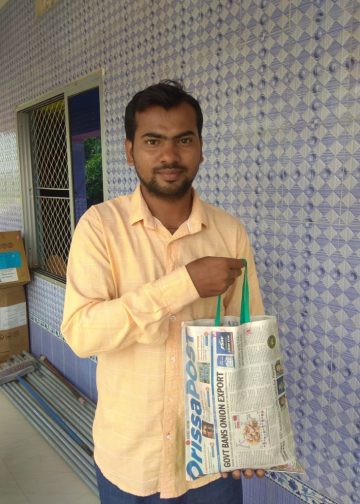
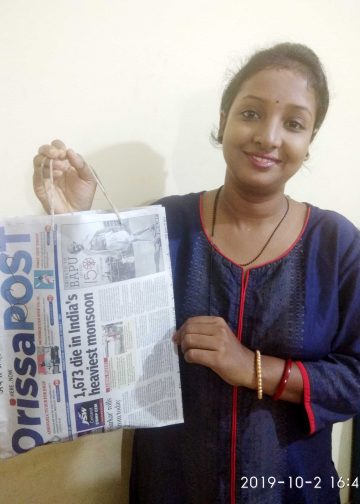
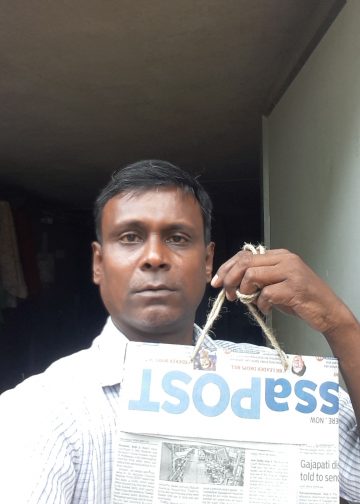
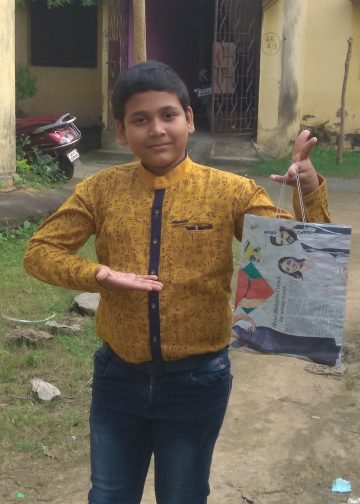
#MyPaperBagChallenge

Sitakanta Mohanty

December 12, 2019
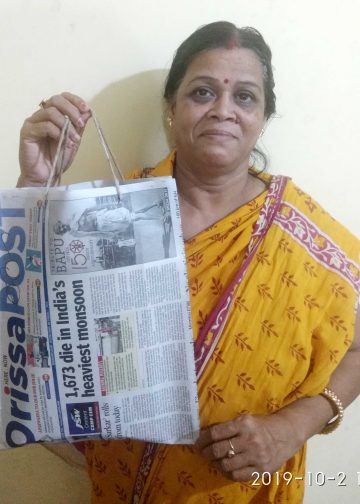
#MyPaperBagChallenge

Rajashree Pravati Mohanty

December 12, 2019
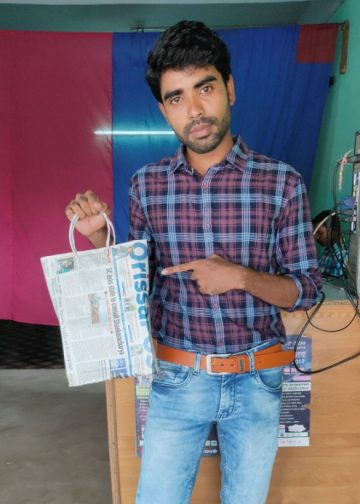
#MyPaperBagChallenge

Matrumangal Jena

December 12, 2019
#MyPaperBagChallenge

Vandana Singh

December 12, 2019
#MyPaperBagChallenge

Shreyanshu Bal

December 12, 2019
#MyPaperBagChallenge

Ramakanta Sahoo

December 12, 2019
#MyPaperBagChallenge

Faiza Firdous

December 12, 2019
#MyPaperBagChallenge

Debasis Mohanty

December 12, 2019
#MyPaperBagChallenge

Geetanjali Patro

December 12, 2019
?????????????????????????????????????????????????????????????????????????????????????????????????????????????????????????????????
#MyPaperBagChallenge

Dibya Ranjan Das

December 12, 2019
#MyPaperBagChallenge

Lopali Pattnaik

December 12, 2019
#MyPaperBagChallenge

Kamana Singh

December 12, 2019
#MyPaperBagChallenge

Rajashree Manasa Mohanty

December 12, 2019
#MyPaperBagChallenge

Sisirkumar Maharana

December 12, 2019
#MyPaperBagChallenge

Adyasha Priyadarsani Sendha

December 12, 2019
#MyPaperBagChallenge

Bijswajit Pradhan

December 12, 2019
#MyPaperBagChallenge

Sarfraz Ahmad

December 12, 2019
#MyPaperBagChallenge

Sarmistha Nayak

December 12, 2019
#MyPaperBagChallenge

Praptimayee Biswal

December 12, 2019
#MyPaperBagChallenge

Priyasha Pradhan

December 12, 2019
#MyPaperBagChallenge

Aishwarya Ranjan Mohanty

December 12, 2019
#MyPaperBagChallenge

Adweeti Bhattacharya

December 12, 2019
#MyPaperBagChallenge

Sibarama Khotei

December 12, 2019
#MyPaperBagChallenge

Nishikant Rout

December 12, 2019
#MyPaperBagChallenge

Arya Ayushman

December 12, 2019
#MyPaperBagChallenge

Pragyan Priyambada

December 12, 2019
#MyPaperBagChallenge

Jyotshna Mayee Pattnaik

December 12, 2019
#MyPaperBagChallenge

Surya Sidhant Rath

December 12, 2019
#MyPaperBagChallenge

Subhajyoti Mohanty

December 12, 2019
#MyPaperBagChallenge

Keshab Chandra Rout

December 12, 2019

Archives

Editorial

Jantar Mantar to Ranchi

Election Commission of India
August 11, 2026

Police used water cannons, lobbed tear gas shells, and lathi-charged job aspirants as they breached barricades multiple times on 10...

Read moreDetails

Strategic Squeeze

Strategic Squeeze
August 10, 2026

The defence pact between Saudi Arabia, Turkey and Pakistan, signed in Mecca on the principle that an attack on one...

Read moreDetails

Protect the Protest

Aakar Patel
August 9, 2026

By Aakar Patel There was a remarkable exchange in the Delhi High Court this week. The government was asked why...

Read moreDetails

Mandi House Reset

DILIP CHERIAN
August 8, 2026

By Dilip Cherian How an Education Ministry worthy wins a new post will be a tale told later. But for...

Read moreDetails
  • Home
  • State
  • Metro
  • National
  • International
  • Business
  • Editorial
  • Opinion
  • Sports
  • About Us
  • Advertise
  • Contact Us
  • Jobs
Developed By Ratna Technology

© 2025 All rights Reserved by OrissaPOST

  • News in Odia
  • Orissa POST Epaper
  • Video
  • Home
  • Trending
  • Metro
  • State
  • Odisha Special
  • National
  • International
  • Sports
  • Business
  • Editorial
  • Entertainment
  • Horoscope
  • Careers
  • Feature
  • Today’s Pic
  • Opinion
  • Sci-Tech
  • About Us
  • Contact Us
  • Jobs

© 2025 All rights Reserved by OrissaPOST

    • News in Odia
    • Orissa POST Epaper
    • Video
    • Home
    • Trending
    • Metro
    • State
    • Odisha Special
    • National
    • International
    • Sports
    • Business
    • Editorial
    • Entertainment
    • Horoscope
    • Careers
    • Feature
    • Today’s Pic
    • Opinion
    • Sci-Tech
    • About Us
    • Contact Us
    • Jobs

    © 2025 All rights Reserved by OrissaPOST