
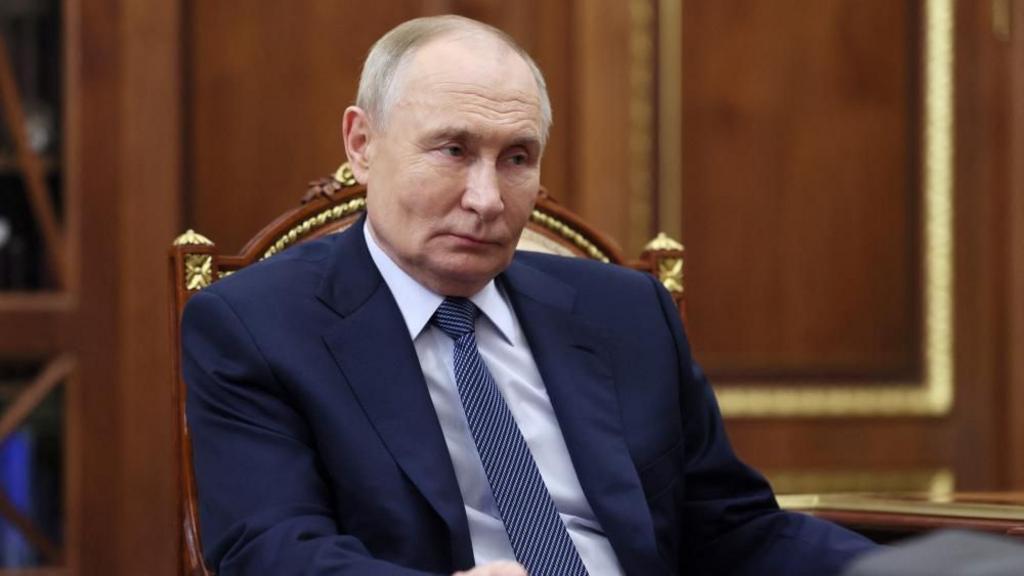
President Vladimir Putin of Russia believed he could finish off, within months, the conflict that he started on European soil against Ukraine. This war could be labelled the biggest since World War II. But four years to this day, he still has not secured the victory he had hoped for. In the process the human cost of his ambition mounts ever higher. It is significant that across a 750-mile frontline to the east of Ukraine, Russian forces make minimal progress despite relentless efforts. When Russian troops invaded Ukraine on 24 February, 2022, Putin claimed his aim was to “de-Nazify” and “demilitarise” the country.
He soon unveiled his plan in an essay titled, “On the Historical Unity of Russians and Ukrainians.” This essay was published on the Kremlin’s official website, and it clearly announced his “special military operation” was intended to bring a change of power in Kyiv and demonstrate the greatness of “eternal Russia” in the face of what he viewed as an aggressive and decadent West. That objective remains illusory since the Ukrainian President Volodymyr Zelenskyy is still in office and has held firm with European support. What is worse is that the war is now entering its fifth year, whereas the “Great Patriotic War,” against Nazi Germany that had begun in 1941, ended in 1945.
The comparison is necessitated by the fact that Russia’s propaganda machine regularly uses that conflict as a reference point to justify its offensive against the so-called “fascist regime” in Kyiv. But Putin seems to have been trapped in his own war game, and the huge loss, both in terms of human lives and weaponry, is hardly justified for only limited territorial gains so far. The Russian President even tried to take advantage of Donald Trump’s return to the White House so as to quickly clinch a “peace agreement” with Washington’s cooperation. Trump fed his ambition with his conciliatory stance, and Moscow kept putting forward maximalist demands, which the Russian-Ukrainian talks – led by envoys from the US President since May 2025 – failed to moderate. The demand for territorial gains included Ukrainian regions even outside of Russian military control. Russia also rejected Kyiv’s inclusion in NATO and demanded the complete withdrawal of Western troops to guarantee peace. It was expected that Ukraine would spurn them, and it did so in unequivocal terms. It is not difficult to understand a secret tradeoff between Putin and Trump for realising the Russian goals in Ukraine. That alone explains why Putin maintained a deafening silence on American pressure on Venezuela, Iran and Cuba, and he did not come to the rescue of these historic but distant allies of his country. Ukraine certainly appears to have remained his main concern. Putin is unable to achieve his end so far because his military has, seemingly, not been fighting fit.
Also Read: Mini-PMO Experiment
He could have been further weakened because he intends to reach an agreement on his own terms. He is not bothered by reports suggesting weakening of his country’s economy, which was initially boosted by the insatiable demands of the military-industrial complex, but has now reportedly begun to tip into stagflation. The Russia-Ukraine war is at the moment dangerously poised, with neither side emerging as the winner or the loser.
A lot depends on the position that Trump would take. The question is whether he would side with his European allies or strengthen Putin’s case. Time is running out for the US President who once told the world that he would end the war within 24 hours and is likely to try again to browbeat Zelenskyy over the Donbas before November’s midterm elections. With a scandalous loss of face in his own global tariff war following the US Supreme Court’s ruling declaring it illegal, Trump may be tempted to adopt desperate remedies to the desperate situation.
Orissa POST – Odisha’s No.1 English Daily