
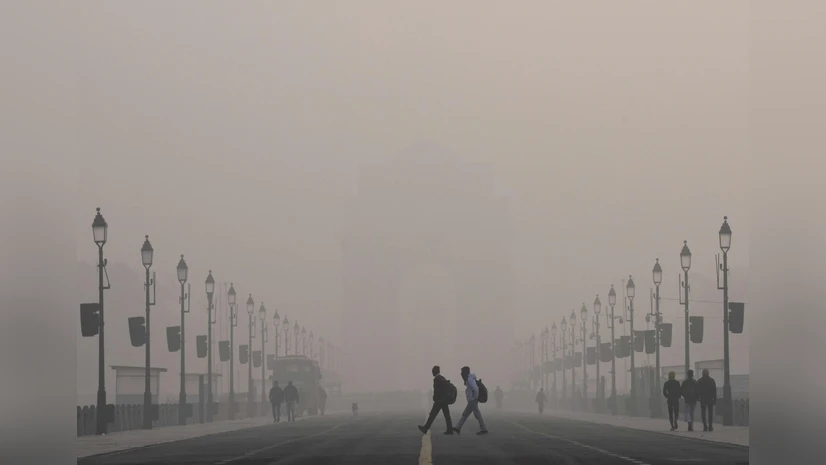
Every winter, Delhi’s air pollution debate follows a familiar script. We look for villains, argue over blame, and ignore science and solutions. This year has been no different — except that it has bordered on the absurd. Pollution season opened with the Supreme Court allowing “green crackers,” followed by the Delhi govt’s failed cloud-seeding attempt. Soon after came official data claiming a 90% reduction in stubble burning in Punjab and Haryana. Overnight, stubble burning was declared “not a problem.” Even though scientific evidence told a very different story. A paper from ISRO and an independent analysis by my colleagues showed that stubble burning continued across Punjab, Haryana, UP, and MP, significantly contributing to pollution in Delhi-NCR. The real issue was not the absence of fires, but the failure of monitoring. Satellite passes over India in the early afternoon. As farmers simply shift the burning to late afternoon and evening, a large proportion of farm fires is no longer being detected.
Instead of fixing the monitoring system, we wasted weeks in the “tu quoque” debate, where stubble burning in Delhi’s local sources was to blame. Incentives for farmers not to burn stubble were never implemented. Committees were formed, reports were written, and once again, we forgot to demand real solutions from all institutions accountable.
All this is particularly frustrating because the core causes of India’s air pollution crisis have been known for at least 25 years. In 1999, more than 200 scientists from across the world participated in the Indian Ocean Experiment, led by the renowned atmospheric scientist V. Ramanathan. This study identified massive clouds of “Asian Brown Clouds” stretching over the Indian subcontinent and the Indian Ocean from October to February.
Their findings were unequivocal. This haze was largely caused by the burning of biomass in homes and fields, and fossil fuels (especially coal) in industry and power plants. Pollution travelled thousands of km, altered rainfall patterns, reduced agricultural productivity, and caused widespread respiratory and cardiovascular disease.
When UNEP published the findings in 2002, some prominent Indian scientists questioned the terminology and intent. The phenomenon was dismissed as “atmospheric brown clouds” — a semantic quibble. The warnings were largely ignored by governments.
A quarter century later, air pollution has become a national crisis. Cities such as Mumbai, Bangalore, and Hyderabad, which once had relatively clean air, now routinely fail to meet national air quality standards. This deterioration is not accidental. It is the direct result of our persistent failure to address the primary sources of pollution identified decades ago.
What pollutes India? Over the last five years, Indian scientific institutions have produced a growing body of research that policymakers have largely ignored. A 2024 study involving researchers from prominent institutions, including earth sciences, found that about 50% of PM10 and PM2.5 in Delhi during the peak pollution season comes from biomass burning sources. Another study from IIT-Kanpur, published in 2023, showed that biomass burning (especially residential heating) is the main driver of intense and frequent night-time haze in Delhi during January and February.
Similar findings have emerged from other parts of the country. Together, they point to a clear conclusion: open burning of biomass (whether for cooking or heating in homes, in small industrial and commercial establishments, or in agricultural fields) is the single largest source of air pollution in India. Without sharply reducing biomass burning, we simply cannot clean the country’s air.
The second major source of pollution is coal use in industries and power plants. A 2023 study by my colleagues estimated that around 37% of India’s PM2.5 emissions come from industry and power generation. Vehicular pollution is the third largest source, especially in cities.
Basically, India’s air pollution crisis is driven by what we burn the most. India burns around 200 crore tonnes of fuel and waste every year. About 85% of this is coal and biomass. Add dust from roads, construction sites, and barren land, and the picture becomes even clearer.
Solving India’s air pollution crisis requires a clean energy transition and an “all-of-the-above” approach.
The biggest gains will come from the residential sector. Transitioning households to LPG, biogas or electricity for cooking and heating would eliminate a large share of PM2.5 emissions and prevent nearly 800,000 premature deaths each year from indoor air pollution. This is difficult, but achievable through targeted policies such as strengthening the PM Ujjwala programme that provides adequate incentives for low-income households to abandon biomass completely.
Industry must be the next priority. Encouraging MSMEs to adopt cleaner fuels and technologies, such as electric boilers and furnaces, combined with strict monitoring, can substantially reduce emissions. For large industries and power plants, enforcement of strict emission standards must be non-negotiable.
Eliminating stubble burning remains essential to reducing severe pollution episodes in October and November. In just 45 days, stubble burning emits as much PM2.5 as all vehicles in India in an entire year. The solutions, technology, market access, incentives, and penalties are well-known and proven. Scaling up electric vehicles and public transport will steadily reduce urban pollution, but this requires sustained policy direction, robust financing, and ambitious targets, not slogans. Finally, local sources (dust, construction, garbage burning, congestion) must be tackled by empowered and accountable urban local bodies.
Real progress on the above action plan will only begin when we stop bickering over science. So, acknowledging the true impact and sources of our pollution crisis is the first step towards meaningful action.
The writer is an environmentalist and CEO, iFOREST.