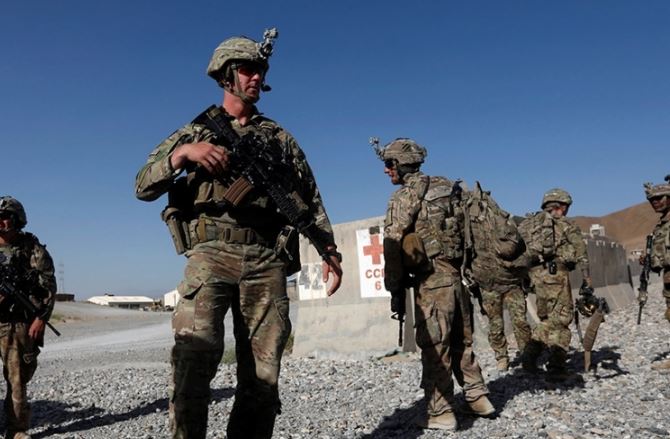
The Pentagon’s announcement on 2 May to significantly reduce American troop presence in Germany marks a pivotal moment in the ties between Europe and the US. The decision comes amid a spat between US President Donald Trump and German Chancellor Friedrich Merz over the war in Iran. Trump is outraged after Merz suggested that the US had been “humiliated” by Iranian negotiators during the talks for a permanent ceasefire. While about 5,000 troops will be withdrawn with immediate effect, the US has hinted at further reductions in the approximately 36,000 troops stationed at present in Germany.
US troops were first deployed in Germany in the wake of World War II as part of the Allied occupation. The arrangement subsequently became central to America’s Cold War strategy as the troops were positioned at the frontline against the Soviet Union and also acted as a deterrent under NATO. In the post-Cold War era, the troop presence reassured European allies of the US commitment to their security. The US military deployment in Germany is its biggest in Europe, followed by Italy with about 12,000 troops and the UK with 10,000-odd troops.
Also Read


In this context, America’s latest move aligns with Trump’s long-standing critique of NATO burden-sharing. For years, he has argued that European allies, particularly economically powerful states like Germany, have underinvested in defence while relying disproportionately on American security guarantees. The decision also comes amid heightened geopolitical instability, particularly due to Russia’s prolonged war in Ukraine and now the US-Israel-Iran war. The US had, in fact, increased troop deployments in Europe after Russia’s 2022 invasion of Ukraine to reassure allies and reinforce deterrence against Moscow. That US posturing saw a big reversal as soon as Trump began his second term as President.
Since then, a broader deterioration in the US-Europe ties has been noticed. Trump’s friction with leaders such as Germany’s Merz, Spanish Prime Minister Pedro Sánchez, and British Prime Minister Keir Starmer reflects a widening geopolitical rift. Disagreements over America’s Iran policy, trade tariffs and alliance commitments suggest that the troop withdrawal is part of a larger pattern rather than an isolated move. The recently proposed 25 per cent US tariffs on European automobiles, for instance, directly target Germany’s economic core, intertwining security disagreements with economic coercion.
From a European perspective, the response has been measured but cautious. Germany appears prepared for some level of drawdown, possibly anticipating such moves given Trump’s past rhetoric. However, the emphasis by German Defence Minister Boris Pistorius that US troop presence benefits both sides suggests that American bases in Germany are not merely instruments of European security but also critical nodes for US global military operations. A troop reduction, therefore, may also constrain American operational flexibility beyond Europe.
The decision has met with critical response in the US, with several prominent Republican lawmakers voicing concerns that a withdrawal could weaken regional deterrence and send a message of vulnerability to Russia. Some members of the Senate and House suggested that if at all the troops are moved, they should be relocated to NATO’s eastern flank rather than being withdrawn from the continent entirely.
Ultimately, the troop withdrawal debate sums up a fundamental shift in the nature of transatlantic relations. Even as the US seeks to reduce its commitments and push allies toward self-reliance, Europe faces the challenge of rapidly scaling up its defence capabilities in an uncertain security environment. While Germany is increasing its domestic defence spending to over 3 per cent of its GDP in the coming years, other European countries have expressed alarm that the withdrawal signifies a troubling decline in transatlantic cooperation. In fact, if American retrenchment outpaces European readiness, the resulting vacuum could destabilise deterrence frameworks that have cemented European security for decades. On the other hand, once European nations are forced to be militarily self-reliant and finally scale capabilities, the US might have to step down from its big brother pedestal and take its position as first among equals. That would play out very differently than Trump might visualise as of now, just like the Iran war.