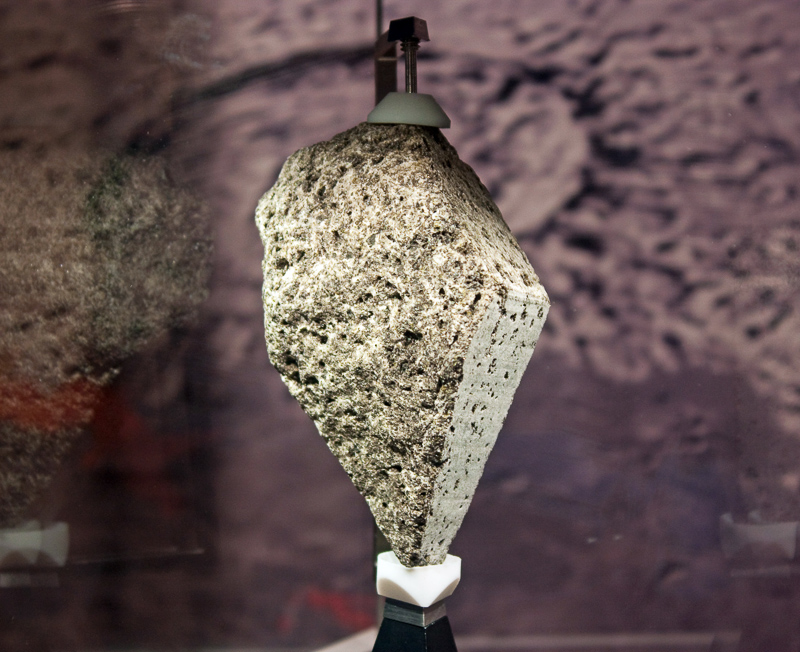
New York: The only documented moon rocks still in private hands sold at an auction house here for $850,000. Thursday’s sale – including all sorts of objects and items pertaining to outer space – took place a month before the 50th anniversary of the Apollo 8 mission to send men around the Moon for the first time, and Sotheby’s took advantage of the anniversary to offer about 300 collectors’ items related to assorted space missions, reports Efe news.
The moon rocks – tiny fragments, actually, had been valued between $700,000 and $1 million, and ultimately went for $855,000 after adding taxes and commissions.


The three tiny lunar stones were obtained during the unmanned Russian Luna-16 mission to the Moon in 1970.
The rocks were initially the property of Nina Ivanovna Koroleva, the video of the director of the Soviet Union’s space programme, Sergei Pavlovich Korolev, who received them as a gift from the USSR in recognition of the contribution of her deceased husband.
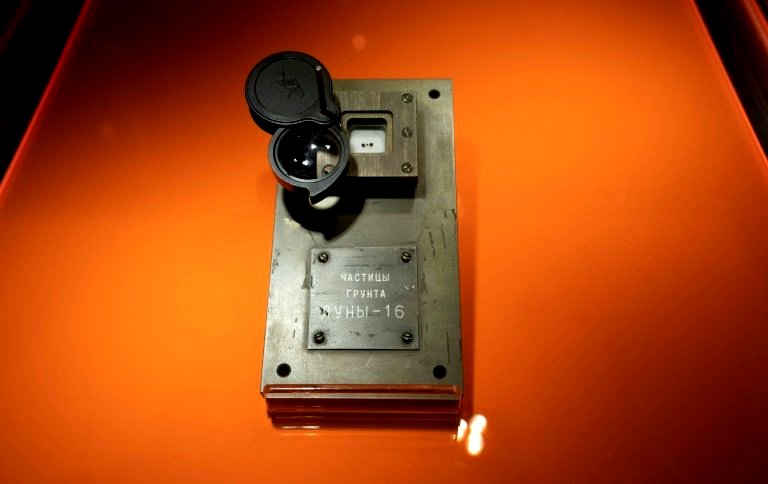
They were previously sold at a Sotheby’s auction in 1993, the first time in history that any extraterrestrial item had been offered to the public.
Also going on the auction block at the unusual sale Thursday was a Gemini space suit prepared for NASA between 1963 and 1965 for US astronaut Pete Conrad, which sold for $162,500.
Sotheby’s also auctioned off was the painting “The Final Impossibility: Man’s Tracks on the Moon”, painted in 1969 by US artist Norman Rockwell and sold for $87,500.
Numerous models of spacecraft, clocks and maps were also sold, along with the autographs of well-known astronauts and cosmonauts – including the Soviet Union’s Yuri Gagarin, the first man in space – as well as photographs taken of the Moon during space missions and the flags of various nations taken on those missions.
HISTORY:
Moon rock describes rock that is found on the Earth’s moon. The term is also loosely applied to other lunar materials collected during the course of human exploration of the Moon.
Rocks collected from the Moon have been measured by radiometric dating techniques. They range in age from about 3.16 billion years old for the basaltic samples derived from the lunar maria, up to about 4.5 billion years old for rocks derived from the highlands.
Based on the age dating technique of “crater counting,” the youngest basaltic eruptions are believed to have occurred about 1.2 billion years ago, but scientists do not possess samples of these lavas. In contrast, the oldest ages of rocks from the Earth are between 3.8 and 4.28 billion years old.
There are currently three sources of Moon rocks on Earth:
1) Those collected by US Apollo missions;
2) Samples returned by the Soviet Union Luna missions, put at the current New York auction; and
3) Rocks that were ejected naturally from the lunar surface by cratering events and subsequently fell to Earth as lunar meteorites.
During the six Apollo surface excursions, 2,415 samples weighing 382 kg (842 lb) were collected, the majority by Apollo 15, 16, and 17.
AGENCIES
Also Read: