Odisha News, Odisha Latest news, Odisha Daily - OrissaPOST
  • Home
  • Trending
  • State
  • Metro
  • National
  • International
  • Business
  • Feature
  • Entertainment
  • Sports
  • More..
    • Odisha Special
    • Editorial
    • Opinion
    • Careers
    • Sci-Tech
    • Timeout
    • Horoscope
    • Today’s Pic
  • Video
  • Epaper
  • News in Odia
No Result
View All Result
OrissaPOST - Odisha Latest news, English Daily -
No Result
View All Result

Himalayan glaciers losing up to 1.5 ft ice each year   

IANS
Updated: June 20th, 2019, 11:37 IST
in Feature
0
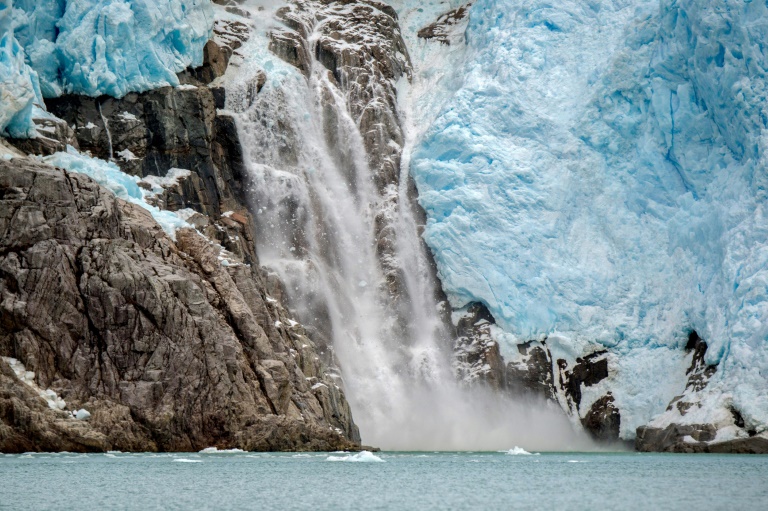
Representational image

Representational image

Share on FacebookShare on TwitterShare on WhatsAppShare on Linkedin

New Delhi:  Himalayan glaciers across India, China, Nepal and Bhutan have been losing the equivalent of more than a vertical foot and half of ice each year since 2000, a new comprehensive international study said Wednesday.

The analysis, spanning 40 years of satellite observations, indicate that melting of the Himalayan glaciers caused by rising temperatures has accelerated dramatically since the start of the 21st century — almost double the amount of melting that took place from 1975 to 2000.


Also Read

What we know after Jensen Huang resigns as Nvidia CEO

5 days ago

74-year-old American becomes world’s oldest wingsuit flyer

1 week ago

The study is the latest and perhaps most convincing indication that climate change is eating the Himalayas’ glaciers, potentially threatening water supplies for hundreds of millions of people downstream across much of Asia.

“This is the clearest picture yet of how fast Himalayan glaciers are melting over this time interval, and why,” said lead author Joshua Maurer, a Ph.D. candidate at Columbia University’s Lamont-Doherty Earth Observatory.

While not specifically calculated in the study, the glaciers may have lost as much as a quarter of their enormous mass over the last four decades, said Maurer.

The study appears this week in the journal Science Advances.

Currently harboring some 600 billion tonnes of ice, the Himalayas are sometimes called the earth’s ‘Third Pole’.

Many other recent studies have suggested that the glaciers are wasting, including one this year projecting that up to two-thirds of the current ice cover could be gone by 2100.

But up to now, observations have been somewhat fragmented, zeroing in on shorter time periods, or only individual glaciers or certain regions.

These studies have produced sometimes contradictory results, both regarding the degree of ice loss and the causes.

The new study synthesises data from across the region, stretching from early satellite observations to the present.

The synthesis indicates that the melting is consistent in time and space, and that rising temperatures are to blame.

Temperatures vary from place to place, but from 2000 to 2016 they have averaged one degree Centigrade (1.8 degrees Fahrenheit) higher than those from 1975 to 2000.

Maurer and his colleagues analysed repeat satellite images of some 650 glaciers spanning 2,000 kms from west to east. Many of the 20th-century observations came from recently declassified photographic images taken by US spy satellites.

The researchers created an automated system to turn these into 3D models that could show the changing elevations of glaciers over time.

They then compared these images with post-2000 optical data from more sophisticated satellites, which more directly convey elevation changes.

They found that from 1975 to 2000, glaciers across the region lost an average of about 0.25 metres (10 inches) of ice each year in the face of slight warming.

Following a more pronounced warming trend starting in the 1990s, starting in 2000 the loss accelerated to about half a meter (20 inches) annually.

Recent yearly losses have averaged about 8 billion tonnes of water, or the equivalent 3.2 million Olympic-size swimming pools, said Maurer.

Most individual glaciers are not wasting uniformly over their entire surfaces, he noted; melting has been concentrated mainly at lower elevations, where some ice surfaces are losing as much as five metres (16 feet) a year.

Some researchers have argued that factors other than temperature are affecting the glaciers. These include changes in precipitation, which seems to be declining in some areas (which would tend to reduce the ice), but increasing in others (which would tend to build it).

Another factor: Asian nations are burning ever-greater loads of fossil fuels and biomass, sending soot into the sky.

Much of it eventually lands on snowy glacier surfaces, where it absorbs solar energy and hastens melting.

Maurer agrees that both soot and precipitation are factors, but due to the region’s huge size and extreme topography, the effects are highly variable from place to place.

Overall, he says, temperature is the overarching force. To confirm this, he and his colleagues compiled temperature data during the study period from ground stations and then calculated the amount of melting that observed temperature increases would be expected to produce.

They then compared those figures with what actually happened. They matched.

“It looks just like what we would expect if warming were the dominant driver of ice loss,” he said.

(IANS)

Tags: Himalayan glaciersLamont-Doherty Earth ObservatoryScience AdvancesThird Pole
ShareTweetSendShare
Suggest A Correction

Enter your email to get our daily news in your inbox.


OrissaPOST epaper Sunday POST OrissaPOST epaper

Click Here: Plastic Free Odisha

#MyPaperBagChallenge

Sisirkumar Maharana

December 12, 2019
#MyPaperBagChallenge

Ramakanta Sahoo

December 12, 2019
#MyPaperBagChallenge

Manas Samanta

December 12, 2019
#MyPaperBagChallenge

Praptimayee Biswal

December 12, 2019
#MyPaperBagChallenge

Sibarama Khotei

December 12, 2019
#MyPaperBagChallenge

Anasuya Sahoo

December 12, 2019
#MyPaperBagChallenge

Anup Mahapatra

December 12, 2019
#MyPaperBagChallenge

Keshab Chandra Rout

December 12, 2019
#MyPaperBagChallenge

Sitakanta Mohanty

December 12, 2019
#MyPaperBagChallenge

Nishikant Rout

December 12, 2019
#MyPaperBagChallenge

Aishwarya Ranjan Mohanty

December 12, 2019
#MyPaperBagChallenge

Lopali Pattnaik

December 12, 2019
#MyPaperBagChallenge

Priyasha Pradhan

December 12, 2019
#MyPaperBagChallenge

Priyabrata Mohanty

December 12, 2019
#MyPaperBagChallenge

Kamana Singh

December 12, 2019
#MyPaperBagChallenge

Mandakini Dakua

December 12, 2019
#MyPaperBagChallenge

Jhili Jena

December 12, 2019
#MyPaperBagChallenge

Tapaswini Mallick

December 12, 2019
#MyPaperBagChallenge

Surya Sidhant Rath

December 12, 2019
#MyPaperBagChallenge

Arya Ayushman

December 12, 2019
#MyPaperBagChallenge

Sarfraz Ahmad

December 12, 2019
#MyPaperBagChallenge

Narendra Kumar

December 12, 2019
#MyPaperBagChallenge

Jyotshna Mayee Pattnaik

December 12, 2019
#MyPaperBagChallenge

Amritansh Mishra

December 12, 2019
#MyPaperBagChallenge

Mrutyunjaya Behera

December 12, 2019
#MyPaperBagChallenge

Akriti Negi

December 12, 2019
#MyPaperBagChallenge

Rajashree Pravati Mohanty

December 12, 2019
#MyPaperBagChallenge

Akshaya Kumar Dash

December 12, 2019
#MyPaperBagChallenge

Sarmistha Nayak

December 12, 2019
#MyPaperBagChallenge

Ipsita

December 12, 2019

Archives

Editorial

Tech Terror

November 18, 2026

It cannot be a coincidence that when the world was still trying to come to terms with the prospect of...

Read moreDetails

More Miseries Ahead

Inflation in India
November 17, 2026

Life is getting difficult by the day for Indians with all us citizens reeling under the dual shocks of rising...

Read moreDetails

Tough Times

Press
November 16, 2026

Press freedom has, for years, been under attack almost everywhere across the globe, but the situation has never been as...

Read moreDetails

Democracy Strikes Back

Rights & Restrictions: AAKAR PATEL
November 15, 2026

By Aakar Patel Democracies correct themselves through elections. The leadership of every nation is imperfect, and the problems become especially...

Read moreDetails
  • Home
  • State
  • Metro
  • National
  • International
  • Business
  • Editorial
  • Opinion
  • Sports
  • About Us
  • Advertise
  • Contact Us
  • Jobs
Developed By Ratna Technology

© 2025 All rights Reserved by OrissaPOST

  • News in Odia
  • Orissa POST Epaper
  • Video
  • Home
  • Trending
  • Metro
  • State
  • Odisha Special
  • National
  • International
  • Sports
  • Business
  • Editorial
  • Entertainment
  • Horoscope
  • Careers
  • Feature
  • Today’s Pic
  • Opinion
  • Sci-Tech
  • About Us
  • Contact Us
  • Jobs

© 2025 All rights Reserved by OrissaPOST

    • News in Odia
    • Orissa POST Epaper
    • Video
    • Home
    • Trending
    • Metro
    • State
    • Odisha Special
    • National
    • International
    • Sports
    • Business
    • Editorial
    • Entertainment
    • Horoscope
    • Careers
    • Feature
    • Today’s Pic
    • Opinion
    • Sci-Tech
    • About Us
    • Contact Us
    • Jobs

    © 2025 All rights Reserved by OrissaPOST