Dhenkanal: Heritage enthusiasts under the aegis of Dhenkanal Heritage Walks (DHW) recently explored the lesser-known yet culturally vibrant Buddhist village of Sarakpatna, located in Bhapur block of Dhenkanal district along the Sapua river.
Participants were astonished to find that the Buddhist way of life continues to be actively practised in the village even after centuries.


While Buddhism today survives largely as a way of life in select parts of India and across Southeast Asia, its deep roots in ancient Kalinga (Utkala) are often confi ned to historical texts.
However, witnessing living Buddhist traditions in the region can be profoundly moving.
Also Read: Parida focus on better facilities at City’s heritage, religious sites
Kalinga, after all, was a key transit point in the spread of Buddhism beyond India following the devastation of the Kalinga War.
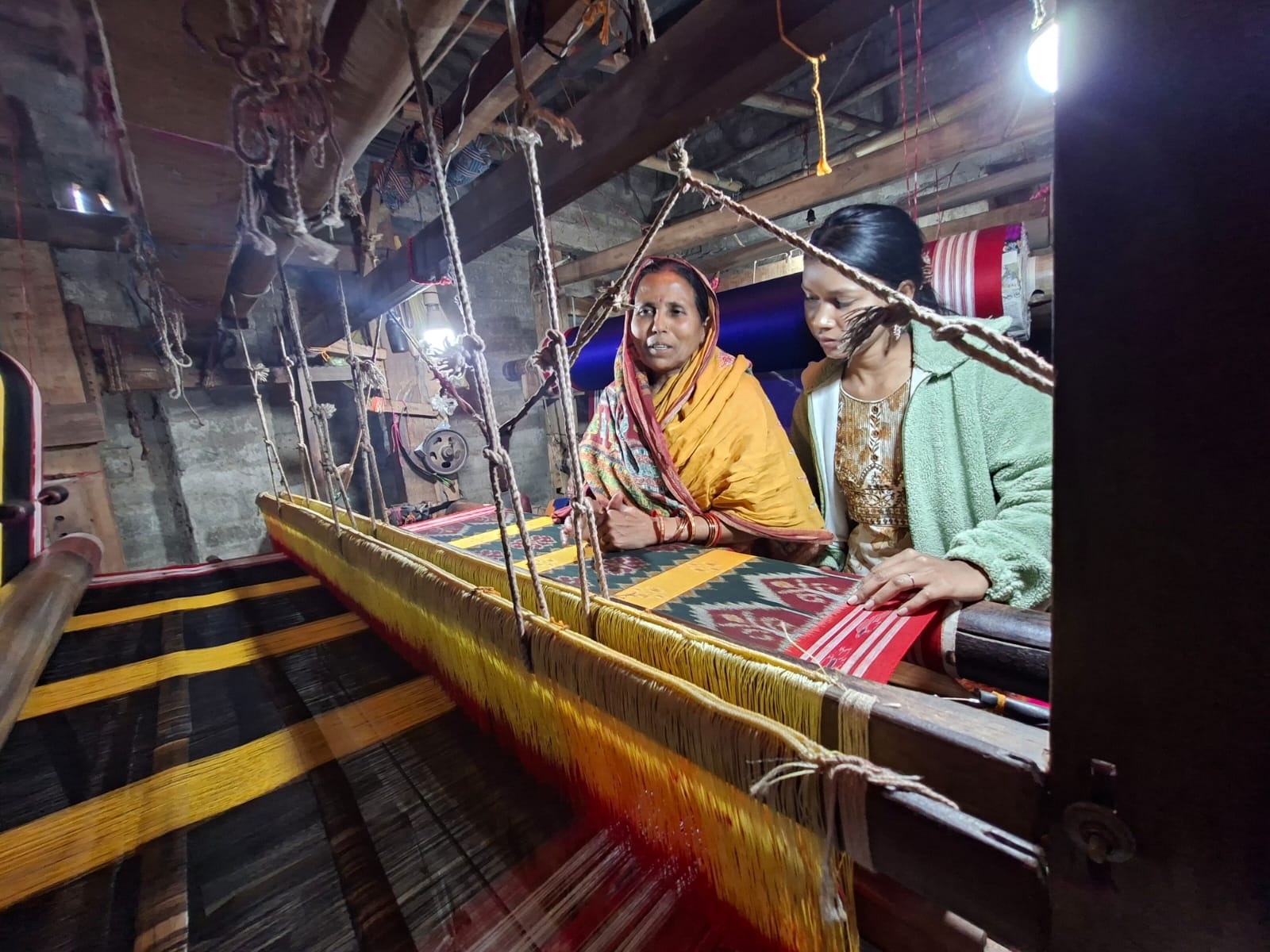
Located about 15 km from the district headquarters, Sarakpatna is predominantly inhabited by the Tantubaya or Rangani weaving community, with looms found in almost every household and operated across generations— reflecting strong intergenerational skill transmission without institutional support.
What sets the village apart is its religious composition: nearly 98 per cent of residents continue to follow the Buddhist way of life, making Sarakpatna a rare exception in Odisha, where Buddhism declined as a community religion after the early medieval period.
The village’s social fabric—from diet and rituals to birth and death ceremonies—is deeply rooted in Buddhist ethical principles.
A centrally located Buddhist temple with a stone image of the Buddha serves as the village’s religious and communal hub, with the annual Buddha Jayanti on Baisakh Purnima remaining its most significant collective observance.
The village’s name also offers historical insight. Sarakpatna is believed to derive from “Sarak,” often seen as a linguistic variation of Shravaka—a Buddhist disciple or “hearer” of the Buddha’s teachings.
Scholarly studies on Sarak communities in eastern India trace them to ancient Buddhist populations that preserved vegetarianism and ethical codes long after Buddhism’s institutional decline, a tradition Sarakpatna appears to have locally sustained.
Definitive historical records explaining the village’s conversion to Buddhism are unavailable.
However, oral traditions preserved by village elders recount visits by Buddhist monks from China, Japan, Tibet and Sri Lanka, suggesting earlier trans-regional links within Buddhist networks.
The 33rd Dhenkanal Heritage Walk, led by DHW convener Suresh Prasad Mishra, enabled direct engagement with over 50 weaving households.
Discussions centred on weaving techniques, economic sustainability and the link between religious ethics and occupational life.
Participation by researchers, retired administrators, heritage practitioners and college students underscored growing recognition of Sarakpatna— not as a relic, but as a living socio-cultural system.
A proposal emerging from the walk to establish a village library dedicated to Buddhist literature reflects a shift from heritage documentation to heritage transmission, especially for younger generations.
Such initiatives align with contemporary heritage frameworks that prioritise community-centred knowledge preservation over symbolic representation.