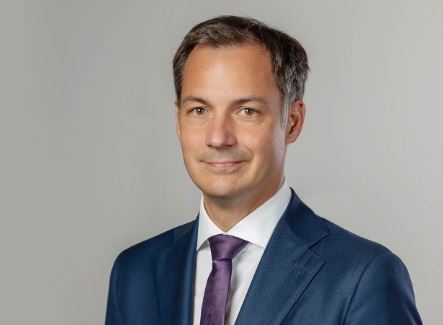


By Alexander De Croo
This year’s Munich Security Conference brought plenty of talk about geopolitics, spheres of influence, the future of NATO, and defence budgets. But as much as these debates matter, they no longer define the full spectrum of power. In today’s fractured world, security is not just about tanks and treaties. It also depends on strong and trusted partnerships, resilient systems, and functioning institutions. These are what equip societies to withstand shocks.
Understood in these terms, international development is not just a form of “soft power” (exerting influence through persuasion and attraction). It is hard power – and our most effective preemptive strike against future threats.
Too many leaders fail to recognise that development is foundational to security itself. They regard development assistance as charity, a luxury compared to the necessity of “real” defence work. But this mindset undermines stability by blinding policymakers to the many drivers of conflict. The longer we ignore the root causes of violence, the more we will pay in lives, taxes, and foregone prosperity.
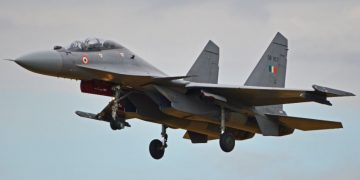
It costs far less to prevent crises than to manage their consequences. If we elevate fighter jets as “strategic” assets but dismiss a functioning education system as “mere aid,” and if we always find money for missiles but not for water or electricity, we are not protecting our societies. We are weakening them.
Yes, defence spending matters, and increased military investment is a legitimate policy response in today’s world. But without parallel investment in development, it is only half a security strategy.
Even if you are more concerned with realpolitik than with human welfare, the data make this clear. A recent analysis by ONE finds that every dollar invested in development and conflict prevention could save up to $103 in future crisis-related costs – from military operations to humanitarian responses to the effects of economic disruption. That is not soft power. It is the highest return you will find in any global security portfolio, and thus the most rational investment choice that governments can make.
Whether it is military intervention, economic fallout, or emergency relief, we always pay for what we failed to prevent. Airstrikes and sanctions are not a solution to violent extremism, irregular migration, or state collapse. Such problems are best contained – and ultimately prevented – when those on the front lines have a future they can look forward to. That means education for their children, reliable electricity, basic services, and a job that pays enough to escape poverty.
If development remains an afterthought in our security doctrine, we will keep losing. We must stop pretending that drones can solve every problem and acknowledge the limits of traditional military force. Consider the Lake Chad Basin, where years of armed interventions failed to stop extremist violence. Military means achieved little because the jobless remained jobless, services remained broken, and the state remained absent. The brush was cleared, but the soil remained uncultivated. Not until development efforts accelerated could the region’s thousands of displaced people return to their homes and rebuild their livelihoods.
Similarly, in parts of Iraq once gutted by war, millions of people have returned, not just because the bullets stopped, but because the electricity came back on and schools and hospitals reopened. Societies begin to heal when development efforts do not merely manage displacement, but give people a reason to stay.
Likewise, after the fall of the Berlin Wall, Western investment in democratic institutions, infrastructure, and economic resilience helped rebuild post-communist societies and laid the foundations for a new era of prosperity. What mattered was not speed, but sequencing: institutions must come before liberalisation, social-safety nets must accompany markets, and political inclusion must come alongside economic reform. Where that balance was respected, stability followed. Where it was ignored, vulnerability filled the gap.
These lessons are as relevant as ever. Security policies that prioritise military force over governance and development do not prevent or shorten conflicts; they encourage and prolong them, usually by creating a vacuum that extremist groups, smugglers, and hostile powers are quick to exploit. Development is the ultimate expression of hard power, allowing us to prevent crises that we would otherwise need to respond to. It is our global community’s first line of defence. Violence becomes far less likely when states can deliver basic services, when young people have economic prospects, and when institutions are seen as legitimate.
Development does not follow from security. It produces it, because lasting security demands long-term horizons. In a world defined by constant urgency, the temptation is to focus only on immediate threats. But if short-term pressure to respond to crises precludes sustained investment in institutions, opportunities, and governance, instability becomes structural.
Hard power is not just the capacity to react. It is the capacity to prevent. Integrating development into the geopolitical debate is not idealism. It is strategic, budget-conscious realism. We can pay up front for development, or we can keep paying the bill later, with interest, in a more unstable and insecure world.
The writer, Administrator of the United Nations Development Programme, is a former prime minister of Belgium