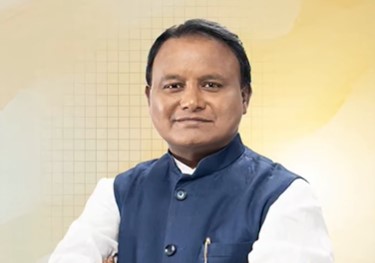
Bhubaneswar: Odisha Chief Minister Mohan Charan Majhi Thursday urged Opposition BJD to broaden its understanding of women’s empowerment and not restrict it to financial help to self-help groups or reservation in local bodies.
Majhi made the remarks while piloting a discussion in a special Assembly session on ‘Participation of Women in Indian Democracy’, where he called for greater inclusion of women in decision-making across social, economic and political spheres.


He was referring to the BJD’s claim of providing 50 per cent reservation for women in three-tier panchayati raj institutions and urban local bodies, and said empowerment must go beyond representation at the grassroots level.
Highlighting women’s achievements, the CM said over the past 80 years of Independence, women have become fighter pilots, armed forces officers and public transport drivers. He also cited the contributions of women officers in national security operations.
Majhi also referred to officers such as Colonel Sophia Qureshi and Wing Commander Vyomika Singh in Operation Sindoor.
Citing UDISE+ data, he said women comprise 53.3 per cent of school teachers (2023–24) and 43 per cent of higher education faculty, questioning why they should not also lead policymaking at higher levels.
The CM also criticised the Congress for not introducing women’s reservation when it had a dominant presence in Parliament, and questioned the BJD’s position on extending quotas to legislatures.
“I think self-interest might be a factor,” he said.
Majhi also lauded Prime Minister Narendra Modi for promoting women’s participation in politics, citing leaders such as President Droupadi Murmu, Finance Minister Nirmala Sitharaman, Odisha Deputy Chief Minister Pravati Parida and Assembly Speaker Surama Padhy.
He highlighted key state initiatives, including the ‘Subhadra Yojana’ aimed at empowering over one crore women, promoting financial independence and digital banking, and the establishment of Nari Adalats for grassroots justice.
The chief minister said around 14.5 lakh women are already elected representatives in Panchayati Raj Institutions and expressed confidence that the Women’s Reservation Act would extend this participation to higher levels, with implementation targeted from the 2029 elections.
Majhi rejected the fear over the delimitation bill and clarified that any increase in Lok Sabha seats would proportionally benefit state assemblies and there will be no loss to the state’s representation in Parliament.