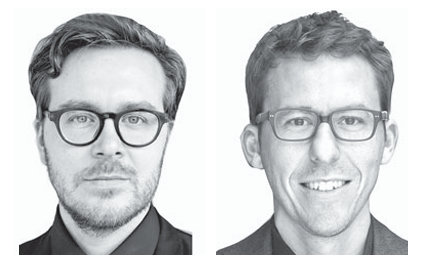
By Frederik Obermaier & Bastian Obermayer
When John Doe, the anonymous whistleblower behind the Pan ama Papers, approached us, he handed us an opportunity. When the resulting investigation into the offshore finance industry was published on 3 April, 2016, the world was handed a test.
As investigative journalists, we seized the opportunity. Sadly, the world has failed the test. For decades, Panama, Malta, the British Virgin Islands, and the Cook Islands functioned as safe havens for dictators, strongmen, presidents, kings, mafia clans, money launderers, and tax cheats.
Behind layers of shell companies, erected often by shady law firms, they hid fortunes, influence, and crimes. John Doe tore away the veil. The outrage was immediate and dramatic. US President Barack Obama called for international reforms to address the “huge problem” of tax avoidance. British Chancellor of the Exchequer George Osborne touted a “hammer blow against those who hide their illegal tax evasion in the dark corners of the financial system.”
A slew of investigations were launched. Icelandic Prime Minister Sigmundur Gunnlaugsson resigned over revelations that he owned an undeclared offshore company. Pakistani Prime Minister Nawaz Sharif was removed from office and indicted on corruption charges. Governments recovered more than $1 billion in back taxes and penalties. Britain, France, Germany, Italy, and Spain launched an information-sharing initiative to combat tax evasion and avoidance.
For a moment, it looked as if governments were finally ready to confront a problem they had tolerated for decades. But systemic reform never came. Jurisdictions talked tough but quietly protected the status quo. A decade later, the verdict is damning. The world was warned. Lawmakers blinked. And the system endured.
Tackling the kind of financial crimes exposed by the Panama Papers is not some impossible dream. On the contrary, much could be achieved simply by introducing freely accessible public registers of beneficial ownership. If the public knows exactly who owns each firm, shell companies will not be able to shield those who steal, bribe, launder money, and evade taxes. The same goes for trusts: with many jurisdictions largely or fully exempting them from public disclosure, these “weapons of mass injustice” can hold wealth indefinitely, while obscuring who truly controls it.
Public ownership registers are widely recognised as one of the most effective tools against corruption. But governments largely refuse to implement them. Where they do exist, they are often deliberately weakened, such as by restricting access to them. In British Overseas Territories and Crown Dependencies, public registers remain unfinished or protected by large barriers to access.
In the United States, the Corporate Transparency Act of 2021 was hailed as a breakthrough. But the national ownership register was never made fully accessible to the public, and the relevant authority—the Financial Crimes Enforcement Network— has since exempted many companies from reporting requirements.
The consequences of America’s failure to act are particularly severe. While US politicians routinely condemn financial secrecy in distant lands, they ignore the uncomfortable truth: when it comes to hiding dirty money, Delaware and Nevada are not much better than Panama.
Then-Treasury Secretary Janet L. Yellen acknowledged as much in 2021: “There’s a good argument that, right now, the best place to hide and launder ill-gotten gains is actually the United States.” (Europe is also high on the list.) Illicit gains are often channeled through the property sector. Global Financial Integrity reports that, in 2015–20, more than $2.3 billion was laundered through US real estate. America’s own authorities have warned that opaque ownership structures have enabled sanctioned Russian elites to invest in US property.
Entire neighborhoods of luxury housing are effectively anonymously owned. US President Donald Trump’s administration appears particularly unlikely to act against hidden wealth, even though this would be one of the most powerful weapons against America’s adversaries. Drug cartels, sanctioned oligarchs, extremist networks, and kleptocratic regimes rely less on troops and drones than on clever accountants, shell companies, and real-estate registries.
But Trump would rather deploy warships, authorise airstrikes, and threaten to obliterate civilisations than dismantle this infrastructure. Hidden wealth fuels corruption, distorts markets, drives inequality, finances authoritarian regimes, and weakens democracies. It bankrolls disinformation, environmental destruction, and war.
It endures not because it is inevitable, but because powerful interests benefit from it. None of the measures recommended here is technically difficult or even economically damaging. They are just politically inconvenient— and, in many cases, financially detrimental for those in power. After all, from Washington to Moscow to Berlin, political power is often concentrated in the hands of the ultra-wealthy. The revelations contained in the Panama Papers were shocking.
But the response has exposed something even more troubling: how determined governments are to protect the system of offshore wealth that causes such far-reaching harm to our societies and economies. Lawmakers cannot credibly claim to oppose authoritarianism and corruption unless they act to dismantle these financial crime havens.
Frederik Obermaier, a Pulitzer Prize-winning investigative journalist, is Co-Founder and Co-Director of the investigative newsroom Paper Trail Media. Bastian Obermayer is a Pulitzer Prize–winning investigative journalist.