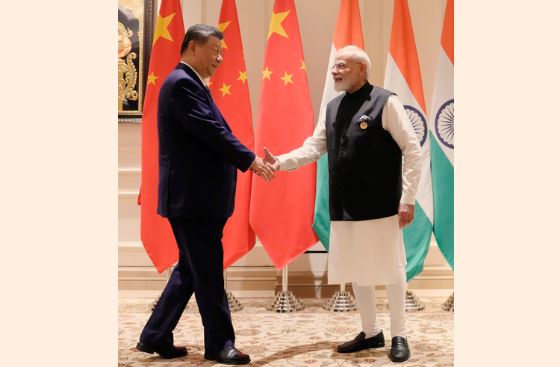
New Delhi: Prime Minister Narendra Modi Saturday conveyed to Chinese President Xi Jinping that peace and tranquillity along the frontier remains essential for development of India-China relations, emphasising that existing agreements on border management must be strictly observed.
In their talks on the sidelines of the BRICS summit, the two leaders reaffirmed that both the countries should take a strategic and long-term perspective of their ties and differences should not become disputes, according to the Ministry of External Affairs (MEA).

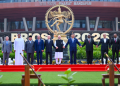
On economic front, Modi and Xi underlined the need to address each other’s concerns, including structural trade imbalance and supply chain issues, and facilitation of meaningful and predictable market access, it said.
The two leaders expressed commitment to a “fair, reasonable, and mutually acceptable” resolution of the boundary question proceeding from the political perspective of their overall bilateral relations and the long-term interests of the two sides, it said.
In his remarks, PM Modi highlighted that both sides must be “guided by three mutuals — mutual respect, mutual sensitivity and mutual interest” in the ties.
The meeting took place hours after Xi arrived in the national capital on a two-day visit to attend the BRICS summit, marking his first trip to India in seven years.
Xi’s visit to India came on the heels of several high-level exchanges, including the Special Representative dialogue in Beijing between National Security Advisor Ajit Doval and Chinese Foreign Minister Wang Yi, even as lingering concerns remain over aggressive Chinese military posturing along the Arunachal Pradesh sector.
Modi and Xi held wide-ranging talks on August 31 last year on the margins of the Shanghai Cooperation Organisation (SCO) summit in Chinese city of Tianjin.
In the last few months, the two sides have taken a series of measures to rebuild their relationship after it came under severe strain following the deadly Galwan Valley clashes in 2020.
The MEA said the two leaders welcomed the steady progress in India-China relations since their last meeting in Tianjin and reaffirmed that “both countries should take a strategic and long-term perspective of their ties”.
“The prime minister emphasised that peace and tranquillity in the border areas remains an essential basis for the continued development of bilateral relations,” it said.
“He underlined the need for both sides to observe existing agreements and understandings on border related issues,” it added.
The MEA said the “two leaders took note of the progress in people-to-people ties and underscored the need to further promote cultural exchanges, business linkages and greater mobility between the two countries.”
“The two leaders agreed that both sides must continue to expand common ground on regional and global issues, and in addressing challenges,” it said.
The prime minister appreciated China’s support for India’s BRICS chairship and its contributions towards the success of the grouping’s summit.
In his televised opening remarks, Xi said Beijing has always viewed the development of India-China relations from a “strategic and long-term perspective”.
“Although our national conditions differ, we can fully support each other and pursue common development path,” he said in Mandarin.
“Faced with a complex and intertwined international situation, China and India — as the world’s two most populous countries and key members of the Global South — shoulder significant responsibilities,” he said.
“Both sides should keep the future of humanity and the well-being of our people in mind. We must join hands to promote cooperation and strive for an inclusive economic future,” he said.
After over four years of frosty ties over the eastern Ladakh military standoff, India and China began to repair the relations following a meeting between Modi and Xi in the Russian city of Kazan in October 2024 that took place after the face-off ended.
The talks between Modi and Xi covered a range of issues including reducing their trade deficit, tackling challenges like terrorism and ensuring fair trade in multilateral platforms.
PTI