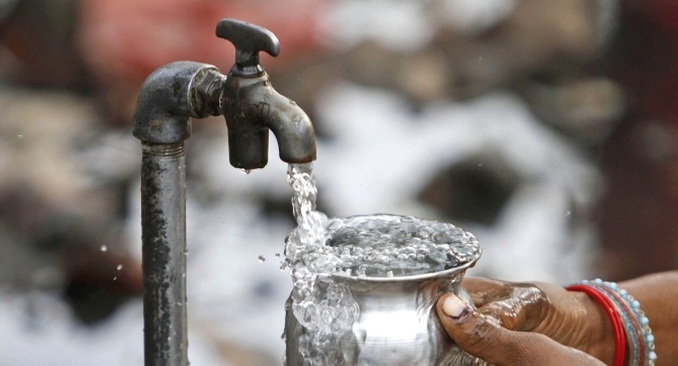
Bhubaneswar: The state government has failed to achieve the target of providing Functional Household Tap Connections (FHTCs) to all rural households by 2024, leaving 31% of households uncovered, according to a Comptroller and Auditor General (CAG) report tabled in the Monsoon Session of the Assembly. The Union government had launched Jal Jeevan Mission (JJM) in August 2019 with the objective of providing piped drinking water supply through FHTCs to every rural household by 2024.
However, the performance audit of JJM found that the state could not achieve universal coverage by the target year, with 31% of rural households still without FHTCs. Among the five districts tested by the CAG, household coverage was highest in Kandhamala at 69.65% and lowest in Malkangiri at 11.20%. The government had taken up 207 mega water supply projects across Odisha during 2019-24, of which 133 were being executed under JJM.

However, only two of these projects had been completed in all respects by June 2024, the report said. The audit also found deficiencies in participatory planning. In 24 of the 39 villages where Village Action Plans (VAPs) had been prepared, Gram Sabhas were not held for their approval, despite this being mandatory under JJM. District Action Plans (DAPs) were not prepared in any district except Kandhamal.
Consequently, the State Action Plan, which was to be derived from the DAPs, was also not prepared, thereby compromising the prescribed bottom-up planning approach, the CAG said. The Village Water Supply Committees (VWSCs) were also not adequately involved in the implementation and operation and maintenance of water supply schemes, in violation of the mission guidelines. Lack of community participation in planning, implementation and management adversely affected project completion as well as the sustainability of schemes after their commissioning, the report observed.
The audit further pointed out that expenditure on support activities and Water Quality Management and Surveillance (WQM&S) remained significantly below the permissible limits. Only 2.20 per cent of the allotted fund was spent on support activities against the permissible limit of 5 per cent, while expenditure on WQM&S stood at 0.38 per cent against the permissible limit of two per cent. The CAG said the low expenditure indicated that implementation of activities planned under these components remained sub-optimal. The state also failed to collect community contributions towards user charges and operation and maintenance of the projects, contrary to JJM guidelines.
This, the report said, prevented the creation of a sense of ownership among beneficiaries and affected the objective of making rural water supply schemes financially and operationally sustainable. The audit also highlighted shortcomings in water quality testing infrastructure. Of the 77 laboratories in the state, only 26 had NABL accreditation and 17 were NABL-recognised, while the remaining 34 laboratories had neither accreditation nor recognition.
Orissa POST – Odisha’s No.1 English Daily