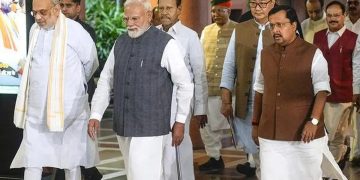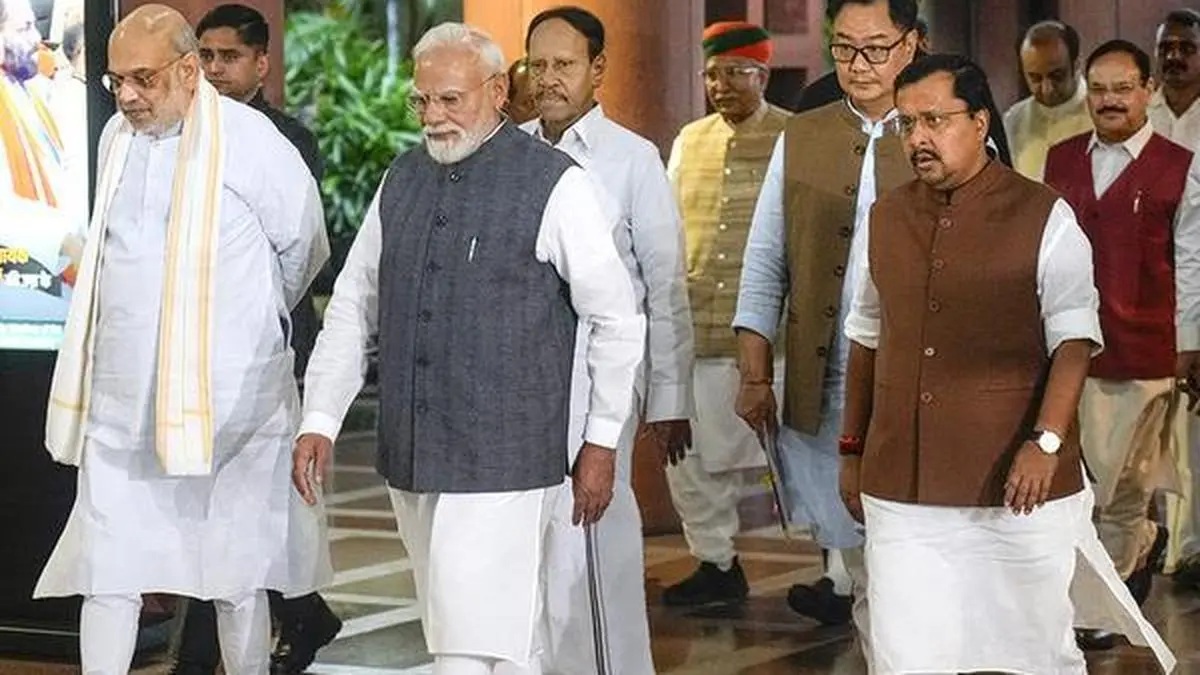
Defeat in Ayodhya in 2024, where the Ram temple was built with much pomp, appears to have deeply shaken the BJP’s apex leadership. The election results exposed the failure of the party’s “Abki Baar 400 Paar” slogan. The BJP managed to form the government at the Centre only after securing the support of former Bihar Chief Minister Nitish Kumar’s Janata Dal (United), which won 12 Lok Sabha seats, and N Chandrababu Naidu’s Telugu Desam Party (TDP) in Andhra Pradesh, which won 16.
Together, the two allies contributed 28 seats. The BJP’s win in 20 out of Orissa’s 21 Lok Sabha seats for the first time ever had greatly strengthened its claim to form government at the Centre. Without this singular impressive performance in Orissa, the party’s position would have been further weakened. Prime Minister Narendra Modi’s personal victory margin in Varanasi had also declined sharply. He won the constituency by 3,71,784 votes in 2014, which increased to 4,79,505 votes in 2019, but that margin fell sharply to 1,52,513 votes in 2024. These figures might indicate reasons for the BJP’s growing insecurity despite being in power currently.
Also Read


BJP’s pre-election slogan of crossing 400 seats seemed to have raised concerns among common voters over the possibility of unbridled power. In particular, there were public apprehensions regarding changes to the Constitution. This might have contributed to the BJP’s failure to secure a majority on its own. Having to seek support from two regional leaders, Nitish Kumar and Chandrababu Naidu, was also a blow to the party’s political pride, especially given Modi’s stature as a dominant national leader.
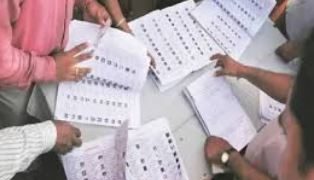
Instead of changing its political approach to regain public support after the electoral setback, the BJP government at the Center appears to have turned to a new political weapon: the Special Intensive Revision (SIR) of electoral rolls. This seems to have resulted in Chief Election Commissioner (CEC) Gyanesh Kumar, a retired bureaucrat, becoming the centre of this whole exercise of creating an infallible weapon of mass destruction. The SIR was implemented ahead of the November 2025 Bihar Assembly elections to test its effectiveness. The same experimental exercise was subsequently carried out in West Bengal, where its success was assessed for a second time.
According to available ECI data, so far, more than 13 crore voters have been removed from electoral rolls across the country. Disenfranchising such an enormous number of citizens in a country such as India could bode ill, to put it mildly, for democracy. Assembly elections in Uttar Pradesh as well as several other states, are approaching early 2027. In this background, the BJP’s pet call for “One Nation, One Election” appears to have been conveniently shelved. Had that proposal been implemented with earnest, it would have been difficult to test a programme such as SIR in this phased manner.
The implications of SIR seem to extend well beyond elections. For instance, during the exercise in Bihar, a case concerning Aadhaar was filed in the Supreme Court, which ruled that the Aadhaar card, another scheme that the Modi gov’t had been insistent on implementing, cannot be proof of Indian citizenship, which could offer voting rights. This effectively undermined the significance of Aadhaar as an identity document. Similarly, ration cards are no more considered proof of citizenship.
Additionally, in what may be considered a global first, India is probably the only country whose government has officially stated that even an Indian passport is not proof of citizenship of the holder, ostensibly to ensure the success of the SIR.
As a result, various identity documents, on which thousands of crores of rupees had been and are even now being spent, have effectively been rendered invalid for the very purpose those are issued. This raises questions about the extent to which the ruling party is deploying Gov’t resources, manpower and strategy behind the SIR as it prepares for the 2029 Lok Sabha elections. Describing the exercise merely as “vote theft” risks underplaying its threat significance. The SIR, in effect, has already delivered a severe blow to Indian democracy. If it helps the ruling party achieve its “400-plus” target in 2029, it could pave the way for constitutional changes and the establishment of a permanent one-party rule in this country. History offers a precedent for such efforts. Saddam Hussein and his Ba’ath Party in Iraq pursued a similar course to consolidate one-party rule.