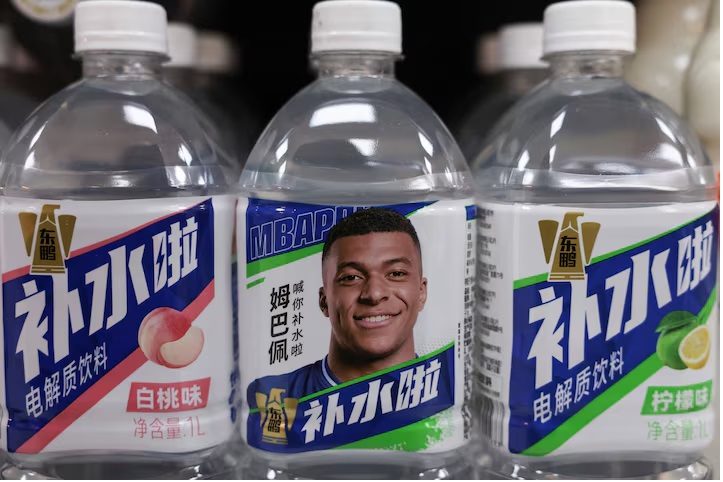
Shanghai: Real Madrid forward Kylian Mbappe’s rapid fall from favour in China after remarks about Mao Zedong followed a familiar pattern: online outrage, corporate distancing, platform restrictions and official intervention.
Within 24 hours of a podcast clip surfacing in which the France captain referred to Mao as “some guy – I think he’s a Chinese dictator”, sponsors including Mengniu Dairy, Shanghai Milkground and energy drink-maker Eastroc ended cooperation with the footballer.

State broadcaster CCTV removed Mbappe-related advertising and Chinese social media platforms restricted access to his accounts. Mbappe apologised Tuesday, describing his remarks as “ill-judged”.
The speed of the fallout will be familiar to companies, brands and celebrities with exposure to China.
Analysts say the episode is the latest reminder of a business risk that remains difficult to manage despite years of similar controversies.
Foreign brands have repeatedly faced public backlash in China, from Dolce & Gabbana’s cancelled Shanghai fashion show in 2018 and apologies by Versace, LVMH-owned Dior and Tapestry’s Coach in 2019, to boycotts of H&M, Nike and Adidas over Xinjiang cotton and the NBA’s fallout with CCTV after a Houston Rockets executive expressed support for Hong Kong’s pro-democracy movement.
The details differ, but the pattern is similar: a remark, image or statement gains traction online, commercial partners come under pressure to respond, and reputational damage quickly outgrows the original offence.
“You don’t need to think like a Chinese person to succeed in China, but you do need to understand how Chinese audiences will react and the cultural implications of not self-policing,” said Michael MacRitchie, founder of MGI Group, which connects global celebrities with Chinese brands.
A central question in such episodes is how much of the backlash reflects genuine public anger and how much is amplified by state media, online platforms and official actors.