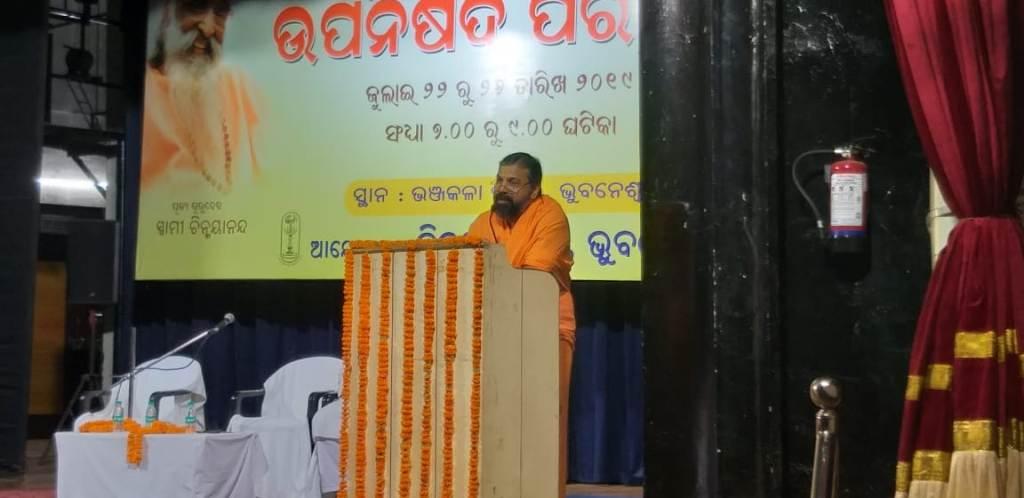
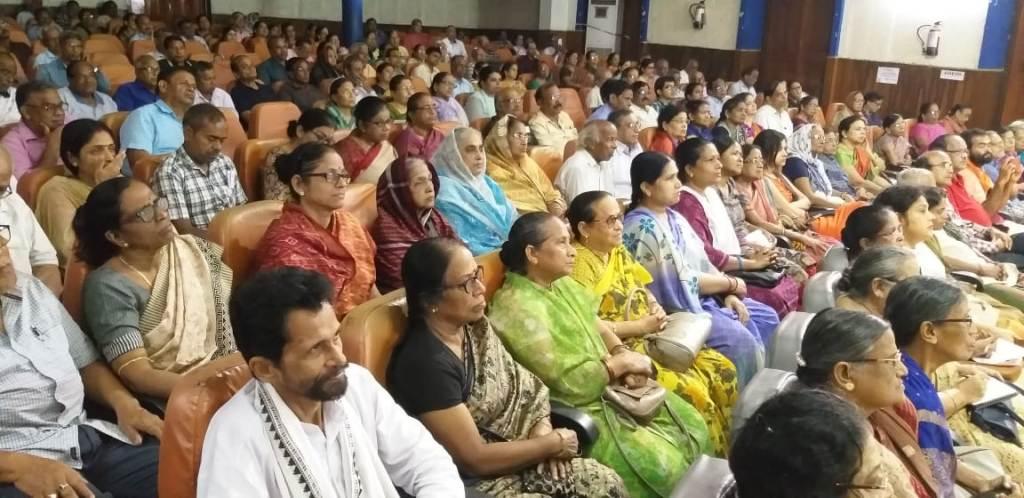
BHUBANESWAR: The Chinmaya Mission, Bhubaneswar organised a five-day Upanishad Parichay programme at Bhanja Kala Mandap here Thursday.
“Upanishad helps one in attaining intellect and guides towards attaining self-attainment. Therefore, I personally feel that Upanishads should be made compulsory. Getting accustomed to it since childhood can enable one to connect to the supreme,” said Swami Bhagabata Nandjee.


“These sacred books are written in the period 400-200 BC. They are mystical and esoteric doctrines of ancient Hindu philosophy. It may be noted that the word Upanishad is written by Acharya Shankarcharya in Kathoupanishda’s Samandha Bhasyam. Upanishad is structured from ‘upa’ and ‘ni’,” he added.
There are more than 200 Upanishads that have been recorded from oral traditions and passed down over centuries. Thirteen of these include core philosophical teachings of Hinduism. The philosophical concepts contained in Upanishads are principal to Hinduism, but some are shared with Buddhism and Jainism as well.
The texts govern and explain the idea of self-realisation, which requires the practice of yoga and meditation. They also cite the concepts of non-violence, compassion, charity, and self-restraint as ethical characteristics. Many people translate the texts subjectively, which contributes to the varied Hindu schools of philosophy and religious practice. It also contributes, in part, to the various schools of yoga.
It may be noted that there only 10 Upanishad on which Adi Shankaracharya has written Bhasya or simple translation. The ten Upanishads are Ishabhasya Upanishad, Prasana Upanishad, Kena Upanishada, Mundaka Upanishad, Taitariyea Upanishad, Katha Upanishad and Bruhadaranyaka Upanishada.
The speakers were Swami Bhagabata Nandjee and Swami Jagadisha Nandaji who described Taitariyea Upanishad and Mundaka Upanishad respectively. Many Upanishad followers and researchers of Hindu scriptures attended the function in large numbers.