

By Bharat Maharana OP
Bhubaneswar is celebrating its 78th Foundation Day Monday, with major squares decorated attractively and official programmes and ceremonial events held across the city.
Observed annually April 13, it marks the formal declaration of the city as Odisha’s state capital in 1948, replacing Cuttack. The foundation stone was laid by India’s first Prime Minister, Jawaharlal Nehru.
This post-independence milestone catalysed the transformation of the ancient ‘Temple City’, denoting Bhubaneswar’s landscape of more than 700 temples, into a modern administrative hub.
Bhubaneswar’s journey as a modern capital remains deeply rooted in its historical legacy, particularly ancient Kalinga — the site of the 261 BCE Kalinga War, where Emperor Ashoka’s conquest led to massive bloodshed along the Daya River, ultimately inspiring his embrace of Buddhism and non-violence, a turning point that shaped the region’s philosophical and cultural ethos.
A Confluence of Tradition, Culture
Bhubaneswar carries forward rich heritage as a cultural hub, forming part of the “Swarna Tribhuja” (Golden Triangle) with Puri and Konark, and drawing millions to its temple traditions, the rock-cut caves of Udayagiri and Khandagiri, and the ongoing Ekamra Kshetra Heritage Project.
Being the capital of Odisha, the city draws people from across the state and the nation and reflects its cultural diversity through handlooms like Sambalpuri, Khandua Pata, Ikat and Bomkai, classical art forms like Odissi and Pattachitra, and traditional crafts such as stone carving and silver filigree.
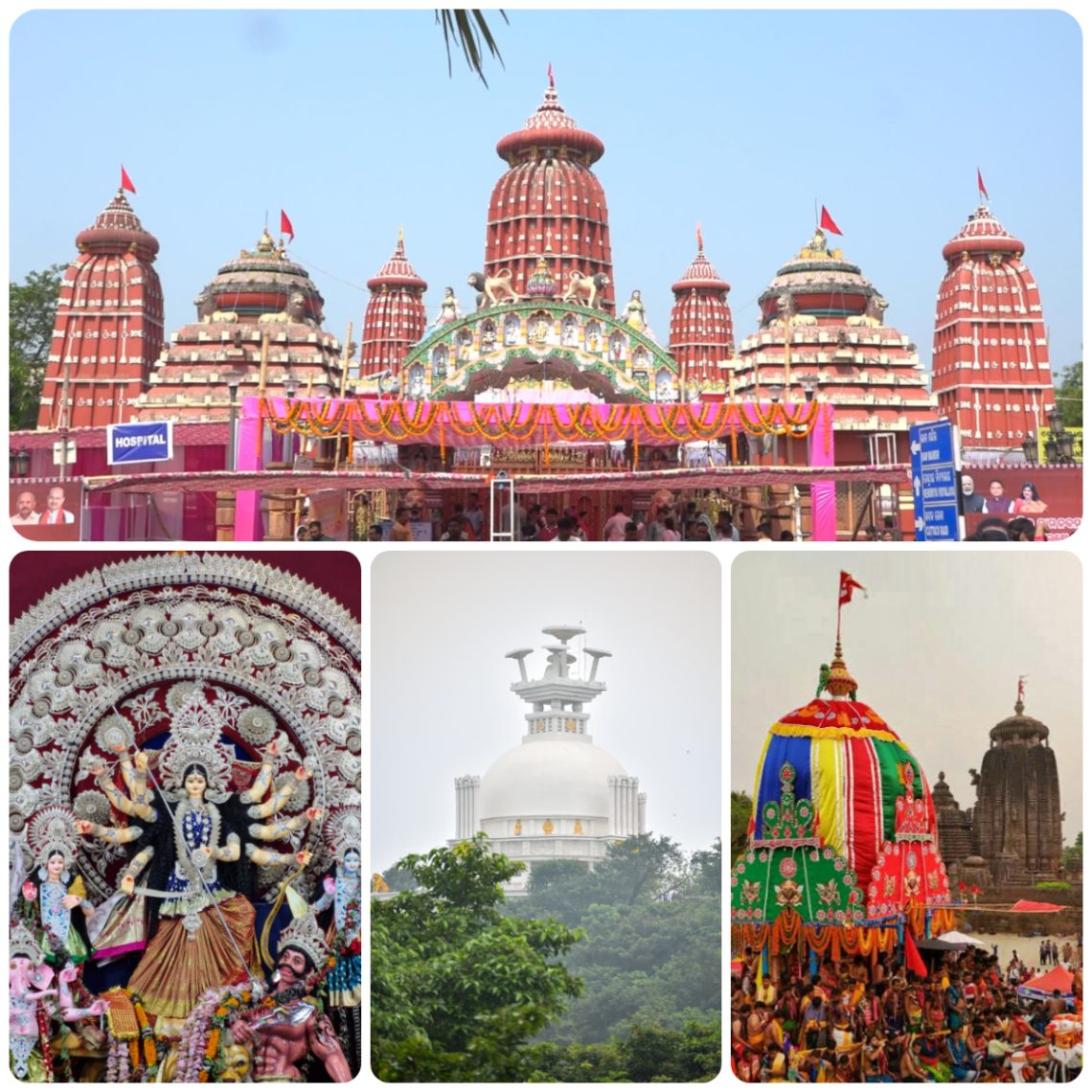

Adding to its cultural richness, Bhubaneswar is also known for its distinctive culinary traditions. The famed ‘Pahala Rasagola’ stands out for its soft, spongy texture and subtle sweetness, while the sacred ‘Abhada’ of Ananta Vasudeva Temple reflects deep-rooted spiritual practices, prepared in earthen pots without onion or garlic. Another local favourite, ‘Kora Khai’, is a traditional sweet delicacy associated with offerings at the historic Lingaraj Temple.
The city also comes alive during major festivals such as Durga Puja, marked by elaborately decorated pandals and community celebrations; ‘Maha Shivaratri’, when lakhs of devotees throng Lingaraj Temple for night-long prayers and rituals; and ‘Ashokashtami’, highlighted by the grand ‘Rukuna Rath’ procession, reflecting Bhubaneswar’s deep-rooted spiritual traditions and vibrant public celebrations. Other state-wide festivals like ‘Raja Parba’, ‘Pana Sankranti’, and Holi are celebrated with pomp and gaiety across the city.
A Forward-looking Capital
The city planned as a modern capital by German architect Otto Königsberger, continues to evolve as a well-designed urban centre with a strong focus on infrastructure and sustainability. Over the decades, it has evolved into a major centre of culture, commerce and education, emerging as one of India’s prominent planned cities.
Mayor Sulochana Das said, “The city has expanded significantly and is emerging as a modern urban centre.” She also highlighted initiatives focused on climate sustainability, inclusive development, and accommodating people from all walks of life.
The ongoing redevelopment of Bhubaneswar Railway Station is transforming it into a world-class transit hub, featuring an operational air concourse connecting the Master Canteen and Cuttack Road sides, along with modern amenities such as lifts, escalators and upgraded passenger facilities. The city has also enhanced its global connectivity with the opening of its first visa application centre offering services for multiple countries.
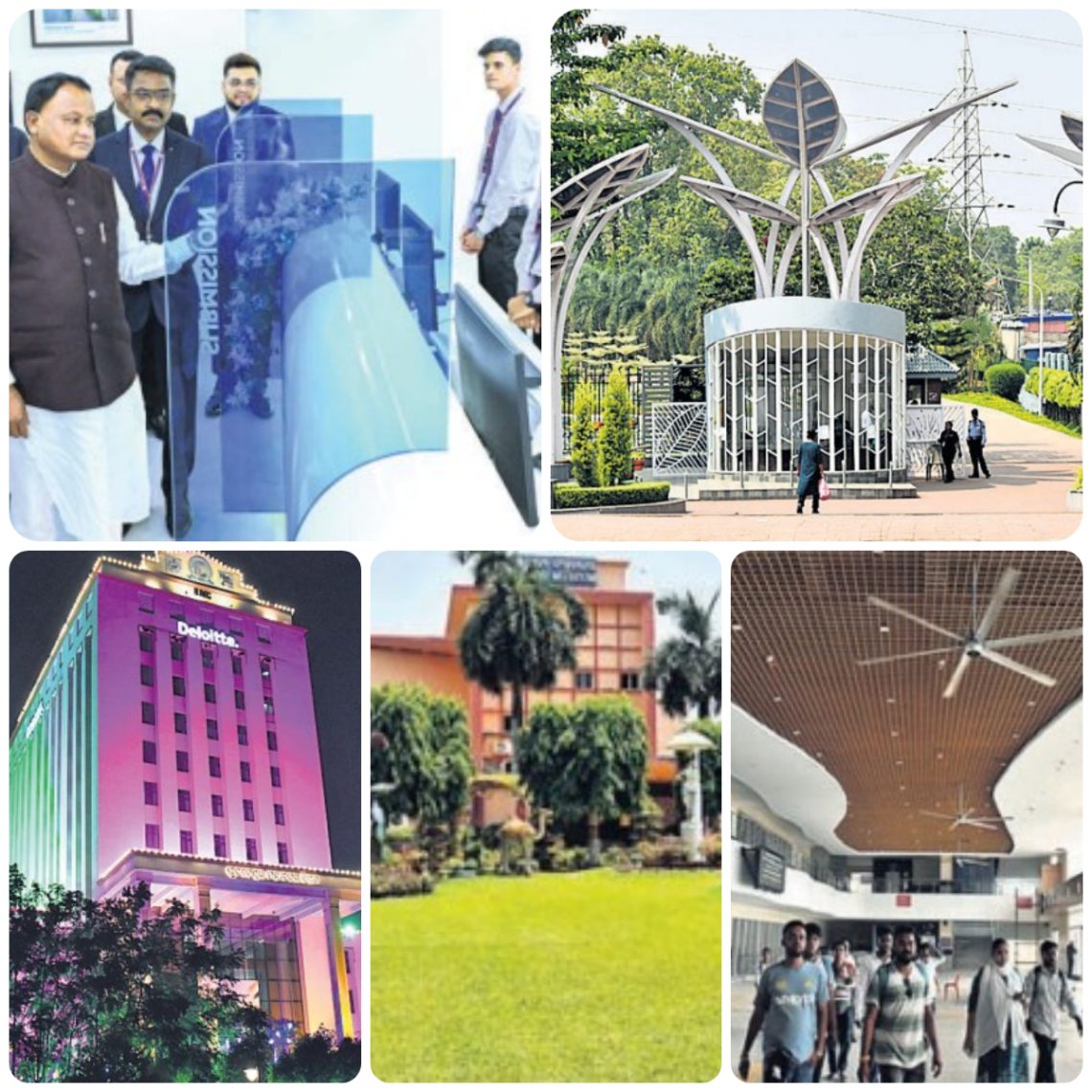
‘Ama Bus’ service, operated by the state government, has significantly improved connectivity and mobility across the capital region. Alongside this, Bhubaneswar’s growth is being driven by initiatives such as urban green corridors with tree-lined roads, improved walkways and cycling tracks to promote sustainable mobility, reinforcing its emergence as a modern, inclusive and future-ready capital.
The city is also emerging as a key technology hub in eastern India, attracting global IT giants. The two proposed semiconductor plants in the Info Valley area are set to reshape its economic landscape and position it as a future-ready centre for advanced technology and manufacturing.
Marking its Foundation Day, Bhubaneswar reflects a city in motion, balancing its enduring traditions with a rapidly changing urban landscape. As infrastructure expands and new industries take root, the capital continues to shape its identity as a vibrant, future-focused centre in eastern India.