Odisha News, Odisha Latest news, Odisha Daily - OrissaPOST
  • Home
  • Trending
  • State
  • Metro
  • National
  • International
  • Business
  • Feature
  • Entertainment
  • Sports
  • More..
    • Odisha Special
    • Editorial
    • Opinion
    • Careers
    • Sci-Tech
    • Timeout
    • Horoscope
    • Today’s Pic
  • Video
  • Epaper
  • News in Odia
  • Home
  • Trending
  • State
  • Metro
  • National
  • International
  • Business
  • Feature
  • Entertainment
  • Sports
  • More..
    • Odisha Special
    • Editorial
    • Opinion
    • Careers
    • Sci-Tech
    • Timeout
    • Horoscope
    • Today’s Pic
  • Video
  • Epaper
  • News in Odia
No Result
View All Result
OrissaPOST - Odisha Latest news, English Daily -
No Result
View All Result

Nani Ma: A defence of diversity

Atri Prasad Rout, OP

Updated: May 9th, 2023, 12:01 IST
in Entertainment, State
0
Share on FacebookShare on TwitterShare on WhatsAppShare on Linkedin

How does one process separation? Make sense of suffering? If you ask people today, chances are they will show you some Spotify playlist or any number of self-help books. But once upon a time, when there wasn’t such a thing as Spotify and influencers didn’t preach self-improvement, people also had to deal with the same things that people today deal with, things like loss, longing, failure and regret. And what helped people then deal with all of these was songs and stories, loosely referred to as folklore, these were passed down generations not through the written script but through the grandmothers, and other gifted storytellers, of many communities.
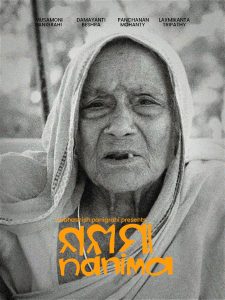
A poster of the documentary

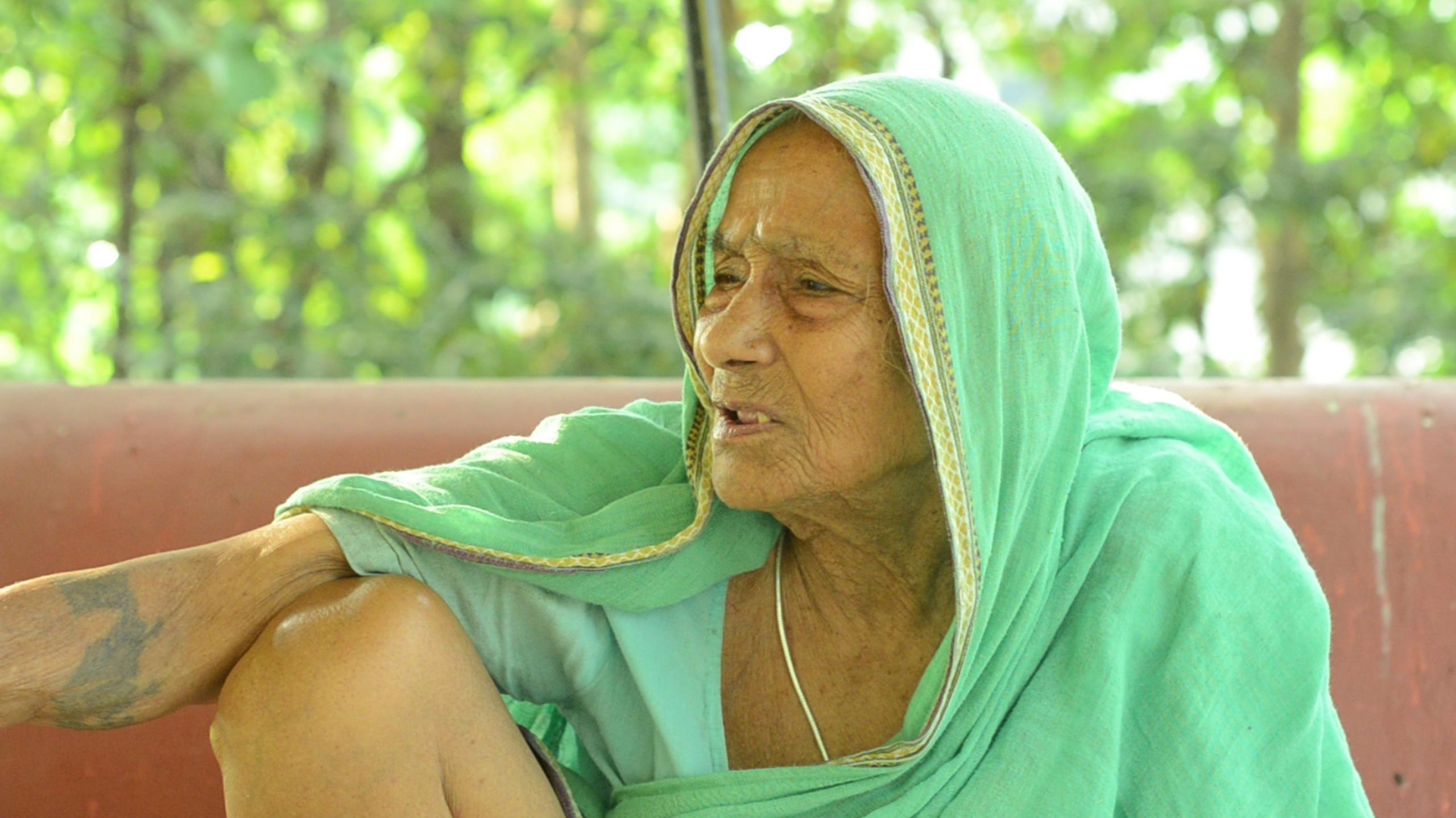
In his documentary Nani Ma, Subhashish Panigrahi takes a snapshot of this folklore, available to him through his grandmother, Musamoni Panigrahi, born in the Balasore district of Odisha in the 1920s who carried the lore from one century to the next, from one era to another.

Also Read

Laxmanananda Saraswati

Odisha names medical college after Laxmanananda; left protests

2 hours ago
NHRC

NHRC seeks compensation status for injured workers

4 hours ago

“I never realised that our grandparents are such amazing storytellers and hold so much wisdom. Only when I stayed away from Odisha, I realised that,” ruminates Subhashish who recorded the interviews with Musamoni used in the film between 2014-16, while visiting home back from his then place of work, Bangalore.

Initially, the purpose was uncertain, though partly he wanted to document dementia, memory loss and the effect of aging. “When my grandmother was 95, she couldn’t recall things she used to do so easily before,” says Subhashish. But with time, in the interviews, layers emerged, introducing him to new dimensions.

The folktales Musamoni narrated were distorted, with her brain erasing parts of her memory, and her imagination stepping in to fill the gaps. The songs almost took a new meaning, assuming an authenticity. The scope that was once limited to memory and folklore expanded to include language, how it flows, across ethnographic boundaries, evolves, absorbing new expressions and abandoning old customs, and how people attempt to exert control over that flow and evolution.

In Odisha, one of the first states in India to have been formed on the basis of language, people speak many languages, many tongues, many dialects. Those who live in the districts that border West Bengal, Jharkhand and Andhra Pradesh speak a tongue that’s heavily influenced by the languages of the bordering states. The tribal people scattered across the geography have their own languages and rich linguistic histories. People migrate, for markets, and for marriage, and with them they carry their languages, exchanging on the way, borrowing, and loaning out.

The folktales Musamoni narrated were distorted, with her brain erasing parts of her memory, and her imagination stepping in to fill the gaps

But for some, this multiplicity, diversity, is confusing, and unacceptable. These are the aberrations they want to see get eliminated, that’s why they separate the ‘suddha’ (pure), from the ‘apabhransa’ (corrupted). “People differentiate between suddha and apabhransa because it gives them a sense of superiority, exactly like the caste system. These are only extensions of Brahminical supremacy,” says Subhashish, who argues that the effort to standardize language is a mistaken pursuit. “We won’t become inferior if we use loan words, say medical or scientific terms from English,” he says, going on to add, that in trying to homogenize culture, “we are actually killing other people’s cultures, because there always has been many cultures.”

Though these issues of language and culture are politically polarising, Panigrahi’s choice of human subject, his grandmother, seems more personal than political. He captures her with a kind of tenderness and compassion that you only reserve for a loved one. There is also a sense of impending loss, that’s irreversible, as Musamoni, her generation and their wisdom confront the cruelty of time, death and decay.

But for some, this multiplicity and diversity are confusing, and unacceptable. These are the aberrations they want to see get eliminated, that’s why they separate the ‘suddha’ (pure), from the ‘apabhransa’ (corrupted)

But by picking a simple structure–interviews with Musamoni interspersed with exposition from experts–Panigrahi gives the stage entirely to his grandmother, leaving her to narrate her own stories, with her own voice, in a society that hesitates before giving agency to women. And this choice yields good results, as the subjective prevails over the objective, as the film becomes something more than mere documentation of Baleswari Odia or regional folktales. Hopefully, this will inspire documentarians, historians and academics from all linguistic and ethnographic backgrounds to preserve, record, what has been gradually disappearing, beneath our eyes, in the tide of time.


Tags: Atri Prasad RoutDocumentaryFilm ReviewOdia cultureOdia LanguageSubhasish Panigrahi
ShareTweetSendShare
Suggest A Correction

Enter your email to get our daily news in your inbox.


OrissaPOST epaper Sunday POST OrissaPOST epaper

Click Here: Plastic Free Odisha

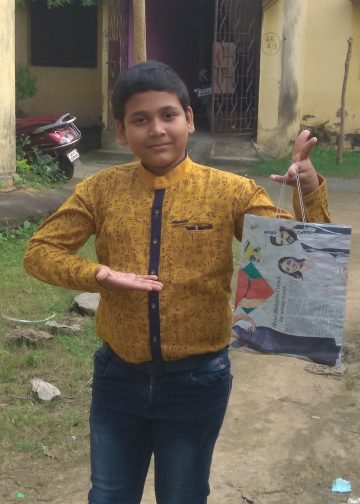
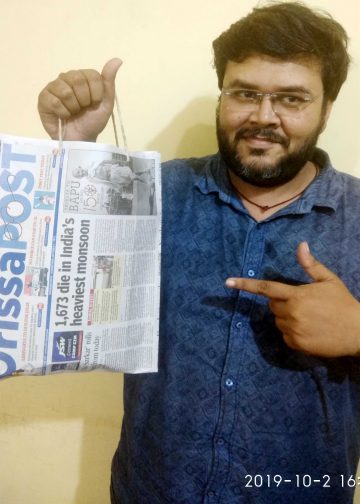
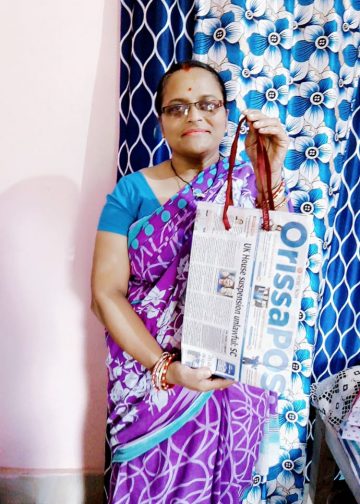
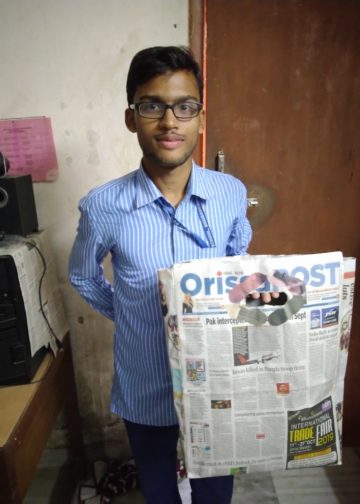
#MyPaperBagChallenge

Keshab Chandra Rout

December 12, 2019
#MyPaperBagChallenge

Sitakanta Mohanty

December 12, 2019
#MyPaperBagChallenge

Mandakini Dakua

December 12, 2019
#MyPaperBagChallenge

Sisirkumar Maharana

December 12, 2019
#MyPaperBagChallenge

Shreyanshu Bal

December 12, 2019
#MyPaperBagChallenge

Adweeti Bhattacharya

December 12, 2019
#MyPaperBagChallenge

Aishwarya Ranjan Mohanty

December 12, 2019
#MyPaperBagChallenge

Anshuman Sahoo

December 12, 2019
#MyPaperBagChallenge

Smitarani Sahoo

December 12, 2019
#MyPaperBagChallenge

Adyasha Priyadarsani Sendha

December 12, 2019
#MyPaperBagChallenge

Tapaswini Mallick

December 12, 2019
#MyPaperBagChallenge

Pitabas Tripathy

December 12, 2019
#MyPaperBagChallenge

Saishree Satyarupa

December 12, 2019
#MyPaperBagChallenge

Ramakanta Sahoo

December 12, 2019
#MyPaperBagChallenge

Pratik Kumar

December 12, 2019
#MyPaperBagChallenge

Sipra Mishra

December 12, 2019
#MyPaperBagChallenge

Adrita Bhattacharya

December 12, 2019
#MyPaperBagChallenge

Akriti Negi

December 12, 2019
#MyPaperBagChallenge

Kamana Singh

December 12, 2019
#MyPaperBagChallenge

D Rama Rao

December 12, 2019
#MyPaperBagChallenge

Pragyan Priyambada

December 12, 2019
#MyPaperBagChallenge

Praptimayee Biswal

December 12, 2019
#MyPaperBagChallenge

Arya Ayushman

December 12, 2019
#MyPaperBagChallenge

Surya Sidhant Rath

December 12, 2019
#MyPaperBagChallenge

Manas Samanta

December 12, 2019
#MyPaperBagChallenge

Ramakanta Sahoo

December 12, 2019
#MyPaperBagChallenge

Anasuya Sahoo

December 12, 2019
#MyPaperBagChallenge

Anup Mahapatra

December 12, 2019
#MyPaperBagChallenge

Amritansh Mishra

December 12, 2019
#MyPaperBagChallenge

Geetanjali Patro

December 12, 2019

Archives

Editorial

Justice Denied

Pic- PTI
July 28, 2026

Better late than never. Two days after the resignation of Union Education Minister Dharmendra Pradhan, the Supreme Court has stated...

Read moreDetails

Satire in Protest

Election Commission of India
July 27, 2026

A quote from Milan Kundera goes thus: The final stage of a cultural movement is satire. When the people laugh...

Read moreDetails

Roots of Rage

July 26, 2026

By Aakar Patel Many are puzzled by the size of the current protests and the speed with which they sprang...

Read moreDetails

Fence Eats Crops

Dilip Cherian
July 25, 2026

By Dilip Cherian What happens when the fence begins to eat the crop? In Delhi’s babu circles, this question is...

Read moreDetails
  • Home
  • State
  • Metro
  • National
  • International
  • Business
  • Editorial
  • Opinion
  • Sports
  • About Us
  • Advertise
  • Contact Us
  • Jobs
Developed By Ratna Technology

© 2025 All rights Reserved by OrissaPOST

  • News in Odia
  • Orissa POST Epaper
  • Video
  • Home
  • Trending
  • Metro
  • State
  • Odisha Special
  • National
  • International
  • Sports
  • Business
  • Editorial
  • Entertainment
  • Horoscope
  • Careers
  • Feature
  • Today’s Pic
  • Opinion
  • Sci-Tech
  • About Us
  • Contact Us
  • Jobs

© 2025 All rights Reserved by OrissaPOST

    • News in Odia
    • Orissa POST Epaper
    • Video
    • Home
    • Trending
    • Metro
    • State
    • Odisha Special
    • National
    • International
    • Sports
    • Business
    • Editorial
    • Entertainment
    • Horoscope
    • Careers
    • Feature
    • Today’s Pic
    • Opinion
    • Sci-Tech
    • About Us
    • Contact Us
    • Jobs

    © 2025 All rights Reserved by OrissaPOST