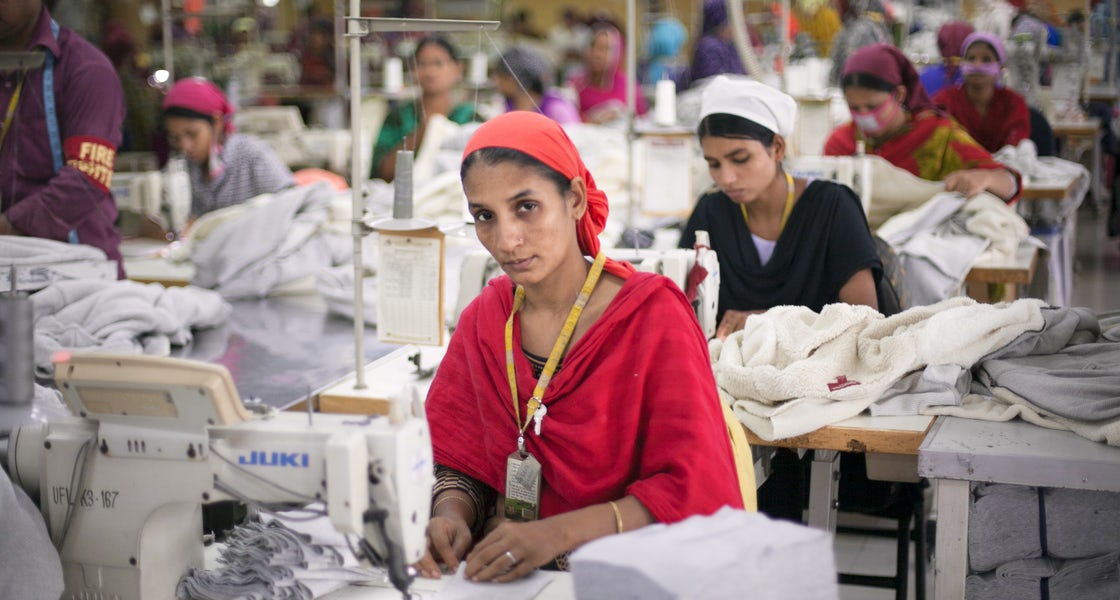
Dhaka: Bangladesh Wednesday raised the minimum monthly wage for garment workers by 36 per cent to USD 136 from USD 100 after weeks of widespread protests by workers that shut factories and disrupted production, authorities said.
Bangladesh, the world’s second-largest garment exporter after China, has seen violent protests by workers demanding higher pay since October.


The decision was reached early Wednesday after a marathon 12-hour meeting at the Minimum Wage Board office in Dhaka’s Segunbagicha, which began at 2 pm Tuesday and ended around 2 am Wednesday, the Dhaka Tribune reported.
The six-member board decided on the new minimum wage through a vote after representatives of factory owners and workers failed to reach a consensus.
The Minimum Wage Board has fixed the minimum monthly wage for workers in Bangladesh’s ready-made garment (RMG) industry at Tk 17,000 (USD 136), up 36 per cent from the existing Tk 12,500 (USD 100), following several rounds of negotiations between factory owners and workers’ representatives.
The new wage structure is expected to take effect from December 1, with workers receiving their revised salaries in January, in line with an earlier agreement between representatives of factory owners and workers, the report said.
The protests began in late October across Bangladesh’s major garment-producing areas.
The workers have been demanding an increase in the minimum monthly wage from the existing Tk 12,500 (USD 100) to Tk 30,000 (USD 240), citing rising costs of food, housing, transport and healthcare.
Bangladesh is the world’s second-largest garment exporter after China. The sector employs more than four million workers and accounts for over 80 per cent of the country’s export earnings, with prolonged disruption threatening production schedules, international buyers’ confidence and global apparel supply chains.
Babul Akhter, the workers’ representative on the board, said four members voted in favour of Tk 17,000, while two supported the workers’ final proposal of Tk 18,000.
The board subsequently fixed Tk 17,000 as the minimum monthly wage for fourth-grade garment workers, marking an increase of Tk 4,500 from the existing wage.
According to board sources, factory owners agreed to Tk 17,000 during the prolonged negotiations but were unwilling to raise their offer further.
Workers’ representatives, meanwhile, insisted on a minimum wage of Tk 18,000, prompting the board to settle the issue through a vote.
Under the new wage structure, third-grade workers will receive a minimum monthly wage of Tk 19,200, second-grade workers Tk 20,000 and first-grade workers Tk 21,500.
The decision follows weeks of labour unrest across major industrial belts, with workers demanding higher wages amid rising living costs.
Workers’ representatives had initially proposed a minimum monthly wage of Tk32,000 before lowering their demand to Tk 22,000 and eventually Tk 18,000 during successive rounds of negotiations.
The existing minimum wage of Tk 12,500 was announced in November 2023 and came into effect in December that year.
Factory owners have warned that prolonged disruption during the peak production season for spring and summer orders could delay shipments, affect overseas buyers’ confidence and lead to cancellations.
Bangladesh supplies major international fashion brands, including H&M, Zara and Gap. The sector has also been facing pressure from rising production costs, inflation and intense competition in global markets.