Odisha News, Odisha Latest news, Odisha Daily - OrissaPOST
  • Home
  • Trending
  • State
  • Metro
  • National
  • International
  • Business
  • Feature
  • Entertainment
  • Sports
  • More..
    • Odisha Special
    • Editorial
    • Opinion
    • Careers
    • Sci-Tech
    • Timeout
    • Horoscope
    • Today’s Pic
  • Video
  • Epaper
  • News in Odia
  • Home
  • Trending
  • State
  • Metro
  • National
  • International
  • Business
  • Feature
  • Entertainment
  • Sports
  • More..
    • Odisha Special
    • Editorial
    • Opinion
    • Careers
    • Sci-Tech
    • Timeout
    • Horoscope
    • Today’s Pic
  • Video
  • Epaper
  • News in Odia
No Result
View All Result
OrissaPOST - Odisha Latest news, English Daily -
No Result
View All Result

Dawn of super-human vision

Updated: June 26th, 2021, 08:00 IST
in Opinion
0
Share on FacebookShare on TwitterShare on WhatsAppShare on Linkedin

Dr Bhubanananda Sahu


The announcement of the Nobel Prize at Stockholm in Sweden in 2019 stunned everybody when professor Dolaldson explained the composition of our universe. He described the universe as a cup of coffee. Whole of the coffee is the dark energy; little bit of cream is dark matter and the tiny bit of sugar is the ordinary matter. Now we know that our universe is made of 69% dark energy, 26% dark matter and mere 5% is the ordinary matter. Briefly, the dark energy is the force that is involved in expansion of universe and dark matter is the priming force for the formation stars and galaxy. We can only see 5% of the universe as it interacts with light, but the rest is completely mysterious.

Also Read

RAJDEEP SARDESAI

BBC’S VOICE OF INDIA

2 days ago
Chander Gupta

Understanding Non-Earning Asset

2 days ago

In the animal kingdom, humans are in the top branch of evolved mammal on the tree of life. Our eyes have the highest features among intelligent life. Around 500 million years ago, the eyes originated in their simple form, euglena as a light spot. Euglena is single cell flagellate eukaryotes extensively studied in laboratory as a model organism. It can navigate in response to light by this light spot. Behind our eye, there is a thin layer of tissue called retina, which converts the incoming light to electrical signal and it is further processed in the brain to create images of the objects. Our retina has three different kinds of cone cells that sensitise three different spectra of light. This three cone cell types are long wave sensitive (LWS) cone or red cone, medium wave sensitive (MWS) cone or green cone, and short-wave sensitive (SWS) cone or blue cone (RGB cones). Each cone cell type enables us to see 100 different shades of each colour. Therefore, we are able to see 1 million colour shades.

As we have three different types of cone cells, our eye is classified as trichromatic type (tri:3; chroma: colour). But mammals such as dogs and cats have only two types of cones: SWScone and LWS cone in the retina and, hence, are classified as dichromatic type (di:2; chroma: colour). The dichromatic eye cannot see the seven colours of the rainbow, but only two colours: blue and yellow. Colour is not so important for animals that forage at night. They can only see one colour – shades of black, white, and gray and are classified as monochromatic eye. Most marine mammals are monochromatic; this includes seals, sea lions and walruses, cetaceans, dolphins and whales.

In 1660, Sir Isaac Newton discovered seven colours in the sunlight. He allowed the sunlight to pass through the prism to convince the world that the white sunlight is made of seven colours: VIBGYOR.  But later we learnt that these seven colours are just a thin slit of spectrum in the vast spectra of sun light. The other higher frequency waves that we cannot see are gamma ray, X-ray, UV-ray, while the lower frequency wave are infrared, radio wave and microwave.

Some animals, including humans, have the rare super-vision beyond the trichromatic type. Some vertebrates such as birds have tetrachromatic vision. They have one extra cone type: UV cone along with RGB cone. This fourth type of cone cell sensitises the UV light region. This tetrachromatic feature helps the birds to see tiny details in a prey in the grassy floor and on trees.

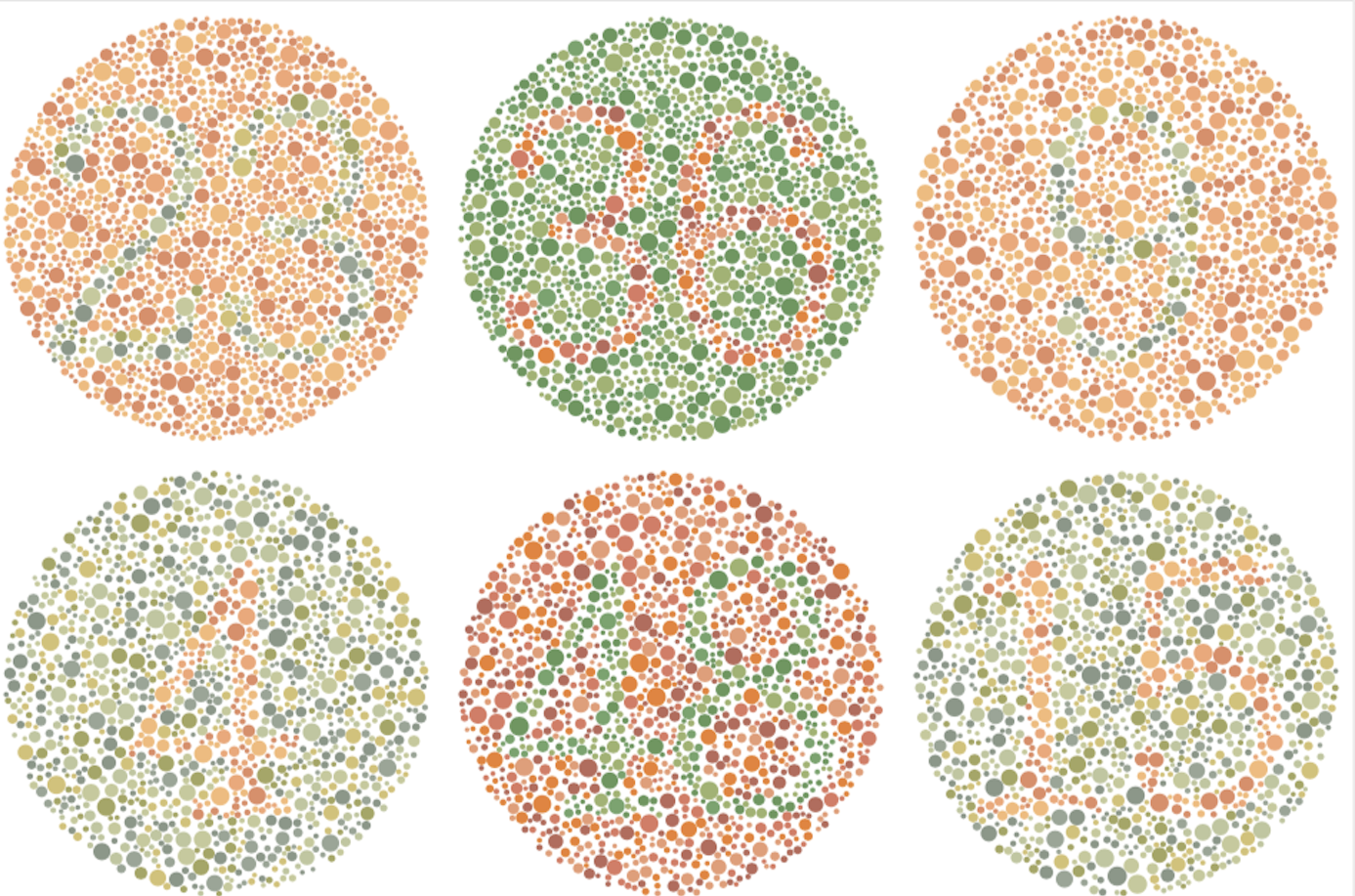
Humas lacked such tetrachromatic vision until recently when a genetic test brought a surprising result. In 2012, Concetta Antico, a painter from San Diego, California, was evaluated genetically and behaviourally by Professor Jay Neitz, Bishop Professor as tetrachromacy. She has a mutation in L-opsin gene which sensitises even in slight difference of spectrum. A pebble appears as a dull grey material to a normal person, but it is a glittering stone with orange, yellows, green, blue, and pink shades to Antico’s eye.        Until now we assumed that dichromatic eye cannot be converted to trichromatic eye due to the difficulty in neural rewiring. But recently, a dichromatic eye has been converted to trichromatic eye with gene therapy. Neitz lab at University of Washington made this conversation in squirrel monkeys. Squirrel monkeys have dichromatic vision. By gene therapy, a human red cone gene was introduced into a monkey’s eye. After the gene therapy the monkey was able to differentiate between red and yellow fruits which otherwise are seen as blue, yellow shade. This is a great leap in vision research. This technology can customise our vision to see many more spectra other than the seven colours of light. Red-green colour blindness is very common genetic disease in world. This technology brings hope to colour blind people who have never seen colour since birth due to dysfunction of colour sensitive gene.

The writer, a faculty of Ophthalmology and Visual Sciences University of Massachusetts Medical School, is from Bargarh, Odisha.

Tags: Color blindnessDr Bhubanananda Sahu
ShareTweetSendShare
Suggest A Correction

Enter your email to get our daily news in your inbox.


OrissaPOST epaper Sunday POST OrissaPOST epaper

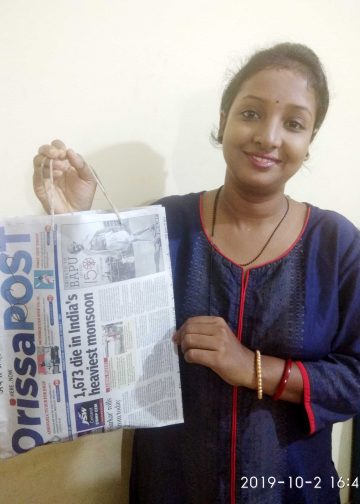
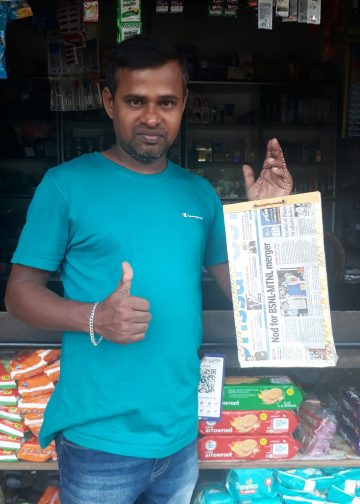
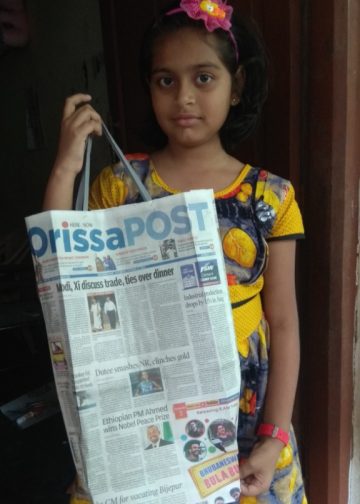
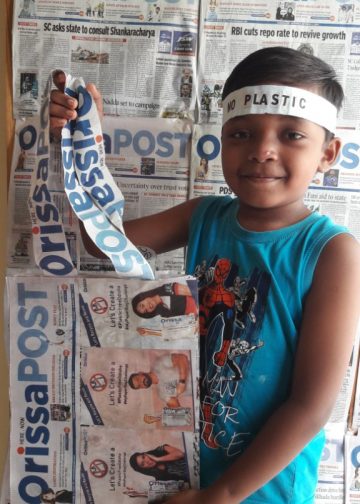
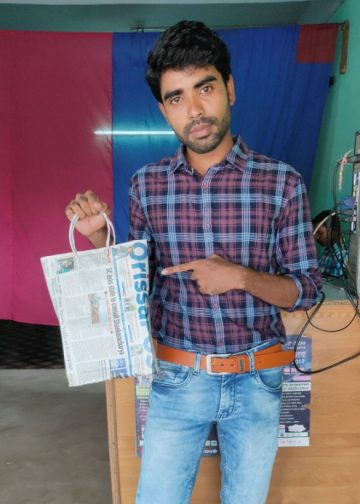
Click Here: Plastic Free Odisha

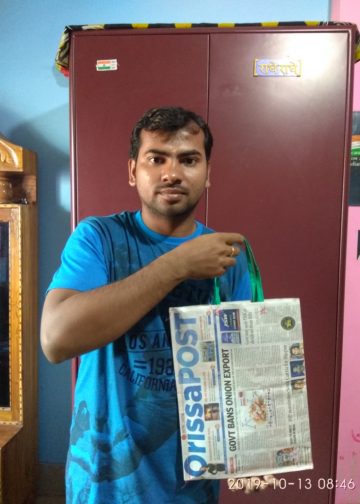
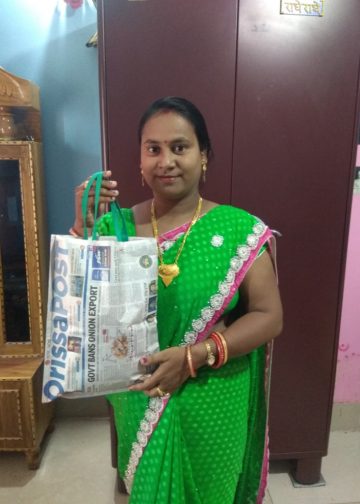
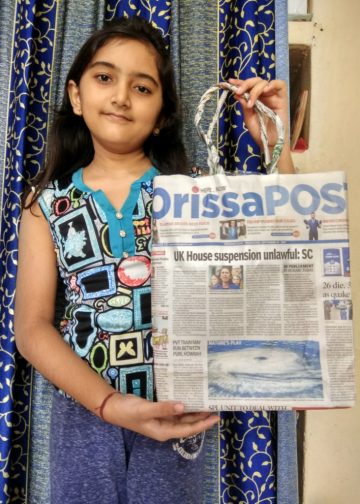
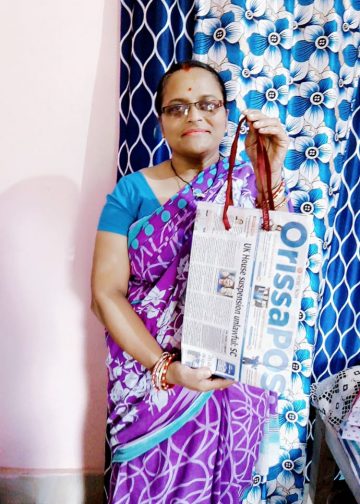
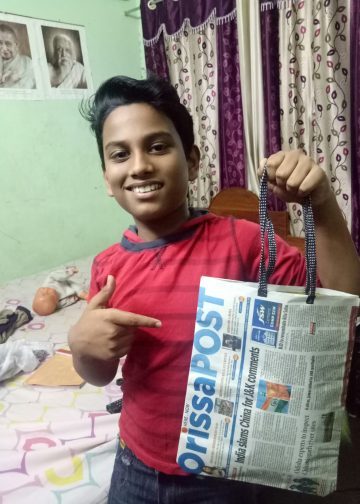
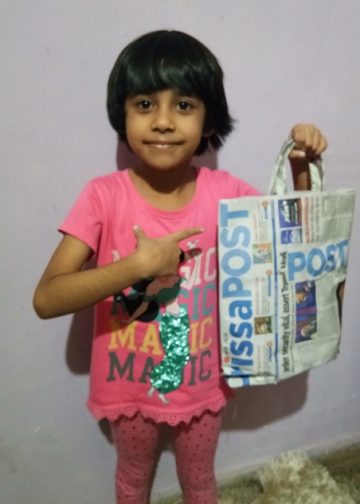
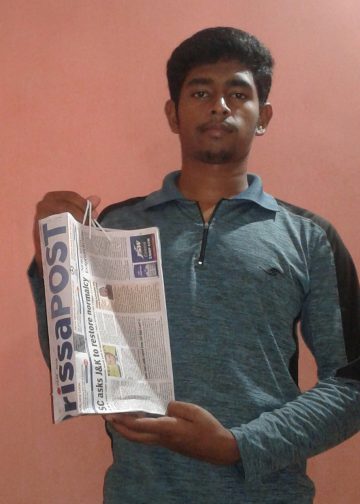
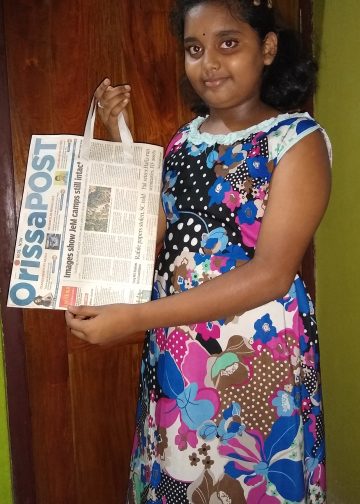
#MyPaperBagChallenge

Ramakanta Sahoo

December 12, 2019
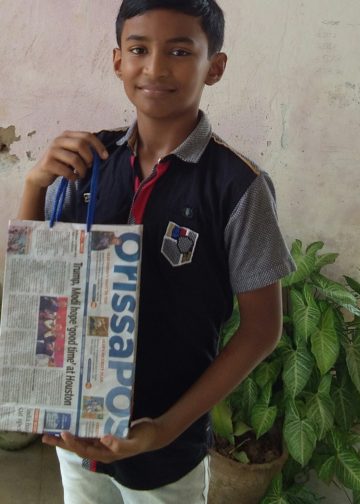
#MyPaperBagChallenge

Diptiranjan Biswal

December 12, 2019
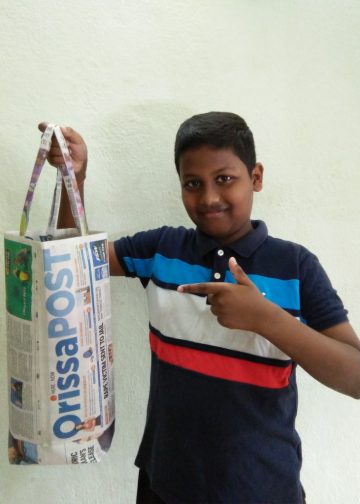
#MyPaperBagChallenge

Aman Kumar Barisal

December 12, 2019
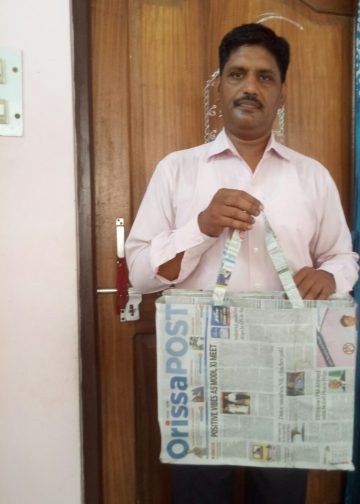
#MyPaperBagChallenge

Faiza Firdous

December 12, 2019
#MyPaperBagChallenge

Keshab Chandra Rout

December 12, 2019
#MyPaperBagChallenge

Smitarani Sahoo

December 12, 2019
#MyPaperBagChallenge

Narendra Kumar

December 12, 2019
#MyPaperBagChallenge

Amritansh Mishra

December 12, 2019
#MyPaperBagChallenge

Bijswajit Pradhan

December 12, 2019
#MyPaperBagChallenge

Sitakanta Mohanty

December 12, 2019
#MyPaperBagChallenge

Archana Parida

December 12, 2019
#MyPaperBagChallenge

Sarmistha Nayak

December 12, 2019
#MyPaperBagChallenge

Subhajyoti Mohanty

December 12, 2019
#MyPaperBagChallenge

Debasis Mohanty

December 12, 2019
#MyPaperBagChallenge

Pitabas Tripathy

December 12, 2019
#MyPaperBagChallenge

Parbati Mohanty

December 12, 2019
#MyPaperBagChallenge

Adyasha Priyadarsani Sendha

December 12, 2019
#MyPaperBagChallenge

Jhili Jena

December 12, 2019
#MyPaperBagChallenge

Adweeti Bhattacharya

December 12, 2019
#MyPaperBagChallenge

Spinoj Pattnaik

December 12, 2019
?????????????????????????????????????????????????????????????????????????????????????????????????????????????????????????????????
#MyPaperBagChallenge

Dibya Ranjan Das

December 12, 2019
#MyPaperBagChallenge

Priyasha Pradhan

December 12, 2019
#MyPaperBagChallenge

Shreyanshu Bal

December 12, 2019
#MyPaperBagChallenge

Adrita Bhattacharya

December 12, 2019
#MyPaperBagChallenge

Anup Mahapatra

December 12, 2019
#MyPaperBagChallenge

Arya Ayushman

December 12, 2019
#MyPaperBagChallenge

Vandana Singh

December 12, 2019
#MyPaperBagChallenge

Nishikant Rout

December 12, 2019
#MyPaperBagChallenge

Pratyasharani Ghibela

December 12, 2019
#MyPaperBagChallenge

Akshaya Kumar Dash

December 12, 2019

Archives

Editorial

Strategic Punch

Silent Shift
January 31, 2026

By Dilip Cherian Three hours is barely enough time for a working lunch in New Delhi. Yet when UAE President...

Read moreDetails

Another Leak

January 28, 2026

Invariably US President Donald Trump says one thing and means something completely different has, by now, become clear to the...

Read moreDetails

Republic of India

Indian Flag
January 26, 2026

We are aware how, once the month of January gets over, the rest of the year flies past in the...

Read moreDetails

Legal Apartheid

Aakar Patel
January 25, 2026

By Aakar Patel This week, Rajasthan is set to pass a segregation law modelled after one in Gujarat. It is...

Read moreDetails
  • Home
  • State
  • Metro
  • National
  • International
  • Business
  • Editorial
  • Opinion
  • Sports
  • About Us
  • Advertise
  • Contact Us
  • Jobs
Developed By Ratna Technology

© 2025 All rights Reserved by OrissaPOST

  • News in Odia
  • Orissa POST Epaper
  • Video
  • Home
  • Trending
  • Metro
  • State
  • Odisha Special
  • National
  • International
  • Sports
  • Business
  • Editorial
  • Entertainment
  • Horoscope
  • Careers
  • Feature
  • Today’s Pic
  • Opinion
  • Sci-Tech
  • About Us
  • Contact Us
  • Jobs

© 2025 All rights Reserved by OrissaPOST

    • News in Odia
    • Orissa POST Epaper
    • Video
    • Home
    • Trending
    • Metro
    • State
    • Odisha Special
    • National
    • International
    • Sports
    • Business
    • Editorial
    • Entertainment
    • Horoscope
    • Careers
    • Feature
    • Today’s Pic
    • Opinion
    • Sci-Tech
    • About Us
    • Contact Us
    • Jobs

    © 2025 All rights Reserved by OrissaPOST