Odisha News, Odisha Latest news, Odisha Daily - OrissaPOST
  • Home
  • Trending
  • State
  • Metro
  • National
  • International
  • Business
  • Feature
  • Entertainment
  • Sports
  • More..
    • Odisha Special
    • Editorial
    • Opinion
    • Careers
    • Sci-Tech
    • Timeout
    • Horoscope
    • Today’s Pic
  • Video
  • Epaper
  • News in Odia
  • Home
  • Trending
  • State
  • Metro
  • National
  • International
  • Business
  • Feature
  • Entertainment
  • Sports
  • More..
    • Odisha Special
    • Editorial
    • Opinion
    • Careers
    • Sci-Tech
    • Timeout
    • Horoscope
    • Today’s Pic
  • Video
  • Epaper
  • News in Odia
No Result
View All Result
OrissaPOST - Odisha Latest news, English Daily -
No Result
View All Result

Epistemic pluralism in research

Updated: February 23rd, 2026, 07:49 IST
in Opinion
0
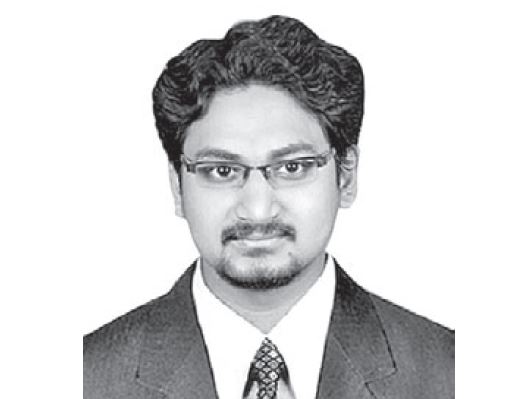
Ashyashree Praharaj

Ashyashree Praharaj

Share on FacebookShare on TwitterShare on WhatsAppShare on Linkedin

The Indian ethos of inquiry and knowledge creation, Bharatiya Anusandhan Parampara, is a legacy that pre-dates recorded civilisational histories. Rooted in the ancient system of logic, observation, and interpretation, the Indian research tradition has contributed paradigms that transformed human understanding across disciplines. Today, as India navigates global scientific competitiveness and socio-technological complexity, this tradition must serve as both foundation and compass for future research excellence.

Indian research tradition traces its origin to ancient scholarly practices embedded in Vedic, Upanishadic, Buddhist, and Jain epistemologies. The intellectual climate of ancient India was characterised by rigorous debates (Vada), systematic observation (Dhriti), and logical reasoning (Tarka). Knowledge was preserved but continuous ly refi ned through dialogue and practice. The Nyaya and Vaisheshika schools developed formal frameworks for logic, inference, and epistemology that prefigure aspects of modern scientific methods. Scholars such as Charaka and Sushruta advanced empirical investigation in medicine and surgery. Aryabhatta, Brahmagupta, and Bhaskara made foundational contributions to mathematics and as tronomy. Panini described a generative grammar of Sanskrit that parallels modern computational linguistics. Although the Mughal era contributed to Indian history, it was the colonial encounter that transformed the research landscape. Colonial institutions introduced Western science and marginalised indigenous knowledge. Despite this, Indian scholars engaged dialogically with science, exemplified by polymaths and reformers navigating dual epistemic worlds. Post-independence, India revived formal research infrastructure, establishing in stitutions like IITs, IIMs, IISERs, ICMR, CSIR, and universities to foster knowledge creation.


Also Read

Santosh Kumar Mohapatra

Patriarchy persists in India’s electoral politics

2 days ago
DK Giri

Chokepoints Drive Partnership

2 days ago

In the last two decades, the policy environment has reinforced research as a national priority. National Education Policy 2020 emphasises a research culture in higher education. Scientific and Industrial Research Policies aim to enhance innovation, industry linkage, and translational research. As a result, India’s output of scientific publications has risen significantly, driven by active participation in global collaborations. Indian researchers have contributed across bioengineering and pharmaceutical innovation, AI and data science, climate science and sustainability research, and social sciences and humanities, examining development dynamics. However, the quantitative growth must be balanced with quality, impact, and relevance.

Despite progress, structural and systemic challenges persist due to limited research intensity, as reflected in R&D expenditure relative to GDP. Furthermore, fragmentation among academic institutions, industry, and policy bodies, inadequate support for integrating indigenous knowledge into mainstream research frameworks, and gaps in skills, research culture, mentorship, and ethical research practices constrain India’s ability to fully realise its research potential.

India encounters a pivotal juncture, necessitating the in tegration of its ancient research ethos with contemporary scientific and innovative pursuits. Its future hinges on epistemic pluralism, integrating indigenous knowledge like Ayurveda and ecological wisdom with scientific methods. This can lead to breakthroughs in healthcare, sustainable agriculture, climate adaptation, cognitive sciences, and education. To thrive, India must invest in research infrastructure, embed research in curricula, foster public-private partnerships, and build international collaborations that respect intellectual sovereignty.

Research in the 21st century must be ethically grounded, socially inclusive, and aligned with societal needs. India’s research agenda should prioritise the Sustainable Development Goals, digital public goods, equity-centred technology deployment, and responsible AI and data governance. Beyond policy and infrastructure, the essential catalyst for research excellence is culture. A culture that encourages curiosity, tolerates failure, rewards creativity, and upholds integrity. Bharatiya Anusandhan Parampara offers a philosophical foundation for inquiry that is compassionate, holistic, and future-oriented. It is a living intellectual reservoir. As India advances, its research tradition must evolve, retaining philosophical depth while embracing technological frontiers. The nation’s future as a knowledge society hinges on its ability to kindle inquiry at all levels, from village innovation hubs to global scientific collaborations. The writer is a research scholar, Department of Business Administration, Berhampur University.

The writer is a research scholar, Department of Business Administration, Berhampur University.

Orissa POST – Odisha’s No.1 English Daily
Tags: Bharatiya Anusandhan ParamparaEpistemic pluralismIIMsIITS
ShareTweetSendShare
Suggest A Correction

Enter your email to get our daily news in your inbox.


OrissaPOST epaper Sunday POST OrissaPOST epaper

Click Here: Plastic Free Odisha

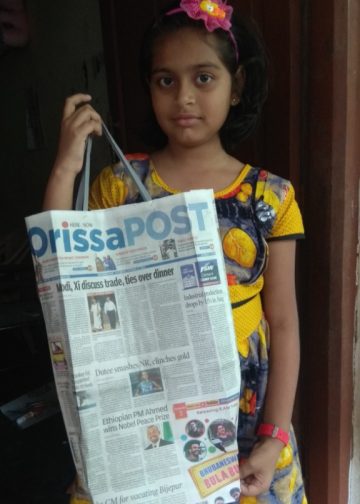
#MyPaperBagChallenge

Faiza Firdous

December 12, 2019
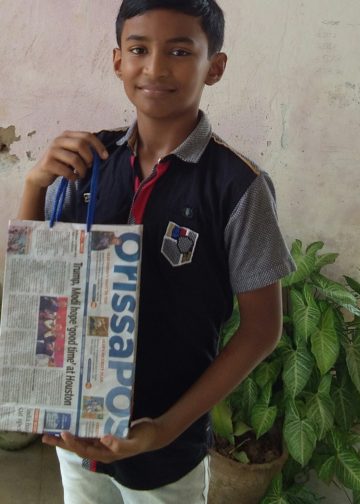
#MyPaperBagChallenge

Mandakini Dakua

December 12, 2019
?????????????????????????????????????????????????????????????????????????????????????????????????????????????????????????????????
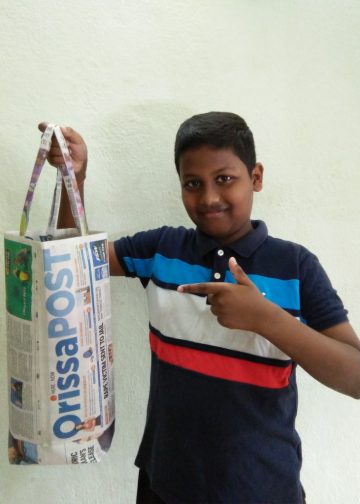
#MyPaperBagChallenge

Dibya Ranjan Das

December 12, 2019
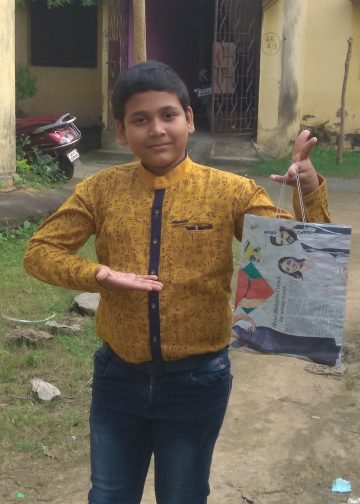
#MyPaperBagChallenge

Tabish Maaz

December 12, 2019
#MyPaperBagChallenge

Ankita Balabantray

December 12, 2019
#MyPaperBagChallenge

Akriti Negi

December 12, 2019
#MyPaperBagChallenge

Pratyasharani Ghibela

December 12, 2019
#MyPaperBagChallenge

Sibarama Khotei

December 12, 2019
#MyPaperBagChallenge

Smitarani Sahoo

December 12, 2019
#MyPaperBagChallenge

Narendra Kumar

December 12, 2019
#MyPaperBagChallenge

Archana Parida

December 12, 2019
#MyPaperBagChallenge

Adweeti Bhattacharya

December 12, 2019
#MyPaperBagChallenge

Ipsita

December 12, 2019
#MyPaperBagChallenge

Anasuya Sahoo

December 12, 2019
#MyPaperBagChallenge

Priyabrata Mohanty

December 12, 2019
#MyPaperBagChallenge

Debasis Mohanty

December 12, 2019
#MyPaperBagChallenge

Pitabas Tripathy

December 12, 2019
#MyPaperBagChallenge

Keshab Chandra Rout

December 12, 2019
#MyPaperBagChallenge

Archit Mohapatra

December 12, 2019
#MyPaperBagChallenge

Geetanjali Patro

December 12, 2019
#MyPaperBagChallenge

Subhajyoti Mohanty

December 12, 2019
#MyPaperBagChallenge

Diptiranjan Biswal

December 12, 2019
#MyPaperBagChallenge

Rajashree Manasa Mohanty

December 12, 2019
#MyPaperBagChallenge

Pratik Kumar

December 12, 2019
#MyPaperBagChallenge

Adyasha Priyadarsani Sendha

December 12, 2019
#MyPaperBagChallenge

Vandana Singh

December 12, 2019
#MyPaperBagChallenge

Rajashree Pravati Mohanty

December 12, 2019
#MyPaperBagChallenge

Parbati Mohanty

December 12, 2019
#MyPaperBagChallenge

Pragyan Priyambada

December 12, 2019
#MyPaperBagChallenge

D Rama Rao

December 12, 2019

Archives

Editorial

Exclusion Doctrine

Rights & Restrictions: AAKAR PATEL
April 26, 2026

Aakar Patel A story under this headline was reported this month: ‘No Muslim name finds place in BJP’s Bengal list’....

Read moreDetails

Silent Recalibration

Dilip Cherian
April 25, 2026

By Dilip Cherian The Centre’s latest appointment of 48 babus at the joint secretary level across ministries looks routine on...

Read moreDetails

War-torn Economy

Oil shortfall
April 22, 2026

The disruption in the supply of cooking gas (LPG) and petrol is one aspect of the economic crisis caused by...

Read moreDetails

Spirited Pope

Pope Leo XIV
April 21, 2026

It is a patently false contention to tell religious leaders to mind things moral and spiritual and leave temporal or...

Read moreDetails
  • Home
  • State
  • Metro
  • National
  • International
  • Business
  • Editorial
  • Opinion
  • Sports
  • About Us
  • Advertise
  • Contact Us
  • Jobs
Developed By Ratna Technology

© 2025 All rights Reserved by OrissaPOST

  • News in Odia
  • Orissa POST Epaper
  • Video
  • Home
  • Trending
  • Metro
  • State
  • Odisha Special
  • National
  • International
  • Sports
  • Business
  • Editorial
  • Entertainment
  • Horoscope
  • Careers
  • Feature
  • Today’s Pic
  • Opinion
  • Sci-Tech
  • About Us
  • Contact Us
  • Jobs

© 2025 All rights Reserved by OrissaPOST

    • News in Odia
    • Orissa POST Epaper
    • Video
    • Home
    • Trending
    • Metro
    • State
    • Odisha Special
    • National
    • International
    • Sports
    • Business
    • Editorial
    • Entertainment
    • Horoscope
    • Careers
    • Feature
    • Today’s Pic
    • Opinion
    • Sci-Tech
    • About Us
    • Contact Us
    • Jobs

    © 2025 All rights Reserved by OrissaPOST