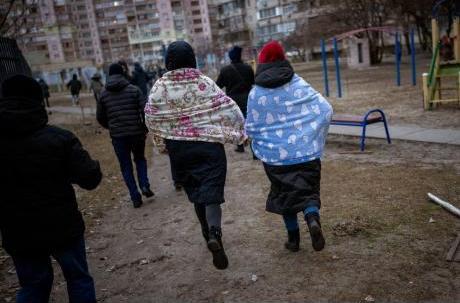
Russia’s war in Ukraine is a humanitarian catastrophe that violates the UN Charter and international humanitarian law, and has exacerbated socioeconomic and environmental crises around the world. It is also the latest manifestation of a global system that does not improve the human condition. Our imperfect responses to climate change, biodiversity loss, COVID-19, rising energy and food costs, and war reveal international systems in dire need of redesign.
An economic model predicated on the pursuit of indefinite production and consumption has confronted us with climate and ecosystem breakdown. The latest reports from the Intergovernmental Panel on Climate Change underscore the severity of the climate crisis and the narrowing opportunity for more climate-resilient development.
Also Read


Governments need to deliver on pledges to align public support behind clean-energy investments and deployment, and to phase out subsidies for fossil fuels. But the war in Ukraine is increasing pressure on fiscal authorities to maintain and even increase support for fossil fuels and intensive, protectionist agriculture. Policymakers therefore must recognise that the current crisis is an opportunity to invest in a faster transition to clean energy and resilient agriculture – all of which will create green jobs in the process.
Climate finance should focus on those most affected by, and least able to address, climate change. Rising food and energy prices were already creating hardship for poorer countries before the war. Now, even higher prices have threatened a food-security crisis that the WFP may struggle to address, given that it has historically sourced more than half of its wheat from Ukraine.
Peace is necessary to ensure that all societies and nature thrive. But peace and long-term prosperity rely, in turn, on our ability to create an equitable, net-zero, nature-positive global economy.
The IMF’s proposed Resilience and Sustainability Trust can help to ensure that the recently allocated $650 billion in special drawing rights will channel more cost-effective, flexible finance to the most vulnerable countries. At the same time, increased development finance can help to scale up green industrialisation and employment, while supporting those countries making the shift away from carbon-intensive industries.
For its part, the World Bank must use its financial leverage to fund a faster and more equitable clean-energy transition. It should support countries suffering from the pandemic, the physical effects of climate change, and the economic shocks of war by making a greater commitment to financing adaptation, facilitating concessional lending, and deploying its risk-mitigation tools to help crowd in more private finance.
Beyond supporting a just transition, transforming the global economic and financial system means changing the “rules of the game.” Natural resources and nature’s services must be properly valued, and externalities properly disclosed, priced, and built into financial markets.
We also need to change how we measure progress, because GDP is no longer fit for purpose. Rather than helping us tackle our biggest problems, it contributes to them by encouraging overconsumption. Replacing GDP with a new yardstick that tracks well-being and prosperity across generations would encourage investment in natural and social capital, as well as a transition to a nature-positive global economy that respects and operates within the biosphere’s limits. The UN Sustainable Development Goals were meant to do that, but we have yet to match those commitments with action.
Forging a consensus on new rules will require a new global commission on the economy and nature – a new Bretton Woods to bring together government, business, finance, academia, and civil society. We must acknowledge that our economies are dependent on and embedded in nature. And we must update the IMF and World Bank’s governance structures to recognise the economic power of emerging markets, giving a greater voice (and more votes) to underrepresented countries.
To persuade businesses and investors to shift capital toward low-carbon, socially inclusive, and nature-positive activities, governments must integrate natural and social systems into their decision-making. That is the only way to align fiscal and other economic policies with international climate, nature, and development goals. This process should include publishing information on natural capital stocks and associated risks, liabilities, and investment requirements in annual budget reports. Moreover, corporate reporting on climate- and nature-related risks need to be standardised and made mandatory for businesses and financial institutions.
Investment in net-zero, nature-positive action should increase, and environmentally harmful subsidies should be eliminated. Reversing the losses to nature will cost $700 billion a year, but that is just a fraction of the $5.9 trillion cost of fossil-fuel subsidies. The same kind of bold economic intervention that was used to manage the pandemic must be brought to bear against climate change and biodiversity loss. As many countries increase their borrowing to recover from the pandemic, now is the time to expand the global financial safety net, nurture green sovereign-debt markets, and promote new financial instruments such as nature-performance bonds.
By reducing the cost of capital for those investing in resilience, we can also drive wider economic reforms to accelerate progress toward greener, more inclusive prosperity. With more than $44 trillion in economic value at risk from nature loss, and with a net-zero transition that requires investment in nature-based solutions, initiating reform for a fairer, greener world must be a top priority.
While addressing the immediate food and energy crises, finance ministers and central-bank governors at the IMF and World Bank Spring Meetings also must pave the way for longer-term reforms. That way, world leaders gathering for Stockholm+50 this June, and for the COP15 biodiversity conference in Kunming later this year, will have a solid foundation upon which to start building the equitable, net-zero, nature-positive global economy that we need.
The writer is Global Finance Practice Leader at WWF International. ©Project Syndicate