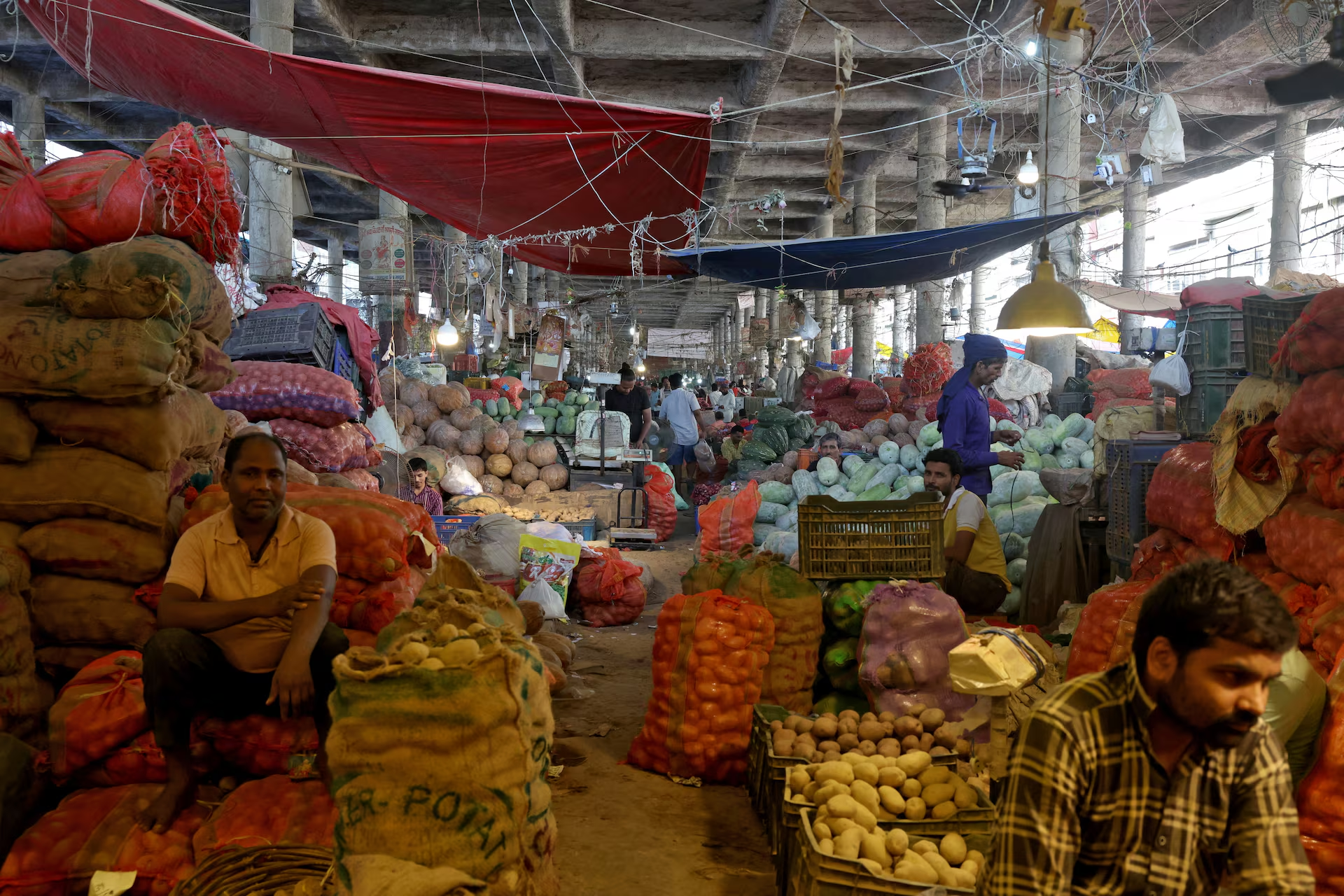
India’s food economy in 2026 looks comfortable. Granaries overflowing, vegetable prices slipping, sugar in surplus, and global food markets cooling—even as wars rage in Ukraine and West Asia and climate shocks persist. The Food and Agriculture Organisation’s (FAO) Food Price Index has retreated steadily from its pandemic and war-era highs, and the World Bank (WB) confirms easing pressure across cereals, sugar, dairy and vegetable oils.
This global easing creates an Indian paradox: what comforts consumers strains farmers. Prices are falling not because of rural prosperity, but because of surplus—global and domestic—long a mixed blessing in Indian agriculture. The reasons are structural. Bumper harvests of wheat, maize and rice in the US, Canada, Russia and Brazil, sustained Black Sea exports despite the war, lower energy and fertiliser costs, weakened demand for oils and dairy, falling freight rates, and gluts in sugar and dairy have together pushed global food prices down.


The WB broadly concurs—but adds a crucial caveat: global price averages hide local distress. Even as international prices soften, domestic food inflation and food insecurity persist in many low- and middle-income countries due to conflict, currency weakness and climate shocks. Hunger does not automatically recede when global prices fall. India sits squarely inside this contradiction.
For Indian consumers, softer prices offer welcome relief after years of food inflation. For Indian farmers—86% of whom are small and marginal landholders—the picture is far less benign. When global prices fall, Indian exports lose competitiveness. Sugar, rice and dairy producers face weaker external demand just as domestic supply peaks. Price realisation drops, often below the cost of production. The FAO has repeatedly warned that price volatility can push smallholders into poverty traps; even short spells of low prices can force distress sales of assets or higher borrowing.
The problem is compounded by sticky input costs. Fertilisers, pesticides, diesel and electricity prices do not fall in tandem with output prices. Margins are squeezed from both ends. Market access remains another choke point. Lacking storage and trans port, farmers are forced to sell immediately after harvest, precisely when prices are at their weakest.
India differs from many low-income economies in one crucial respect: policy buffers. The MSP and government procurement— particularly for rice and wheat— continue to anchor farm incomes for key staples. The Food Corporation of India’s assured buying absorbs a large share of output, insulating these crops from global price swings. India’s vast domestic market also matters. Internal demand absorbs much of what is produced, softening the transmission of global volatility.
India’s challenge is to ensure that surplus does not translate into rural insolvency. That means resisting the temptation to view low food inflation as an unqualified success. The world may be awash in food. For India, the task is to ensure that plenty does not become punishment—and that consumers’ relief does not come at the cost of farmers’ survival with their Rs 6000 Kisan Samman Nidhi and MSP back-up. That balance, not bumper harvests alone, will determine whether this phase passes as a manageable correction—or hardens into a deeper agrarian stress.