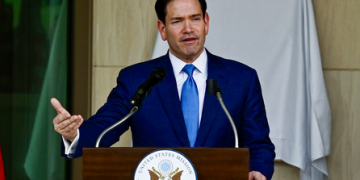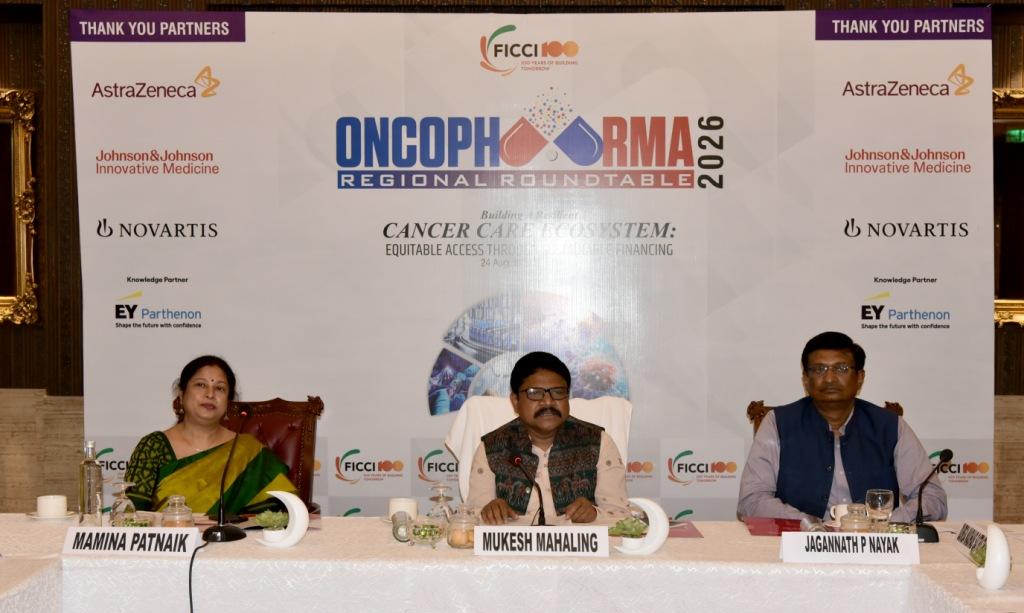
Bhubaneswar: Health & Family Welfare Minister Mukesh Mahaling said Monday that Odisha was committed to building a resilient and accessible cancer care ecosystem through increased financial investment, wider screening and decentralised treatment facilities. He was addressing the Federation of Indian Chambers of Commerce and Industry (FICCI) ‘OncoPharma 2026’ Roundtable on “Building a Resilient Cancer Care Ecosystem: Equitable Access through Sustainable Financing” (Odisha Chapter) here. The roundtable brought together government officials, healthcare professionals, oncologists, hospital representatives, patient advocacy groups, public health experts and industry leaders to discuss ways to strengthen cancer care in Odisha.
Mahaling said the government has allocated Rs 311 crore under the Mukhyamantri Cancer Care Yojana and strengthened local treatment capacity by establishing day-care chemotherapy centres across all 32 districts. Together, these centres have delivered more than 35,000 chemotherapy cycles, he said. He added that 91 specialised cancer treatment packages have been integrated into state health schemes to ease the financial burden on vulnerable families.

Odisha is also participating in the national HPV vaccination drive for young girls, he said. Highlighting the scale of the state’s screening efforts, Mahaling said more than 1.5 crore women have been screened for breast, cervical and oral cancers under the Sustha Nari, Sasakta Parivar initiative. He called for greater participation from the private sector, industrial houses and technology startups to expand access to advanced diagnostics and cancer screening in rural communities. He also urged major corporations operating in Odisha to use their corporate social responsibility (CSR) funds to adopt districts and deploy mobile cancer screening vans. Jagannath P Nayak, Chairman, FICCI Odisha State Council, said advances in medicine and technology were opening new possibilities in cancer care, but reaching rural and underserved communities remained a key challenge. Sourav Kumar Mishra, Associate Professor, Department of Oncology, AIIMS-Bhubaneswar, called for coordinated, patient-centric cancer care policies.
He said AIIMS-Bhubaneswar sees around 500 cancer patients daily, nearly 90 per cent of whom present at an advanced stage, largely due to low awareness and uncertainty over where to seek treatment. Head and neck, stomach and breast cancers are among the most common in Odisha, he said. Mishra highlighted the urban-rural gap in cancer care, saying many patients from rural Odisha still travel to Bhubaneswar and other cities for specialised treatment. He also called for a review of the Rs 5 lakh treatment coverage limit under Ayushman Bharat, citing rising cancer treatment costs and growing use of advanced therapies.
Mishra warned that the cancer burden was likely to rise further, while the state faced a shortage of oncology specialists and significant vacancies. He called for urgent recruitment and further strengthening of healthcare infrastructure. Deepak Routray, Director, Acharya Harihar Postgraduate Institute of Cancer, Kataka, also highlighted the shortage of trained oncology professionals. He said vacancies for oncology specialists in government hospitals were making it increasingly difficult for the public healthcare system to meet rising patient demand. He attributed the shortage partly to the significant pay gap between government and private hospitals, which hampers the recruitment and retention of specialised medical professionals.
Orissa POST – Odisha’s No.1 English Daily