Ajit Ranade
The government cannot spend even a rupee without the consent of Parliament. Hence its annual spending plan, called the Union Budget proposal is tabled in the Lok Sabha, as required by the Constitution. The Budget proposals are examined for how they impact the common man, how resources are to be raised, how is the gap to be filled, how will it affect economic growth, and whether the proposals make sense and are credible.


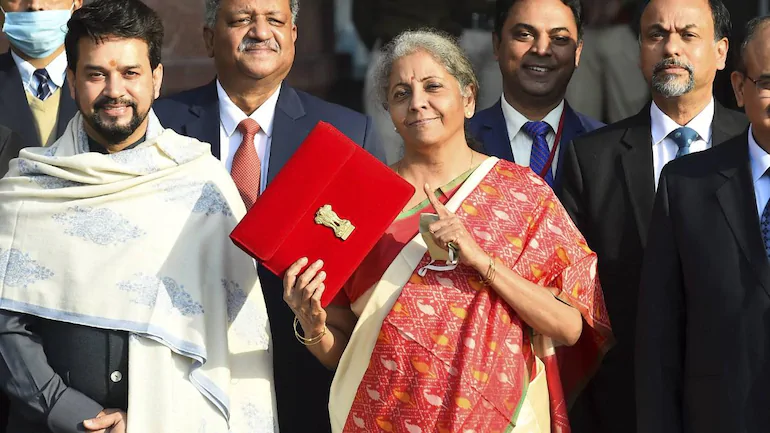
On the eve of the Budget, the prime minister had said that the Budget would carry on the work of the previous year, when five mini-budgets were presented in the pandemic year, under the “Atmanirbhar” package. By contrast the finance minister had said this would be a “never before”, once in a century kind of budget.
What we have got is certainly very bold and ambitious. It is clearly focused on reviving growth. It makes up for the lack of fiscal stimulus that was mostly absent during the pandemic year. It now makes sense, that the government chose to backload the fiscal stimulus, at a time when most of the lockdowns around the country are being dismantled. For if people are stuck in their homes, then fiscal spending would not bring a bigger bang for the buck.
The big relief is that there are no new taxes and the fiscal taps have been fully opened. Next year’s annual Budget size is nearly `35 lakh crore, which is about 16 per cent higher than last year’s Budget. But since we are just coming out of a recession, the tax revenues may not be very buoyant. Hence the gap between spending and revenue i.e. the fiscal deficit will widen. It was 9.5 per cent of the GDP this year, since the GDP itself has shrunk by 8 per cent, and the economy was in lockdown for several months. But next year too, the fiscal deficit will be 6.8 per cent, which is more than twice as high as what is allowed by the fiscal responsibility law passed by Parliament. The finance minister said in her speech that the fiscal deficit will come down to 4.5 per cent only after four years, and even then it will be nowhere closer to the 3 per cent limit specified by the fiscal responsibility law.
If the deficit is so high, how does the government intend to finance the gap? By borrowing of course. Today’s borrowing has to be paid back in the future, by taxing future citizens, who are basically unborn taxpayers. But today’s borrowing is going to be used to build roads, highways, metro rail sys-tems, ports and airports. Those assets will last long, and will probably be in use for decades or longer. It’s just like when an individual buys a house (an asset) the home loan is repaid over the next fifteen or twenty years. The individual repays the housing loan before he or she dies. But a government lives on, so even in the future the government can borrow, and pay off old loans with new loans. That is not to say that this can be done recklessly. Even Mumbai’s Municipal Corporation wants to borrow by selling bonds, but its corporators are opposing it. In this case, however, the finance minister has presented a credible and realistic picture of the government’s finances and that will go a long way in building trust with the taxpayers.
Apart from the big-spending thrust on the infrastructure we also have a decisive move toward privatisation. The finance minister announced that two public sector banks and one general insurance company will be privatised. Also, some of the government-owned assets, such as toll roads, or land owned by government companies, will be monetised. This is possibly the first such budget which is showing conviction about government vacating space for the private sector. Indeed, the stated philosophy is that the government will get out of all non-strategic sectors like airlines, hotels etc, and leave it for the private sector. This will certainly improve the efficiency of the usage of capital and lead to higher growth.
India’s ranking in the world hunger index or child malnutrition is quite low. Hence, we need to substantially increase public spending on health, which is below our peer country average. This Budget aims to double the spending on health and nutrition. But to do more, we need higher economic growth which can generate tax revenues to fund the social sector. On health and education, surely the finance minister could have allocated more, but given that the size of the deficit is already high, the policy focus is clearly on growth rather than redistribution. If indeed the economy manages to generate 15.5 per cent nominal growth next year, as predicted by the International Monetary Fund, then the current Budget projections will turn out to be quite conservative and easily achievable. So, we must commend the Budget for a growth-oriented fiscal stimulus, accompanied by some spending on social sectors, and deficit numbers which seem credible and achievable. On that count, kudos to the finance minister.
The writer is an economist and Senior Fellow, Takshashila Institution. ©The Billion Press.