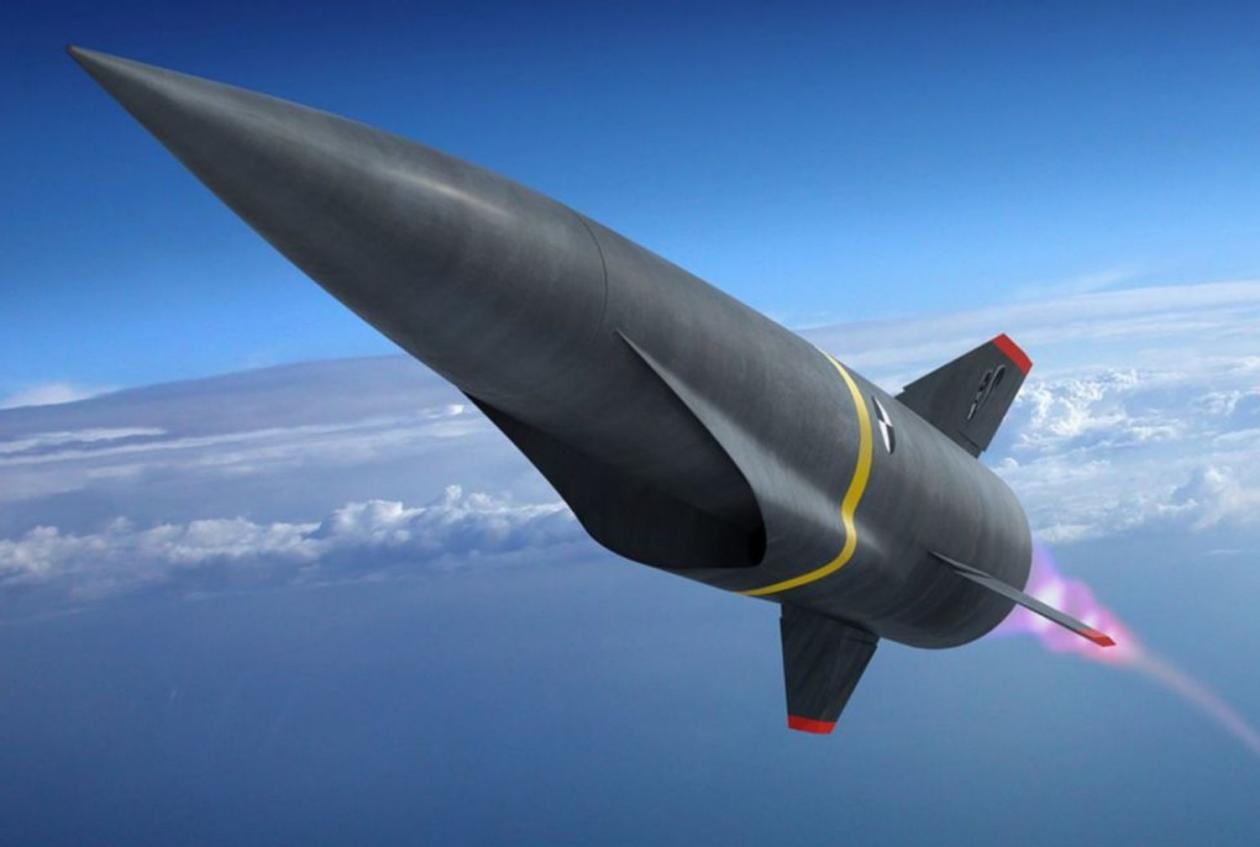
Colorado: Russia used a hypersonic missile against a Ukrainian arms depot in the western part of the country March 18, 2022. That might sound scary, but the technology the Russians used is not particularly advanced. However, next-generation hypersonic missiles that Russia, China and the US are developing do pose a significant threat to national and global security.
I am an aerospace engineer who studies space and defense systems, including hypersonic systems. These new systems pose an important challenge due to their maneuverability all along their trajectory. Because their flight paths can change as they travel, these missiles must be tracked throughout their flight.


A second important challenge stems from the fact that they operate in a different region of the atmosphere from other existing threats. The new hypersonic weapons fly much higher than slower subsonic missiles but much lower than intercontinental ballistic missiles. The US and its allies do not have good tracking coverage for this in-between region, nor does Russia or China.
Russia has claimed that some of its hypersonic weapons can carry a nuclear warhead. This statement alone is a cause for concern whether or not it is true. If Russia ever operates this system against an enemy, that country would have to decide the probability of the weapon being conventional or nuclear.
In the case of the US, if the determination were made that the weapon was nuclear, then there is a very high likelihood that the US would consider this a first strike attack and respond by unloading its nuclear weapons on Russia. The hypersonic speed of these weapons increases the precariousness of the situation because the time for any last-minute diplomatic resolution would be severely reduced.
It is the destabilising influence that modern hypersonic missiles represent that is perhaps the greatest risk they pose. I believe the US and its allies should rapidly field their own hypersonic weapons to bring other nations such as Russia and China to the negotiating table to develop a diplomatic approach to managing these weapons.
Describing a vehicle as hypersonic means that it flies much faster than the speed of sound, which is 761 miles per hour (1,225 kilometers per hour) at sea level and 663 mph (1,067 kph) at 35,000 feet (10,668 meters) where passenger jets fly. Passenger jets travel at just under 600 mph (966 kph), whereas hypersonic systems operate at speeds of 3,500 mph (5,633 kph) – about 1 mile (1.6 kilometers) per second – and higher.
Hypersonic systems have been in use for decades. When John Glenn came back to Earth in 1962 from the first US crewed flight around the Earth, his capsule entered the atmosphere at hypersonic speed.
All of the intercontinental ballistic missiles in the world’s nuclear arsenals are hypersonic, reaching about 15,000 mph (24,140 kph), or about 4 miles (6.4 km) per second at their maximum velocity.
ICBMs are launched on large rockets and then fly on a predictable trajectory that takes them out of the atmosphere into space and then back into the atmosphere again.
The new generation of hypersonic missiles fly very fast, but not as fast as ICBMs. They are launched on smaller rockets that keep them within the upper reaches of the atmosphere.
There are three different types of non-ICBM hypersonic weapons: aero-ballistic, glide vehicles and cruise missiles. A hypersonic aero-ballistic system is dropped from an aircraft, accelerated to hypersonic speed using a rocket and then follows a ballistic, meaning unpowered, trajectory. The system Russian forces used to attack Ukraine, the Kinzhal, is an aero-ballistic missile. The technology has been around since about 1980.
A hypersonic glide vehicle is boosted on a rocket to high altitude and then glides to its target, maneuvering along the way. Examples of hypersonic glide vehicles include China’s Dongfeng-17, Russia’s Avangard and the US Navy’s Conventional Prompt Strike system. US officials have expressed concern that China’s hypersonic glide vehicle technology is further advanced than the U.S. System.
A hypersonic cruise missile is boosted by a rocket to hypersonic speed and then uses an air-breathing engine called a scramjet to sustain that speed.
Because they ingest air into their engines, hypersonic cruise missiles require smaller launch rockets than hypersonic glide vehicles, which means they can cost less and be launched from more places.
Hypersonic cruise missiles are under development by China and the US.
The US reportedly conducted a test flight of a scramjet hypersonic missile in March 2020.
The primary reason nations are developing these next-generation hypersonic weapons is how difficult they are to defend against due to their speed, maneuverability and flight path.
The US is starting to develop a layered approach to defending against hypersonic weapons that includes a constellation of sensors in space and close cooperation with key allies. This approach is likely to be very expensive and take many years to implement.
With all of this activity on hypersonic weapons and defending against them, it is important to assess the threat they pose to national security. Hypersonic missiles with conventional, non-nuclear warheads are primarily useful against high-value targets, such as an aircraft carrier. Being able to take out such a target could have a significant impact on the outcome of a major conflict.
However, hypersonic missiles are expensive and therefore not likely to be produced in large quantities. As seen in the recent use by Russia, hypersonic weapons are not necessarily a silver bullet that ends a conflict.
By Iain Boyd, Professor of Aerospace Engineering Sciences, University of Colorado Boulder
The Conversation