Orville Schell
Soon after the news of Russia’s invasion of Ukraine flashed across my computer screen, I received an email that seemed to mark another milestone in the dismantling of the old global order. Having tickets to attend a Vienna Philharmonic concert at New York’s Carnegie Hall, I received a ‘Customer Service Announcement’ reporting that the Valery Gergiev – described as “a friend and prominent supporter of President Vladimir V. Putin of Russia” – would no longer be conducting the orchestra. Many other orchestras have since cut ties with Gergiev as well.
Also Read


Until the Russian invasion, it was still possible to believe that a full Western “decoupling” from China and Russia was both unlikely and unwise. Yet Gergiev’s removal is a metaphor for how the newly confected Sino-Russian axis is catalysing a rift that will now affect everything from cultural exchanges to trade.
After all, until the invasion, many were skeptical that the European Union (especially Germany) would ever get the Russian natural-gas needle out of its arm – especially with the Nord Stream 2 pipeline offering up a fresh vein. Equally, many have wondered how the US could ever kick its addiction to low-cost Chinese-made merchandise now that so many of its own factories have closed.
During the halcyon days of globalisation – when “Davos man” ruled the planet with cheery bromides about win-win-win outcomes – global supply chains seemed to promise boundless benefits for everyone. What was wrong with outsourcing to distant lands if they could make something cheaper and ship it faster? Open markets were touted for their ability to create more open societies. All we had to do was keep trading transnationally, paying no heed to the ideological or political cast of the other country. Thus did the West, and much of the rest of the world, become codependent with Russia (for gas) and China (for rare earths, polysilicon, pharmaceuticals, and old-fashioned consumer goods).
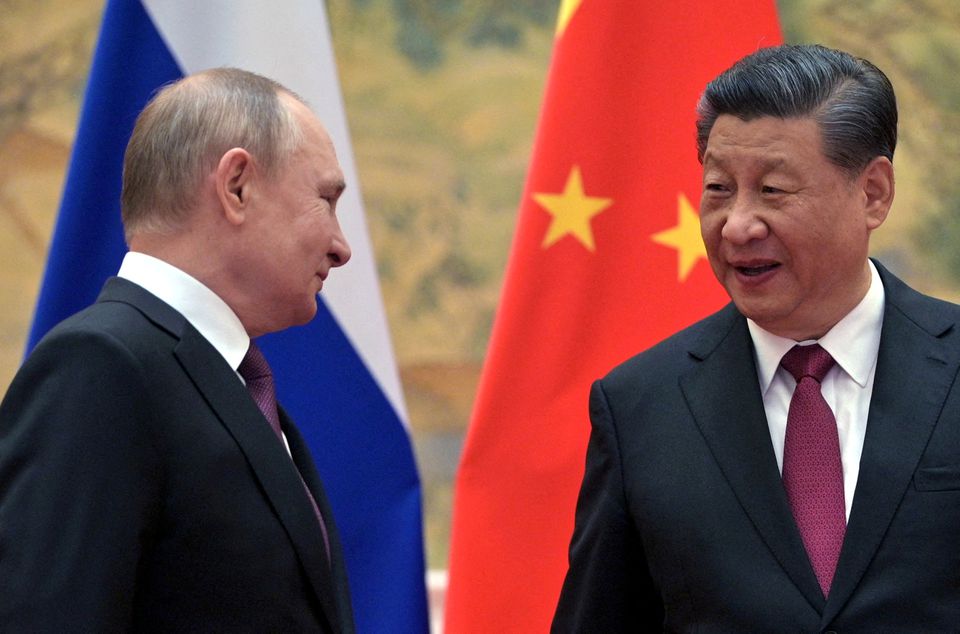
But with Putin invading Ukraine and Chinese President Xi Jinping expressing revanchist attitudes toward Taiwan, we are left to assess not only an upturned world order and a shattered global marketplace, but also the sundering of anodyne cultural exchanges.
What is driving this unexpected and dangerous train wreck? Why would Putin throw Russia’s real national interests to the wind by invading a once-fraternal neighbour? What would lead Xi to countenance sacrificing his own people’s historic economic miracle for the sake of seizing a flea-shaped island that China hasn’t ruled in well over a century? Why have these two latter-day authoritarians indulged such self-destructive urges and alienated so many other important countries, just when the world was becoming so interdependent?
First, it is important to remember that autocrats are far freer to act in unrestrained ways, because they face few if any political checks and balances. Thus, as “supreme” leaders, they can shape policies according to their own characterological disorder without challenges. While Putin and Xi have very different backgrounds and personalities, they share some key traits. Both are deeply insecure, paranoid men who have been shaped by historical narratives of grievance, especially against the “great powers” of the West.
These narratives center around Leninist themes of foreign exploitation, humiliation, and victimisation. They demonise Western democracies as hypocrites and oppressors (as in Lenin’s theory of imperialism). And they impute arrogant and disdainful attitudes to the West.
More than anything else, Putin and Xi want respect. Yet they know that most Western leaders do not, and probably never will, respect their authoritarianism – no matter how successful they are in building high-speed rail lines, constructing modern cities, or hosting Olympic Games. It is this respect-deficit syndrome that has created their imperium of resentment and grievance. Putin and Xi recognise that they will never overcome this, regardless of how successfully their foreign, technology, and space policies advance their countries’ development, or how much oil and gas they sell to the world. And it does no good to admonish them that gaining respect requires them to behave respectably, rather than jailing opposition candidates and dissidents, persecuting people for their religious beliefs, bullying other countries with punitive trade policies, and launching invasions. Having drunk the Leninist Kool-Aid of victimisation, Putin and Xi simultaneously want to overthrow the Western order and be esteemed by it.
As such, they are animated by a contradiction that no amount of Western handholding can resolve. Not even the tonic effect of “engagement,” sustained through nine US presidential administrations, was enough to overcome China’s sense of being the target of constant disapprobation and ideological threat from the world’s democracies. Putin and Xi take great umbrage at having to live next door to successful democracies, like Ukraine and Taiwan, comprised of peoples with similar histories, cultures, and ethnicities.
The magnetic force of shared grievance has brought these two former rivals so close that they recently declared there were “no limits” to their partnership. Both insist that it should be up to the people of the country “to decide whether their state is a democratic one.” And Putin and Xi claim they are leading a new kind of democracy, never mind that Putin fancies himself a czar, and that Xi’s version of governance is a “democratic dictatorship of the proletariat.”
The question now is whether Russia and China will be able to maintain their opportunistic pact following Putin’s decision to go to war. Just before the invasion, Chinese Foreign Minister Wang Yi told the Munich Security Conference that the “sovereignty” and “territorial integrity” of all countries should be protected, and that “Ukraine is no exception.” And Xi subsequently called Putin to explain that, while he understands Russia’s security concerns, China still respects the sovereignty of nation-states and intends to uphold the principles of the United Nations Charter. After all, the Communist Party of China does not want foreign powers interfering in its own “internal affairs,” never mind invading China.
Which of these imperatives will win out? Most likely, China and Russia’s shared aversion to liberal democracy (and to the self-righteousness of democratic leaders) will ultimately trump the quaint nineteenth-century idea that national sovereignty is sacred. The narrative of victimisation that is psychologically fueling both countries’ nationalism with reservoirs of resentment is simply too powerful to be nullified by the niceties of international law.
The writer is Director of the Center on US-China Relations at the Asia Society. ©Project Syndicate.